CM Hemant Soren Calls for Environmental Awareness Across Jharkhand
Synopsis
Chief Minister Hemant Soren on 11 August 2026 called for scaling up environmental sensitivity across all towns in Jharkhand, describing the state's forests, rivers, mountains, and mineral wealth as the primary foundation of people's livelihoods and urging mass awareness through every available channel.
Key Takeaways
CM Hemant Soren on 11 August 2026 directed that environmental awareness be increased across all towns — big and small — in Jharkhand .
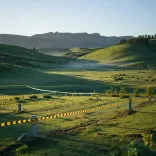
He described Jharkhand as a 'prosperous and green state' endowed with forests, mountains, rivers, and abundant mineral wealth.
Soren framed these natural resources as the 'primary basis of livelihood' for the state's people, linking conservation directly to economic survival.
The directive calls for awareness to reach 'every citizen' through 'various means,' signalling a multi-channel public outreach intent.
The explicit focus on urban towns reflects growing pressure on Jharkhand's environment from rapid industrial and urban expansion.
Jharkhand's forests, rivers, mountains, and mineral wealth are not just assets — they are, as Chief Minister Hemant Soren put it, the very foundation of the state's existence. On Tuesday, 11 August 2026, the Chief Minister's Office of Jharkhand shared a pointed directive from the Chief Minister: environmental sensitivity must be scaled up across every town and city, and awareness must reach every citizen through every available channel.
Speaking in Hindi, CM Soren said: 'छोटे-बड़े सभी नगरों में पर्यावरण के प्रति संवेदनशीलता बढ़ाई जाए और विभिन्न माध्यमों से जन-जन को जागरूक किया जाए' — 'Environmental sensitivity must be increased in all towns, big and small, and people must be made aware through various means.' He described Jharkhand as a 'prosperous and green state' endowed with forests, mountains, rivers, and abundant mineral wealth, calling these resources the primary basis of the people's livelihood.
A Green State Under Pressure
The statement lands with particular weight in a state that holds some of India's most significant ecological and mineral reserves simultaneously. Jharkhand accounts for a substantial share of the country's coal, iron ore, and other mineral deposits — resources that drive industrial activity but also place persistent pressure on its forest cover and river systems. The tension between extraction and conservation is not abstract here; it plays out in the daily lives of communities whose livelihoods depend on both. Soren's call to raise awareness 'through various means' signals an intent to go beyond government circulars — reaching urban residents, schools, and local bodies with a conservation message that connects ecology directly to economic survival.Urban Towns as the New Battleground
The explicit focus on small and large towns is notable. Jharkhand's urban centres have expanded rapidly alongside mining and industrial growth, often outpacing environmental infrastructure. By directing attention specifically at towns — not just forests or tribal hinterlands — the Chief Minister is acknowledging that the conservation challenge has moved into paved streets and growing city limits, not just remote woodland. Jharkhand governments have periodically coupled environmental messaging with the state's resource identity, but the framing here — positioning nature as the 'primary basis of livelihood' — is a deliberate attempt to make conservation feel personally urgent to every resident, not just a bureaucratic obligation. Whether this statement is followed by a formal urban environmental drive or policy measure will be the real test of its intent. The Chief Minister has set the direction; the machinery now has to move.Point of View
The Chief Minister is speaking directly to forest-dependent and tribal communities who are both the most exposed to environmental degradation and the most critical electoral bloc. The focus on urban towns is a tactical expansion: it widens the audience for a green message beyond traditional rural constituencies. Whether the rhetoric translates into enforceable urban environmental measures will determine if this is a governance signal or a communication exercise.
NationPress
26 Sept 2026
Frequently Asked Questions
What did Hemant Soren say about environment in Jharkhand?
CM Hemant Soren called for increasing environmental sensitivity across all towns in Jharkhand and using various means to make every citizen aware, describing the state's forests, rivers, mountains, and minerals as the primary basis of people's livelihoods.
Why is Jharkhand important for environment and minerals?
Jharkhand holds some of India's largest reserves of coal, iron ore, and other minerals, while also having significant forest cover and river systems — making the balance between resource extraction and conservation a critical issue for the state.
What is the Jharkhand government's stance on environmental conservation?
The Jharkhand government under CM Hemant Soren has emphasised environmental awareness as integral to the state's identity, periodically coupling conservation messaging with the state's natural and mineral resource base.
Which towns in Jharkhand are targeted for environmental awareness?
CM Soren's directive covers all towns — both small and large — across Jharkhand, with a specific acknowledgement that urban centres face growing environmental pressure alongside industrial and mining expansion.
What natural resources does Jharkhand have?
Jharkhand is endowed with extensive forests, mountain ranges, major rivers, and abundant mineral deposits including coal and iron ore, which together form the ecological and economic foundation of the state.