CM Hemant Soren: Protect Earth for Future Generations
Synopsis
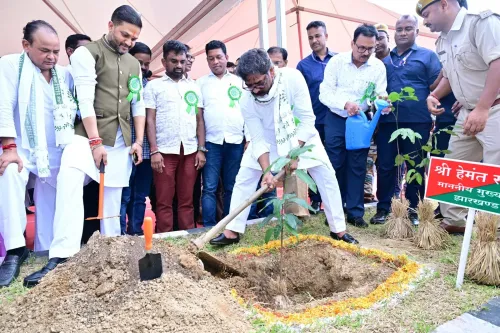
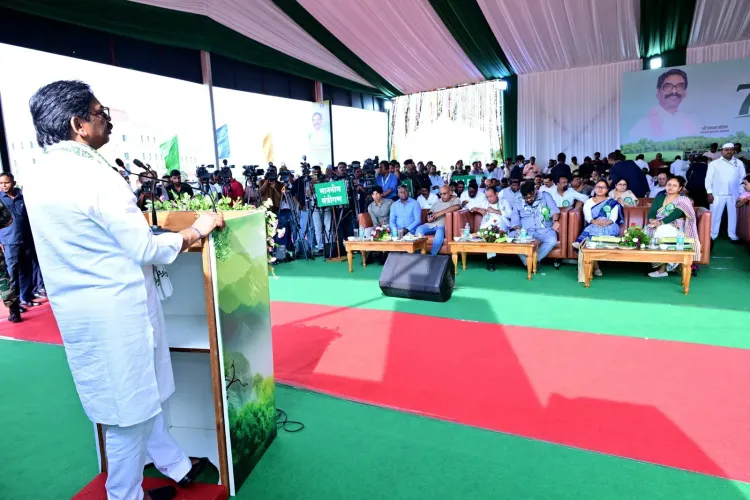
Jharkhand CM Hemant Soren, speaking through the official CMO account on 11 August 2026, called for a balanced relationship with nature, warning that present generations must not leave future ones to suffer the consequences of environmental destruction in a state already strained by mining pressures.
Key Takeaways
The Chief Minister's Office of Jharkhand shared an environmental appeal from CM Hemant Soren on 11 August 2026 .
Soren called for a 'balanced behaviour with nature' to ensure the earth sustains future generations 'for eternity.' He framed environmental responsibility as a moral duty: 'We are here today, we will not be tomorrow.' Jharkhand is a mineral-rich state with significant forest cover and tribal communities whose livelihoods depend on land.
India has committed to net-zero emissions by 2070 ; state-level statements like this often precede policy or budgetary action.
A state that sits atop one of India's richest mineral belts is also one of its most ecologically vulnerable — and Jharkhand Chief Minister Hemant Soren is putting that tension into words. On Tuesday, 11 August 2026, the Chief Minister's Office of Jharkhand shared a pointed environmental appeal from CM Soren, calling on citizens to adopt a balanced relationship with nature so that the planet can sustain generations yet to come.
Soren's statement, shared via the official CMO handle, reads: 'We must adopt such a balanced behaviour with nature that this earth remains a means of nourishment for future generations for eternity. We are here today, we will not be tomorrow — but it is our responsibility to ensure that the generations to come do not suffer the consequences of this destruction.'
The Weight of Those Words in a Mining State
Jharkhand is not a state that can speak about environmental destruction in the abstract. Home to vast reserves of coal, iron ore, and other minerals, the state has long lived at the sharpest edge of the development-versus-conservation debate. Its forests shelter significant tribal communities whose livelihoods are directly tied to the land. Every new mine, every cleared hectare, lands differently here than it does in a policy document drafted in a distant capital. Soren's framing — 'हम आज हैं, कल नहीं रहेंगे' ('We are here today, we will not be tomorrow') — is deliberately intergenerational. It shifts the moral weight of environmental decisions from the present political moment to a longer civilisational horizon, a rhetorical move that resonates strongly in tribal cultural traditions that regard land as a living inheritance, not a commodity.Jharkhand's Place in India's Climate Conversation
India has committed to net-zero emissions by 2070 and embedded that pledge within its Sustainable Development Goals framework. For coal-dependent states like Jharkhand, that commitment demands a careful, phased reimagining of economic growth — one that does not simply pull the rug from under mining communities while asking them to plant trees in its place. State-level sustainability statements of this kind often precede concrete legislative or budgetary action: afforestation drives, climate adaptation schemes, or revised forest-clearance protocols. Whether Soren's words translate into such follow-up measures in upcoming assembly sessions will be the real test of their weight. The message is clear, the stakes are older than any election cycle. Future generations are not a constituency that votes — but in Jharkhand, they are very much a presence that inherits.Point of View
He occupies the moral high ground without committing to a specific legislative position — a classic move ahead of potential scheme announcements. For a JMM government whose core constituency includes tribal communities with deep cultural bonds to land, environmental messaging is also electoral messaging. The broader signal, however, fits a pattern of Indian state governments positioning themselves within the national net-zero narrative, seeking both credibility and, potentially, green-transition funding.
NationPress
25 Sept 2026
Frequently Asked Questions
What did Jharkhand CM Hemant Soren say about the environment?
CM Hemant Soren urged people to adopt a balanced relationship with nature, stating it is the current generation's responsibility to ensure future generations do not suffer the consequences of environmental destruction.
Why is environmental protection especially significant for Jharkhand?
Jharkhand is one of India's most mineral-rich states, with coal and iron ore extraction creating persistent tension between economic development and forest conservation, directly affecting tribal communities who depend on the land.
What is India's net-zero emissions target?
India has committed to achieving net-zero carbon emissions by 2070, a goal that requires coal-dependent states like Jharkhand to gradually reimagine their economic growth models.
Who is Hemant Soren?
Hemant Soren is the Chief Minister of Jharkhand and the leader of the Jharkhand Mukti Morcha (JMM), a party with strong roots among the state's tribal population.
Could this statement lead to new environmental schemes in Jharkhand?
Environmental statements from state governments often precede concrete policy action such as afforestation programmes or climate adaptation schemes; any follow-up measures would likely emerge in upcoming Jharkhand assembly sessions.