CM Hemant Soren: Jharkhand's talent still largely untapped
Synopsis
Chief Minister Hemant Soren has said that many talents in Jharkhand remain untouched, spotlighting the state's longstanding challenge of unlocking human potential — particularly among youth and tribal communities — alongside its mineral-rich economy.
Key Takeaways
The Chief Minister's Office of Jharkhand quoted CM Hemant Soren on 22 July 2026 saying many talents in the state remain 'untouched even today.' Jharkhand , formed in 2000 , has a large Scheduled Tribe population and faces persistent out-migration and underemployment.
Soren, a JMM leader, previously served as Chief Minister from 2019 to 2024 before returning to office.
Successive state governments have launched talent-identification efforts in sports, arts, and entrepreneurship to address human capital gaps.
Policy watchers will monitor upcoming state budget sessions for concrete schemes on talent scouting and youth training.
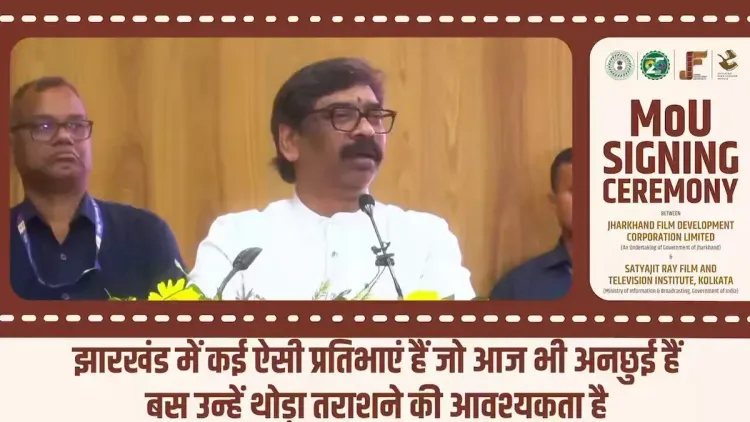
The Chief Minister's Office of Jharkhand on Wednesday, 22 July 2026, shared a statement by Chief Minister Hemant Soren underscoring his belief that a significant portion of the state's human talent remains undiscovered and unrealised.
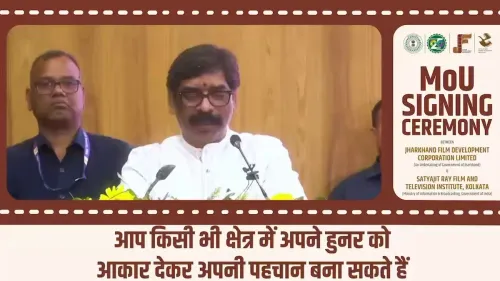
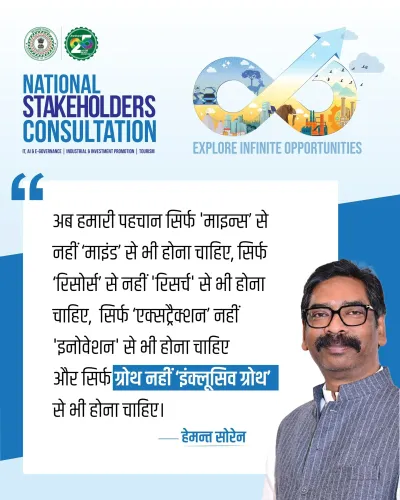
Quoting the Chief Minister directly, the post read: 'Jharkhand mein kai aisi pratibhayen hain jo mujhe lagta hai ki aaj bhi anchhui hain' — 'There are many talents in Jharkhand that I believe remain untouched even today.' The remark signals a continuing preoccupation of the Soren-led government with unlocking the state's latent human capital.
Context
Hemant Soren, who leads the Jharkhand Mukti Morcha (JMM), returned to the Chief Minister's post after previously serving in the role from 2019 to 2024. His administration has consistently framed Jharkhand's development challenge as one that goes beyond its well-documented mineral wealth to include the potential of its people — particularly youth and tribal communities.
The state, carved out of Bihar in 2000, is home to a large Scheduled Tribe population and has historically grappled with out-migration, underemployment, and limited access to quality education and vocational training. Soren's remark touches directly on these structural concerns.
Policy Backdrop
Successive governments in Jharkhand have launched initiatives aimed at talent identification and skill development across sectors including sports, arts, and entrepreneurship. These efforts have been positioned as a counterweight to the state's dependence on its extractive economy — dominated by coal, iron ore, and other minerals.
The current administration has previously emphasised schemes targeting tribal youth in particular, seeking to bridge gaps in formal employment and create pathways for those in remote areas. The Chief Minister's latest statement suggests this agenda remains a live priority for the government.
Stakeholders and Impact
Local youth and tribal communities stand as the primary stakeholders in any policy response that flows from this stated concern. For a state where out-migration to cities like Delhi, Mumbai, and Kolkata remains a persistent social challenge, talent-retention programmes carry both economic and cultural significance.
Civil society organisations working in Jharkhand's interior districts — particularly in areas like Santhal Pargana and the Kolhan region — have long argued that grassroots scouting and mentorship infrastructure is needed to complement top-down scheme delivery. Soren's framing aligns with that view.
What's Next
Observers will watch the state budget and upcoming assembly sessions for concrete allocations towards talent-scouting, training, and scholarship programmes. The Chief Minister's remark, while aspirational in tone, may presage a policy announcement or scheme expansion aimed at formalising the government's talent-identification mandate.
Whether the statement translates into measurable programme commitments will determine how it is received by youth groups and tribal advocacy bodies who have long called for sustained investment in human development alongside infrastructure spending.
Point of View
Soren is implicitly critiquing the developmental model inherited from Jharkhand's earlier administrations, which prioritised extraction over education and skilling. The statement also carries electoral resonance: tribal youth unemployment and out-migration are live grievances that the opposition can exploit, and pre-emptively claiming this ground is tactically sound. The real test will be whether budget allocations and scheme design follow the rhetoric.
NationPress
21 Oct 2026
Frequently Asked Questions
What did Jharkhand CM Hemant Soren say about talent in the state?
CM Hemant Soren said that many talents in Jharkhand remain untouched even today, highlighting the state's unrealised human potential, particularly among youth and tribal communities.
Who is Hemant Soren and which party does he belong to?
Hemant Soren is the Chief Minister of Jharkhand and the leader of the Jharkhand Mukti Morcha (JMM). He previously served as CM from 2019 to 2024 before returning to office.
What is the Jharkhand government doing for tribal youth development?
The Jharkhand government has launched various skill development and talent-identification initiatives targeting tribal youth across sectors including sports, arts, and entrepreneurship, though specific new announcements linked to this statement are yet to be confirmed.
Why is talent development important for Jharkhand?
Jharkhand faces persistent out-migration and underemployment despite being rich in mineral resources. Developing local human capital is seen as critical to reducing dependence on the extractive economy and retaining youth in the state.
What schemes does Jharkhand have for youth skill development?
Successive Jharkhand governments have periodically introduced skill-development and talent-scouting programmes, with the current Soren administration expected to outline further allocations in upcoming state budget and assembly sessions.