CM Hemant Soren Signs MoU to Unearth Jharkhand's Hidden Artists
Synopsis
Chief Minister Hemant Soren has announced an MoU to discover and train Jharkhand's hidden tribal artists, citing scholar Dr. Ramdayal Munda's philosophy that artistic expression is central to adivasi survival and identity.
Key Takeaways
The Chief Minister's Office of Jharkhand announced an MoU on 22 July 2026 to identify and nurture hidden artistic talent across the state.
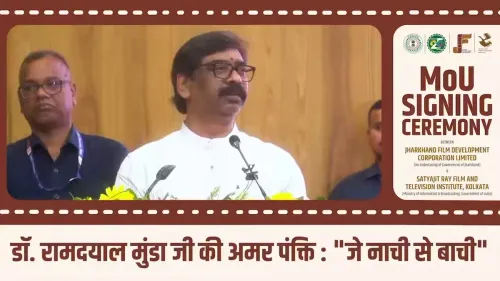
CM Hemant Soren quoted tribal scholar Dr.
Ramdayal Munda's phrase 'Je nachi se bachi' ('those who dance, survive') to frame the initiative.
The MoU aims to seek out artists who have been unable to emerge due to structural and economic barriers.
Primary beneficiaries are expected to be tribal artists, folk performers and rural youth in Jharkhand.
Operational details — partner organisations and pilot districts — have not yet been publicly disclosed.
The initiative builds on Jharkhand's founding mandate since 2000 to protect tribal cultural expressions.
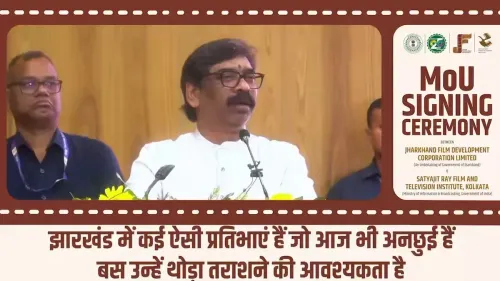
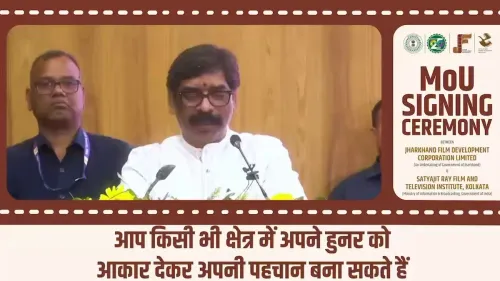
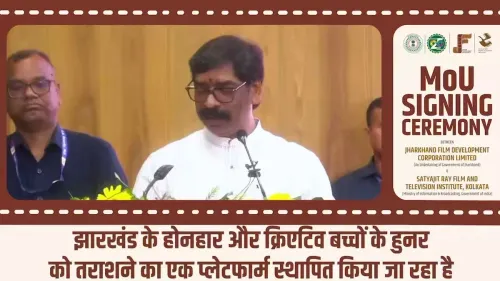
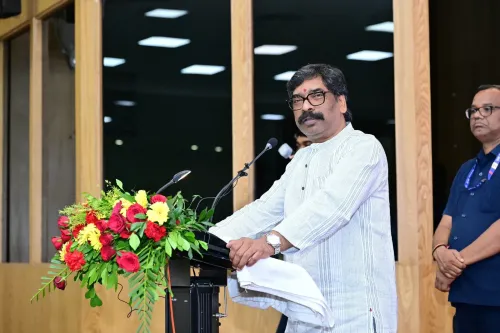
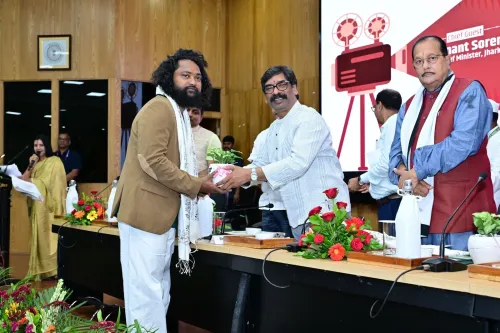
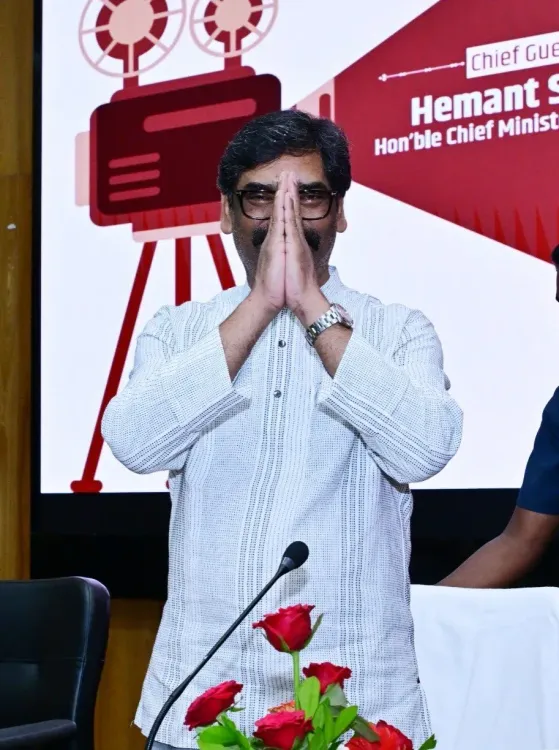
The Chief Minister's Office of Jharkhand shared remarks by Chief Minister Hemant Soren on Wednesday, 22 July 2026, announcing that a memorandum of understanding has been signed to identify and nurture hidden artistic talent across the state, drawing on the cultural legacy of tribal Jharkhand.
Context
Invoking the celebrated tribal scholar Dr. Ramdayal Munda, CM Soren quoted a line that has become a touchstone of Jharkhand's cultural identity: 'Je nachi se bachi' — roughly, 'those who dance, survive.' The phrase, attributed to the late linguist and Jharkhand movement leader, encapsulates the belief that artistic expression is inseparable from the survival and dignity of the region's people.
Soren noted that while every person in Jharkhand carries an artist within, structural and economic barriers have long prevented that talent from surfacing. The MoU, he said, is designed specifically to 'seek out and polish those artists.'
Policy Backdrop
Jharkhand was carved out of Bihar in 2000 with the explicit goal of protecting the tribal communities' cultural expressions — dance, music, folk arts — that had long been marginalised. That founding promise has shaped successive governments' approach to cultural policy.
The Soren-led administration has consistently framed tribal welfare and cultural identity as interlinked priorities. State governments in Jharkhand have previously used institutional partnerships to identify performing-arts talent and integrate it with livelihood schemes, reflecting a broader pattern of using public-private MoUs to safeguard intangible heritage.
Stakeholders and Impact
The primary beneficiaries are expected to be tribal artists, folk performers and rural youth in Jharkhand who have had limited access to formal training or platforms. For adivasi communities, traditional performing arts carry both cultural significance and potential as a livelihood source.
Dr. Ramdayal Munda, whose words anchor the announcement, served as Vice-Chancellor of Ranchi University and devoted his life to preserving tribal languages, dance and cultural practices. Invoking his legacy lends the initiative a symbolic weight that connects it to the broader Jharkhand movement.
What's Next
The operational details of the MoU — including partner organisations, pilot districts and timelines — are yet to be publicly disclosed. Observers will watch whether the initiative integrates with existing state schemes for artists' welfare or the state's tourism promotion agenda.
If implemented effectively, the programme could set a replicable model for other states with large adivasi populations seeking to convert cultural heritage into sustainable livelihoods for their communities.
Point of View
The Soren government is making a deliberate symbolic choice — connecting a routine institutional agreement to the foundational narrative of Jharkhand's statehood. This framing is politically astute: it positions the JMM-led administration as the authentic custodian of adivasi identity ahead of any future electoral cycle. The move also reflects a wider state-level trend of packaging cultural preservation as economic empowerment, which allows governments to access both welfare and tourism budgets simultaneously. Whether the MoU delivers tangible outcomes for folk artists will depend heavily on the partner institutions chosen and the depth of district-level implementation.
NationPress
21 Oct 2026
Frequently Asked Questions
What is the MoU announced by Jharkhand CM Hemant Soren for artists?
CM Hemant Soren announced an MoU aimed at identifying and training hidden artistic talent in Jharkhand, particularly among tribal and rural communities whose folk-arts skills have gone unrecognised due to economic and social barriers.
Who was Dr. Ramdayal Munda and why is he being quoted?
Dr. Ramdayal Munda was a renowned tribal scholar, linguist and Jharkhand movement leader who served as Vice-Chancellor of Ranchi University. His phrase 'Je nachi se bachi' — 'those who dance, survive' — is a celebrated expression of the belief that cultural practice is central to adivasi identity and survival.
What does 'Je nachi se bachi' mean?
'Je nachi se bachi' is a Hindi-Nagpuri phrase attributed to Dr. Ramdayal Munda, meaning roughly 'those who dance, survive.' It conveys that artistic and cultural expression is not a luxury but a life-force for Jharkhand's tribal communities.
Who will benefit from Jharkhand's new cultural MoU?
The primary beneficiaries are expected to be tribal artists, folk performers and rural youth across Jharkhand who have lacked formal platforms or training opportunities to develop their artistic abilities.
What are the next steps after the Jharkhand artists MoU announcement?
Partner organisations, pilot districts and operational timelines are yet to be publicly announced. Observers are watching whether the programme will be linked to existing state welfare schemes for artists or to Jharkhand's tourism development agenda.