CM Mohan Yadav: Alirajpur & Dhar Changing Under PM Modi
Synopsis
On Janjatiya Gaurav Diwas 2026, MP Chief Minister Mohan Yadav credited PM Narendra Modi's leadership for changing tribal-majority districts Alirajpur and Dhar, invoking the Narmada River while highlighting welfare for the poor, women, youth, and farmers.
Key Takeaways
Janjatiya Gaurav Diwas , observed on 15 November every year, honours Bhagwan Birsa Munda and was instituted by the Government of India in 2021 .
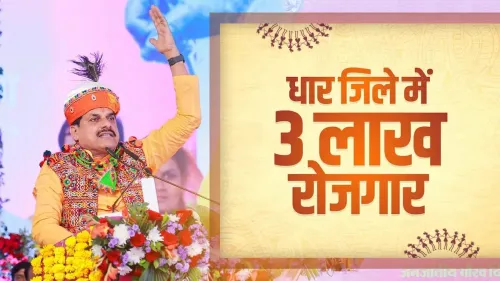
Mohan Yadav specifically named Alirajpur and Dhar — both tribal-majority districts in western Madhya Pradesh — as areas undergoing change.
The Narmada River basin underpins irrigation, drinking-water, and livelihood programmes in these districts and was invoked symbolically by the CM.
The statement frames welfare delivery around four groups: the poor, youth, women, and farmers — consistent with the national welfare messaging of PM Narendra Modi's government.
Madhya Pradesh, home to one of India's largest Scheduled Tribe populations, has been a focal state for Janjatiya Gaurav Diwas observances and related welfare programmes.
On Janjatiya Gaurav Diwas, 15 November 2026, Madhya Pradesh Chief Minister Dr. Mohan Yadav declared that the tribal-heartland districts of Alirajpur and Dhar are transforming — invoking the blessing of Maa Narmada and crediting Prime Minister Narendra Modi's leadership for steering the country toward 'happiness and prosperity.'
A Day of Tribal Pride, A Message of Change
Janjatiya Gaurav Diwas — observed every 15 November to honour the birth anniversary of freedom fighter and tribal icon Bhagwan Birsa Munda — has since its institution in 2021 become the annual moment when both the central and state governments take stock of welfare delivery to Scheduled Tribe communities. CM Yadav used the occasion to frame the government's work squarely around four constituencies: the poor, youth, women, and farmers.
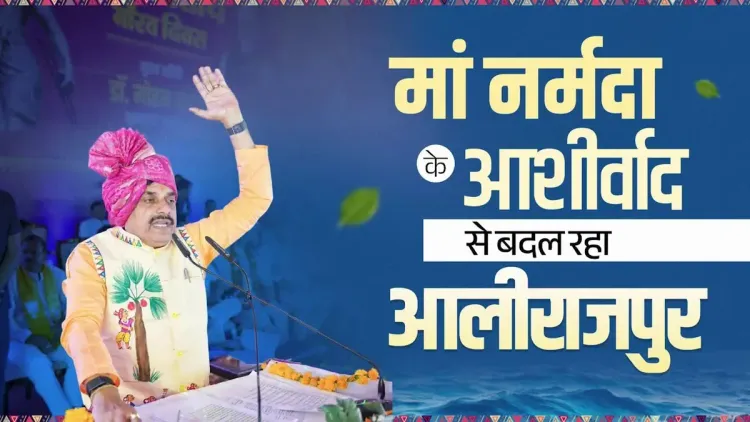
His post on X reads: 'Maa Narmada ke aashirwaad se ab Alirajpur aur Dhar ka kshetra bhi badal raha hai' — 'With the blessings of Mother Narmada, the region of Alirajpur and Dhar is now also changing.' The phrasing is deliberate: the river, sacred across Madhya Pradesh, doubles as a symbol of the irrigation and drinking-water infrastructure that successive government schemes have channelled through the Narmada basin into some of the state's most underserved districts.
Why Alirajpur and Dhar Matter
Alirajpur and Dhar sit in western Madhya Pradesh, both carrying large Scheduled Tribe populations and both falling within or adjacent to the Narmada river valley. These districts have historically ranked among the state's most economically lagging, making them focal points for tribal welfare programming. Central and state governments have included them in successive phases of irrigation, livelihood, and drinking-water initiatives tied to the Narmada.
Invoking Narmada on a day dedicated to tribal pride signals that the government is linking visible, river-linked infrastructure — something communities in these districts experience daily — to the broader political narrative of welfare delivery under PM Modi.
The Janjatiya Gaurav Diwas Framework
The Government of India instituted Janjatiya Gaurav Diwas in 2021 to give formal national recognition to tribal cultural heritage and to anchor announcements on tribal-welfare schemes. Madhya Pradesh, with one of the country's largest Scheduled Tribe populations, has been a consistent focal state for these observances. CM Yadav's statement on Sunday fits a now-established pattern: use the occasion to signal progress, name specific geographies, and reinforce the Centre-state partnership in welfare delivery.
The day also serves as a political marker. Naming Alirajpur and Dhar — not just the state at large — sharpens the message for tribal voters in these constituencies, anchoring an aspirational national narrative in local, recognisable ground.
Whether district-level data backs the claim of transformation in Alirajpur and Dhar will be the next measure of accountability — and the next Janjatiya Gaurav Diwas will be watching.
Point of View
A technique that resonates deeply in MP's river-valley belt. The Janjatiya Gaurav Diwas platform, now a five-year-old institution, is maturing into a structured political-communication event where tribal welfare and electoral messaging are increasingly inseparable. Accountability will ultimately hinge on whether district-level data for Alirajpur and Dhar validates the transformation the CM has proclaimed.
NationPress
15 Nov 2026
Frequently Asked Questions
What is Janjatiya Gaurav Diwas and why is it celebrated on 15 November?
Janjatiya Gaurav Diwas is an annual national observance on 15 November , the birth anniversary of tribal freedom fighter Bhagwan Birsa Munda . It was instituted by the Government of India in 2021 to honour tribal cultural heritage and accelerate welfare measures for Scheduled Tribe communities.
Why did CM Mohan Yadav mention Alirajpur and Dhar specifically?
Alirajpur and Dhar are tribal-majority districts in western Madhya Pradesh with historically high poverty levels. By naming them, CM Yadav signalled targeted government focus on some of the state's most underserved tribal geographies, situated within or near the Narmada river valley.
What is the significance of the Narmada River for tribal welfare in Madhya Pradesh?
The Narmada River basin supports irrigation, drinking-water, and livelihood programmes across Madhya Pradesh. For tribal districts like Alirajpur and Dhar , Narmada-linked infrastructure has been a key channel for successive state and central welfare schemes.
Who is Mohan Yadav and what is his role in Madhya Pradesh?
Dr. Mohan Yadav is the Chief Minister of Madhya Pradesh . He made these remarks on Janjatiya Gaurav Diwas, 15 November 2026 , crediting PM Narendra Modi's leadership for the state's development trajectory.
What welfare groups did CM Mohan Yadav highlight in his statement?
CM Yadav highlighted four groups: the poor, youth, women, and farmers , consistent with the central government's stated welfare priorities under Prime Minister Narendra Modi .