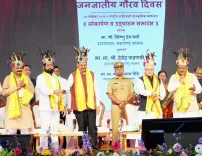
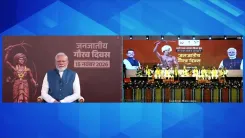
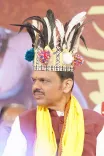
CM Fadnavis Marks Janjatiya Gaurav Diwas in Gadchiroli
Synopsis
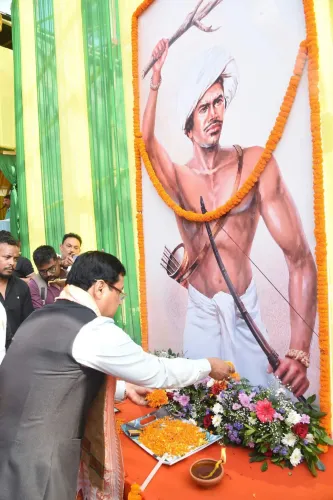
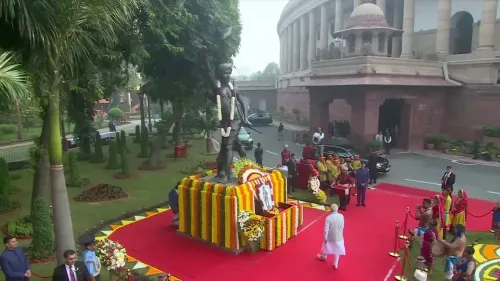
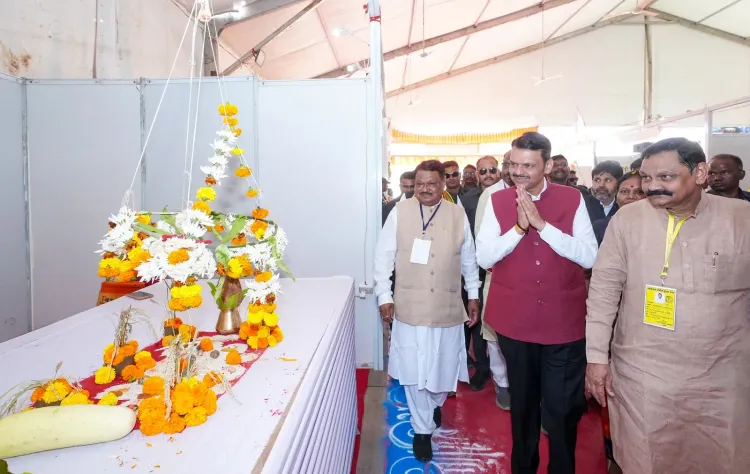
Maharashtra's Chief Minister Devendra Fadnavis and the CMO observed Janjatiya Gaurav Diwas on 15 November 2026, spotlighting Gadchiroli and its Adivasi communities on the birth anniversary of tribal icon Birsa Munda.
Key Takeaways
Janjatiya Gaurav Diwas falls on 15 November every year, marking the birth anniversary of tribal leader Birsa Munda .
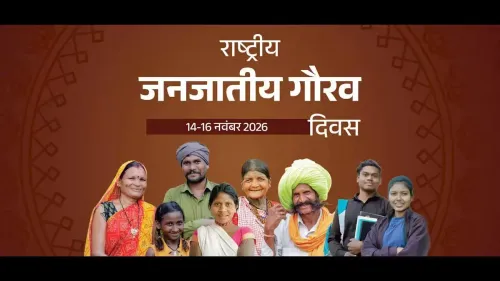
The national observance was instituted by the Government of India in 2021 to honour tribal freedom fighters and Adivasi heritage.
Gadchiroli , Maharashtra's easternmost district, has one of the state's highest concentrations of Scheduled Tribe population, including Gond, Madia, and Kolam communities.
CM Devendra Fadnavis and the Chief Minister's Office of Maharashtra used the occasion to spotlight the district under the #DiscoverGadchiroli campaign.
Maharashtra has consistently used this day to push tribal welfare, forest-rights implementation, and eco-tourism potential in Scheduled Areas.
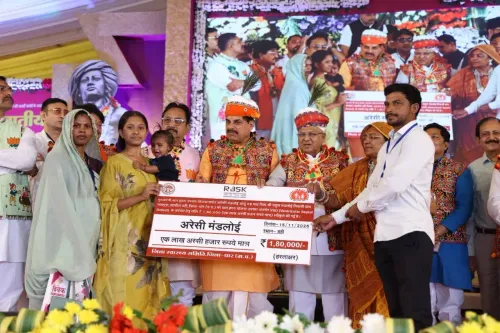
On the birth anniversary of tribal icon Birsa Munda, Maharashtra Chief Minister Devendra Fadnavis and the Chief Minister's Office of Maharashtra turned the spotlight on Gadchiroli — the state's easternmost district and home to some of its largest Adivasi communities — to observe Janjatiya Gaurav Diwas on Sunday, 15 November 2026.
A day rooted in Birsa Munda's legacy
The Government of India instituted Janjatiya Gaurav Diwas in 2021, designating 15 November — Birsa Munda's birth anniversary — as a national occasion to honour tribal freedom fighters and celebrate Adivasi heritage. Munda, the 19th-century leader from the Chota Nagpur Plateau, led the 'Ulgulan' (Great Tumult) uprising against British land-grab policies and remains a unifying symbol for tribal communities across the country. The day is now observed annually by state governments through local events, cultural programmes, and policy announcements in Scheduled Tribal Areas.
Why Gadchiroli carries special weight
Gadchiroli is no ordinary backdrop for the occasion. The district, which borders Chhattisgarh and Telangana, holds one of Maharashtra's highest concentrations of Scheduled Tribe population, with Gond, Madia, Halba, and Kolam communities among the most prominent groups. For decades, the district's dense forest cover and remote terrain defined it largely through the lens of left-wing extremism. That narrative has gradually shifted — policing gains, infrastructure investment, and broader tribal welfare programmes have brought Gadchiroli increasing attention as a region with untapped cultural and eco-tourism potential.
Maharashtra's pattern of spotlighting Adivasi districts
The state government has made a consistent practice of using Janjatiya Gaurav Diwas to draw national attention to districts like Gadchiroli, framing tribal welfare and forest-rights implementation alongside development. CM Fadnavis, who leads a BJP-led administration in Maharashtra, has positioned outreach to tribal constituencies as a priority, with Gadchiroli often cited in discussions around road connectivity, healthcare access in forested areas, and livelihood programmes for Adivasi communities. The #DiscoverGadchiroli tag attached to the post points toward a continued push to reframe the district's identity — from conflict zone to cultural destination.
Point of View
The Fadnavis government signals a deliberate identity-shift strategy for a district long defined by its conflict history — reframing it as a site of cultural pride and development potential. The #DiscoverGadchiroli tag is part of a broader BJP effort to consolidate tribal constituencies ahead of ongoing political cycles, connecting central government symbolism (the Birsa Munda-linked holiday) with state-level messaging. For Maharashtra, Gadchiroli also represents a governance test: delivering on tribal welfare in India's most remote forested districts is both a political promise and a development challenge. How the state translates ceremonial visibility into tangible outcomes — road access, healthcare, forest-rights titles — will determine whether the spotlight on Gadchiroli endures beyond the annual calendar.
NationPress
15 Nov 2026
Frequently Asked Questions
What is Janjatiya Gaurav Diwas and why is it celebrated on 15 November?
Janjatiya Gaurav Diwas is a national observance instituted by the Government of India in 2021 to honour tribal freedom fighters and celebrate Adivasi heritage. It is held on 15 November every year because that is the birth anniversary of tribal icon Birsa Munda , who led a landmark uprising against British land-grab policies in the late 19th century.
Why did Maharashtra observe Janjatiya Gaurav Diwas in Gadchiroli?
Gadchiroli has one of Maharashtra's highest concentrations of Scheduled Tribe population , making it a symbolically fitting location for the observance. The state government has consistently used the occasion to spotlight districts with large Adivasi communities and to highlight welfare and development initiatives in Scheduled Areas.
What is the #DiscoverGadchiroli campaign?
The #DiscoverGadchiroli hashtag reflects a push by the Maharashtra government to reframe Gadchiroli's public image — from a region historically associated with left-wing extremism to a destination with rich Adivasi culture, dense forests, and eco-tourism potential.
What tribal communities live in Gadchiroli, Maharashtra?
Gadchiroli district is home to several Scheduled Tribe communities, most prominently the Gond, Madia, Halba, and Kolam groups, who form a significant share of the district's population and maintain distinct cultural traditions in its forested landscape.