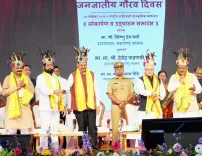
Maharashtra CMO highlights tribal welfare push on Janjatiya Gaurav Diwas

Synopsis
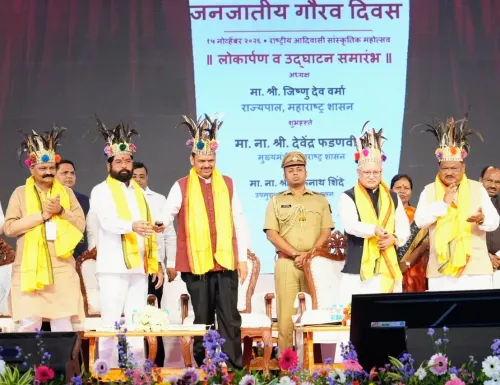
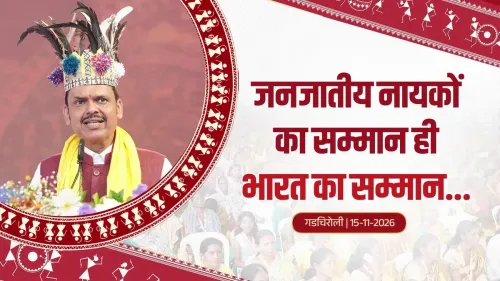
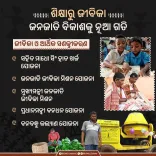
On Janjatiya Gaurav Diwas, 15 November 2026, Maharashtra's Chief Minister's Office highlighted the Tribal Development Department's work on inclusive development, cultural respect, and economic empowerment for Adivasi communities, with a special focus on Gadchiroli.
Key Takeaways
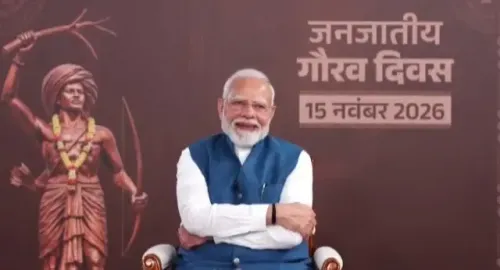
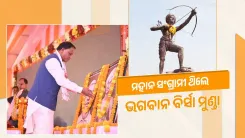
Janjatiya Gaurav Diwas falls on 15 November , the birth anniversary of tribal freedom fighter Birsa Munda , and was institutionalised as a national observance in 2021 .
Maharashtra's Tribal Development Department is the nodal agency implementing welfare schemes for Adivasi families, students, youth, and women across the state.
The CMO's post frames the state's tribal agenda around three pillars: inclusive development, cultural dignity, and economic empowerment.
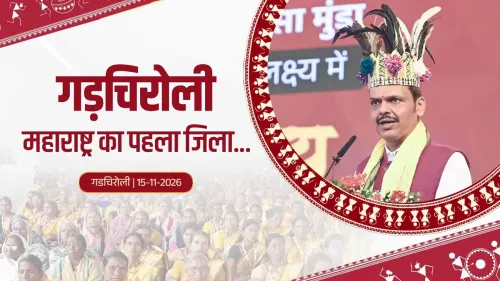
Gadchiroli — one of Maharashtra's most Adivasi-concentrated and historically underserved districts — was directly highlighted in the post.
The post tagged both Prime Minister Narendra Modi and Chief Minister Devendra Fadnavis , signalling Centre-state coordination on tribal welfare.
Detailed scheme and programme information was promised by the CMO as part of the day's communication drive.
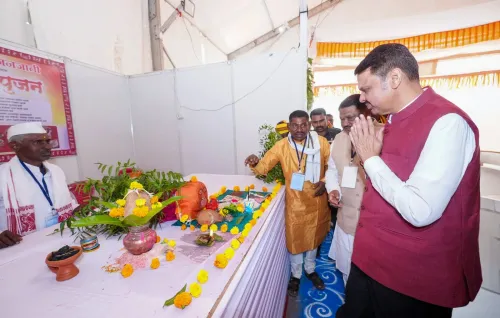
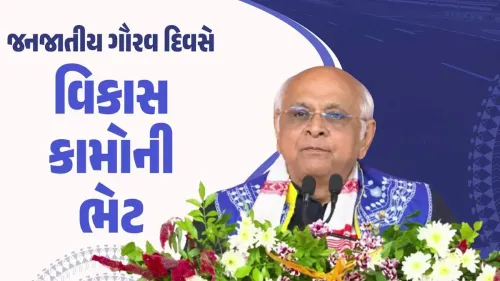
On Janjatiya Gaurav Diwas, 15 November 2026, the Chief Minister's Office of Maharashtra announced that a new dawn is breaking for the state's tribal communities — driven by a three-pronged agenda of inclusive development, cultural dignity, and economic empowerment. The post, tagged to Prime Minister Narendra Modi and Chief Minister Devendra Fadnavis, spotlighted the work of Maharashtra's Tribal Development Department in lifting the lives of Adivasi families, students, youth, and women across the state.
What Janjatiya Gaurav Diwas means for Maharashtra's tribal belt
Janjatiya Gaurav Diwas is observed every year on 15 November — the birth anniversary of tribal freedom fighter Birsa Munda — as a national salute to India's tribal heritage and the sacrifices of indigenous leaders. The Government of India institutionalised the observance in 2021 to embed cultural recognition at the heart of tribal policy. For Maharashtra, with its substantial Adivasi population concentrated in districts such as Gadchiroli, the day has become a focal point for reviewing and renewing welfare commitments.
The CMO's post invoked a 'trisutri' — सर्वसमावेशक विकास, सांस्कृतिक सन्मान आणि आर्थिक सक्षमीकरण ('inclusive development, cultural respect, and economic empowerment') — as the guiding philosophy of ongoing state programmes. The framing signals that Maharashtra is aligning its own tribal agenda with the broader national narrative championed by the Centre.
Gadchiroli and the Tribal Development Department's reach
Gadchiroli district — hashtaged directly in the post — has long been among Maharashtra's most underserved regions, home to a dense Adivasi population and historically challenged by poor infrastructure and insurgency. It has also been a persistent testing ground for tribal welfare delivery by the Tribal Development Department, the nodal state agency responsible for rolling out education, livelihood, and health schemes in Scheduled Areas.
The CMO's post promises 'detailed information' on the various schemes and initiatives being implemented through the department — a signal that the government intends to publicly communicate programme performance, even if specific scheme data had not been released at the time of posting.
Why the timing carries political weight
Maharashtra has repeatedly invested political capital in tribal welfare, and the choice to elevate this messaging on Janjatiya Gaurav Diwas — with direct tags to both the Prime Minister and the Chief Minister — underscores the Centre-state coordination at play. Devendra Fadnavis, who oversees state-level development programmes, and Narendra Modi, whose government institutionalised the observance, together frame this as a shared mission rather than a purely state-level initiative.
Tribal communities represent a significant electoral and social constituency across Maharashtra's eastern and northern districts. Schemes targeting Adivasi women, students, and youth directly address some of the state's sharpest human development gaps — and their visibility on a day of national tribal pride amplifies both their policy and symbolic reach.
The question now is whether the promised scheme details will follow with measurable outcomes — because in tribal welfare, intent is only as good as the delivery numbers that back it up.
Point of View
Aligning Maharashtra's state machinery with the Centre's tribal-pride narrative introduced in 2021. By invoking a 'trisutri' framework and tagging both PM Modi and CM Fadnavis, the state signals coordinated federal ambition on tribal welfare ahead of any potential scheme announcements. The spotlight on Gadchiroli is telling: it is both a development priority and a symbolic choice, representing Maharashtra's most visible Adivasi frontier. Whether this translates into measurable delivery — school enrolment rates, livelihood creation, women's self-help group formation — will determine if the rhetoric earns its credibility.
NationPress
15 Nov 2026
Frequently Asked Questions
What is Janjatiya Gaurav Diwas and why is it celebrated on 15 November?
Janjatiya Gaurav Diwas is observed on 15 November every year to honour India's tribal heritage and freedom fighters, particularly Birsa Munda , who was born on this date. The Government of India formally instituted the observance in 2021 .
What is Maharashtra's Tribal Development Department?
The Tribal Development Department is the Maharashtra government agency responsible for designing and implementing welfare schemes — covering education, livelihoods, health, and cultural programmes — for Adivasi communities in Scheduled Areas of the state.
Why is Gadchiroli significant for tribal welfare in Maharashtra?
Gadchiroli is one of Maharashtra's largest and most Adivasi-populated districts, historically facing poor infrastructure and development challenges. It has been a central focus of the state's tribal welfare delivery efforts.
What did Maharashtra's CMO announce on Janjatiya Gaurav Diwas 2026?
The Chief Minister's Office of Maharashtra posted on 15 November 2026 highlighting tribal welfare programmes run by the Tribal Development Department, framing the state's approach around inclusive development, cultural respect, and economic empowerment for Adivasi communities.
How is PM Modi connected to Maharashtra's tribal welfare initiatives?
Prime Minister Narendra Modi 's government instituted Janjatiya Gaurav Diwas in 2021 as a national marker of tribal pride. Maharashtra's CMO tagged him in the post to underscore the alignment between state schemes and the Centre's broader tribal recognition agenda.