Odisha CMO: Tribal welfare getting new momentum
Synopsis
The Chief Minister's Office of Odisha says the holistic development of tribal communities is gaining new momentum, with state initiatives targeting village infrastructure, quality education, healthcare, and livelihood creation across Odisha's vast tribal belt.
Key Takeaways
The Chief Minister's Office of Odisha announced on 15 November 2026 that tribal development efforts are gaining new momentum.
The drive covers four areas: village infrastructure , quality education , healthcare , and livelihood creation .
Odisha has one of India's largest tribal populations, concentrated in Mayurbhanj , Koraput , and Sundargarh districts.
The state's Odisha Tribal Empowerment and Livelihoods Programme (OTELP) has been active since the mid-2000s.
State schemes are layered on top of central programmes like the Forest Rights Act and Vanbandhu Kalyan Yojana .
No specific scheme names, budget figures, or district-level data were cited in the post.
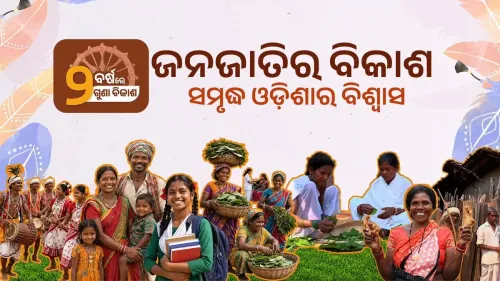
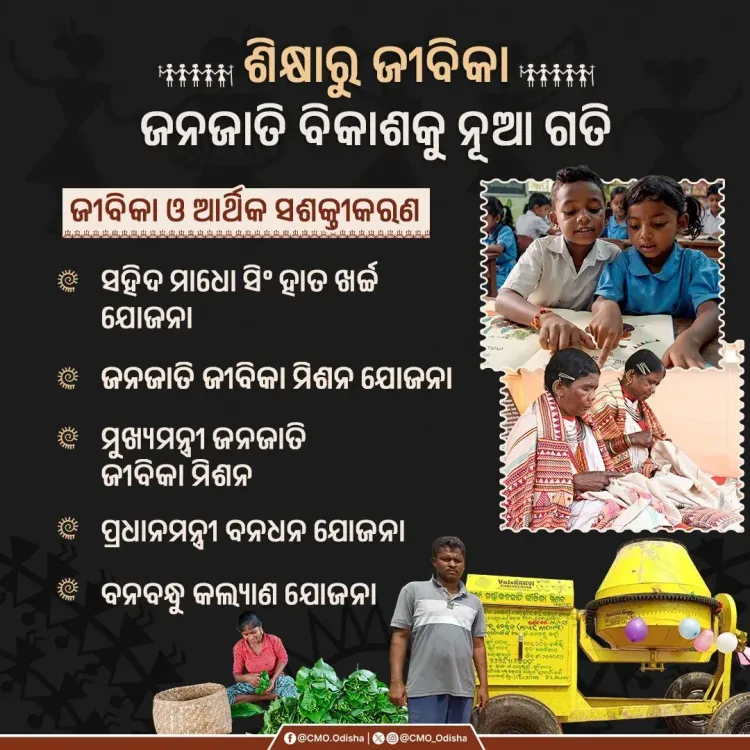
Odisha's tribal communities — spread across districts such as Mayurbhanj, Koraput, and Sundargarh — are at the centre of a renewed push for holistic development, as the Chief Minister's Office of Odisha declared on Sunday, 15 November 2026 that efforts spanning infrastructure, education, healthcare, and livelihoods are gaining fresh momentum.
The post, shared in both Odia and English, states that 'ଜନଜାତି ସମାଜର ସାମଗ୍ରିକ ବିକାଶକୁ ମିଳୁଛି ନୂଆ ଗତି' — 'the holistic development of tribal communities is gaining momentum' — through targeted steps on village infrastructure, quality education, health protection, and livelihood creation. No specific scheme names or budget figures were cited in the post.
Odisha's long tribal welfare arc
Odisha is home to one of the largest tribal populations in India, and successive state administrations have layered programmes on top of constitutional guarantees under the Fifth Schedule of the Constitution, which applies to Scheduled Areas across the state's tribal belt. The state has operated the Odisha Tribal Empowerment and Livelihoods Programme (OTELP) since the mid-2000s, targeting income generation and community resilience in remote tribal regions.
These state-level efforts sit alongside central government programmes such as the Forest Rights Act and the Vanbandhu Kalyan Yojana, designed to close persistent gaps in access to land rights, education, and basic services. The gap between intent and outcome in tribal districts has historically been the central challenge — the new signal from the CMO frames the present moment as one of accelerating delivery.
Four pillars driving the push
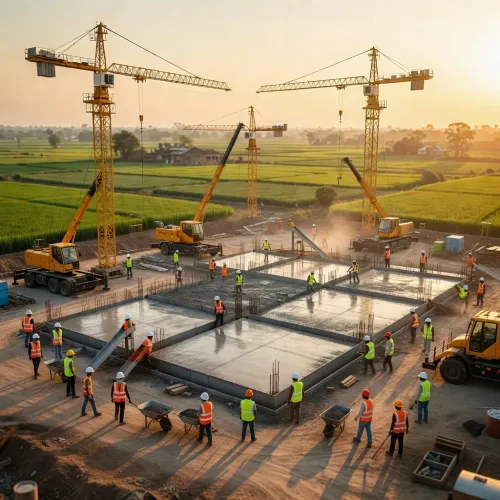
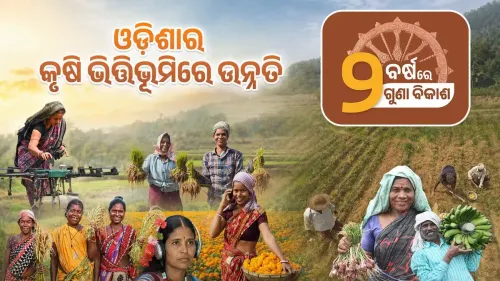
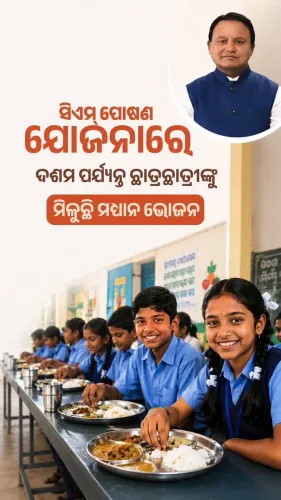
The CMO's framing rests on four interlocking priorities: strengthening village infrastructure, improving quality education, expanding healthcare access, and generating livelihood opportunities. Each addresses a structural deficit that tribal advocacy groups and government audits have flagged for years — poor roads isolating villages, low retention in schools, distant health facilities, and dependence on subsistence farming with no income buffer.
What the post signals is a consolidation of these priorities under a single development narrative — one the state government is clearly keen to amplify. The specific schemes, district rollouts, and budget allocations behind this narrative will be the real measure of its reach.
Odisha's tribal belt has long been where India's development promises are tested hardest. Whether this renewed momentum translates into measurable outcomes on the ground — in classrooms, clinics, and livelihoods — will be the story worth watching in the months ahead.
Point of View
And the CMO's broad framing — covering infrastructure, education, health, and livelihoods simultaneously — echoes a 'convergence' approach that development planners have long advocated. The timing, in mid-November, coincides with budget planning cycles, suggesting the state may be building a political and administrative case for higher tribal sub-plan allocations. Without named schemes or measurable targets attached, however, the announcement remains a signal of intent rather than a deliverable — and in a state where tribal communities have heard similar promises before, specifics will matter more than momentum.
NationPress
15 Nov 2026
Frequently Asked Questions
What is Odisha doing for tribal development in 2026?
The Odisha government says it is accelerating holistic tribal development through initiatives on village infrastructure, quality education, healthcare, and livelihood creation, as announced by the Chief Minister's Office on 15 November 2026.
Which districts in Odisha have the largest tribal populations?
Odisha's tribal populations are concentrated in districts such as Mayurbhanj, Koraput, and Sundargarh, all of which fall under Scheduled Areas governed by the Fifth Schedule of the Constitution.
What is the Odisha Tribal Empowerment and Livelihoods Programme (OTELP)?
OTELP is a state-run programme launched in the mid-2000s to improve incomes and community resilience in tribal areas of Odisha, targeting livelihood generation and sustainable development in remote regions.
What central government schemes support tribal welfare in Odisha?
Central schemes like the Forest Rights Act and the Vanbandhu Kalyan Yojana operate alongside Odisha's state programmes to address land rights, education, and basic service gaps in tribal districts.
What are Fifth Schedule areas in Odisha?
Fifth Schedule areas are constitutionally designated Scheduled Areas in states like Odisha where special protections and governance provisions apply to tribal communities, with the state government responsible for implementing welfare programmes in these regions.