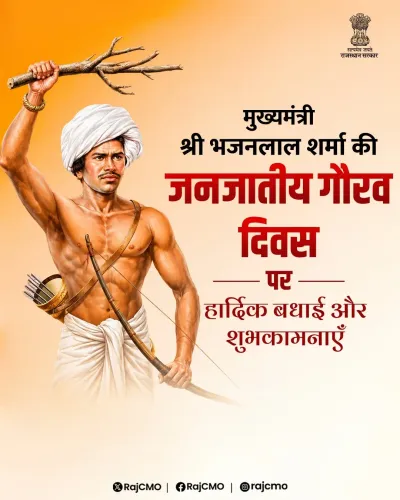
CM Bhajanlal Sharma Marks Janjatiya Gaurav Divas With Tribal Dialogue
Synopsis
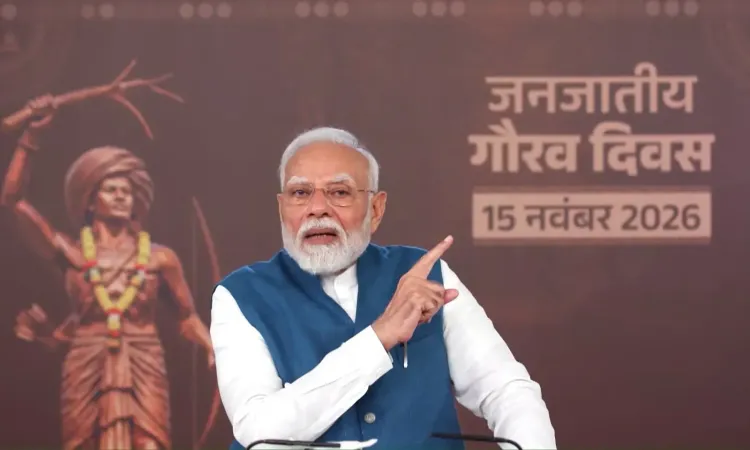
Rajasthan CM Bhajanlal Sharma observed Janjatiya Gaurav Divas on 15 November 2026, attending PM Modi's national address before engaging tribal community representatives, screening short films on tribal heritage and development, with senior ministers and legislators present.
Key Takeaways
Janjatiya Gaurav Divas is observed on 15 November every year — Bhagwan Birsa Munda's birth anniversary — and was launched nationally by PM Modi in 2021 .
CM Bhajanlal Sharma attended PM Modi's address and then held direct dialogue with tribal community representatives in Rajasthan.
Sharma cited President Droupadi Murmu — the first person from a Scheduled Tribe to hold the office — as a landmark symbol of tribal recognition.
Two short films were screened: one on tribal development journeys and another on faith centres in tribal regions.
The event was attended by Tribal Area Development Minister Babulal Kharadi , two MLAs, and Additional Chief Secretary Kunji Lal Meena .
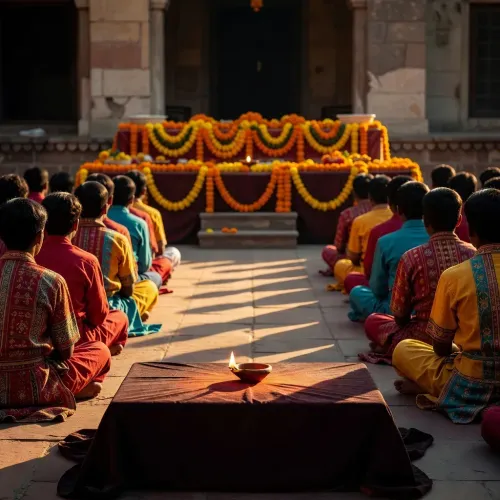
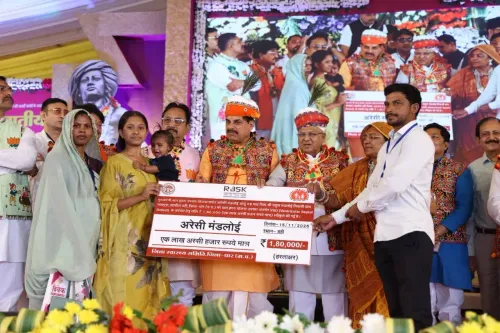
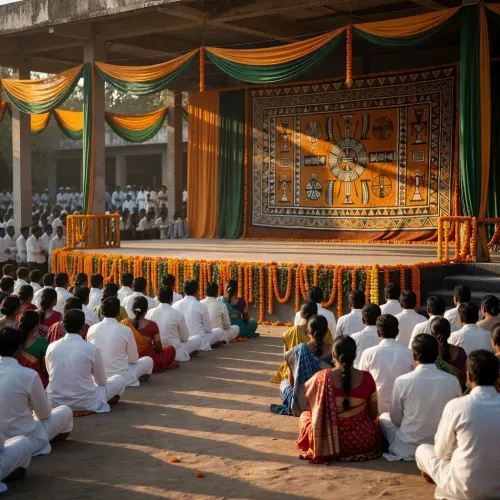
On a date that belongs to tribal India, Rajasthan Chief Minister Bhajanlal Sharma gathered with tribal community representatives on Sunday, 15 November 2026 to observe Janjatiya Gaurav Divas — the national day honouring the legacy of freedom fighter Bhagwan Birsa Munda. The Chief Minister first listened to Prime Minister Narendra Modi's national address, then held direct dialogue with tribal representatives from across the state.
From Birsa Munda's birth anniversary to a national conscience
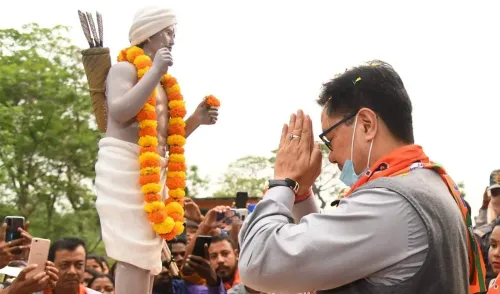
Sharma underscored how the day has grown in stature since its founding. 'Janjatiya Gaurav Divas, launched by Prime Minister Modi on Bhagwan Birsa Munda's birth anniversary in 2021, has today become an important part of national consciousness,' he said, adding that tribal heroes are now receiving the national recognition and respect their contributions have always deserved.
The reference to Droupadi Murmu — herself from a Scheduled Tribe community and India's President since 2022, the first person from a tribal background to hold the country's highest constitutional office — was central to the CM's remarks. For many in the room, Murmu's presidency represents the most visible proof that the symbolic work of Janjatiya Gaurav Divas is translating into concrete representation at the summit of power.
Short films, tribal faith centres, and 'tradition to progress'
The Jaipur event went beyond speeches. Two short films were screened: one tracing a 'Parampara se Pragati ki Ore Vikas Yatra' (a development journey from tradition to progress), and another built around faith centres in tribal regions — an attempt to weave cultural identity into the narrative of development rather than treating them as competing forces. The dual framing — heritage and growth, faith and infrastructure — reflects how state-level observances are being designed to resonate emotionally as well as politically with tribal audiences.
Who was in the room in Jaipur
The event drew a wide cross-section of officialdom and community leadership. Tribal Area Development Minister Babulal Kharadi, legislators Phool Singh Meena and Mahendrapal Meena, and Additional Chief Secretary Kunji Lal Meena were all present, alongside a large number of tribal community representatives — a lineup that signals the state government's intent to treat the occasion as substantive governance business, not mere ceremony.
Janjatiya Gaurav Divas has quietly become one of the BJP's most effective vehicles for tribal outreach. Five years in, the architecture is established: a central address from the Prime Minister, parallel state events led by chief ministers, and community dialogue that feeds both upward (data and grievances) and downward (schemes and symbolism). Rajasthan, with one of India's larger Scheduled Tribe populations concentrated in its southern belt, is a state where this architecture carries real electoral weight. The question for policymakers now is whether the commemorations are keeping pace with tangible budget allocations and scheme delivery on the ground.
Point of View
With the PM's address cascading into chief-ministerial events across the country. Rajasthan's large Scheduled Tribe electorate in its southern belt makes the state's participation strategically significant. The elevation of Droupadi Murmu as a recurring reference point in these observances reinforces the narrative of tribal representation reaching the apex of constitutional governance. The long-run test, however, is whether annual commemoration is matched by measurable improvements in tribal area infrastructure, education, and livelihoods — a gap that opposition parties and civil society groups consistently flag.
NationPress
15 Nov 2026
Frequently Asked Questions
What is Janjatiya Gaurav Divas and when is it celebrated?
Janjatiya Gaurav Divas is a national day observed on 15 November every year to honour the contributions of tribal communities and their heroes to India's history. It was launched by Prime Minister Narendra Modi in 2021 to coincide with the birth anniversary of tribal freedom fighter Bhagwan Birsa Munda .
Who is Bhagwan Birsa Munda?
Birsa Munda was a 19th-century tribal leader, folk hero, and freedom fighter who led the Ulgulan movement against British colonial rule and forest laws in the Chota Nagpur plateau. He is revered as 'Dharti Aaba' (Father of the Earth) among tribal communities across India.
Why is Droupadi Murmu significant to Janjatiya Gaurav Divas?
Droupadi Murmu , who became President of India in 2022 , is the first person from a Scheduled Tribe community to hold the country's highest constitutional office. Her presidency is frequently cited at Janjatiya Gaurav Divas events as proof of tribal representation at the apex of governance.
What happened at Rajasthan's Janjatiya Gaurav Divas 2026 event?
CM Bhajanlal Sharma attended PM Modi's national address and then held dialogue with tribal community representatives. Two short films on tribal heritage and development were screened, and senior officials including Tribal Area Development Minister Babulal Kharadi were present.
Who is Babulal Kharadi?
Babulal Kharadi is Rajasthan's Minister for Tribal Area Development and was present at the state-level Janjatiya Gaurav Divas event on 15 November 2026 alongside CM Bhajanlal Sharma.