Odisha CMO Highlights Schemes to Cut Tribal School Dropout
Synopsis
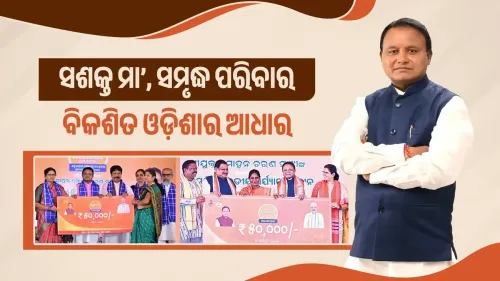
The Chief Minister's Office of Odisha on June 7, 2026 spotlighted two state schemes — the Madho Singh Hat Karch Yojana and Mukhya Mantri Poshan Yojana — designed to cut dropout rates in tribal areas by providing financial aid and extending midday meals to Classes 9 and 10 students.
Key Takeaways
The Chief Minister's Office of Odisha posted on June 7, 2026 reaffirming the state's commitment to universal education.
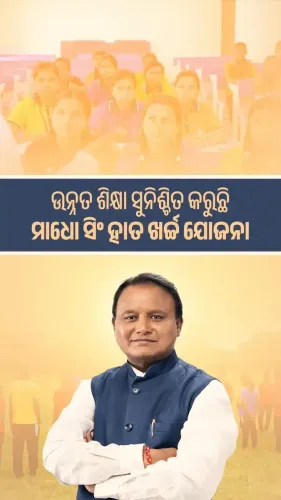
The Madho Singh Hat Karch Yojana provides financial assistance to students in tribal areas to reduce dropout rates.
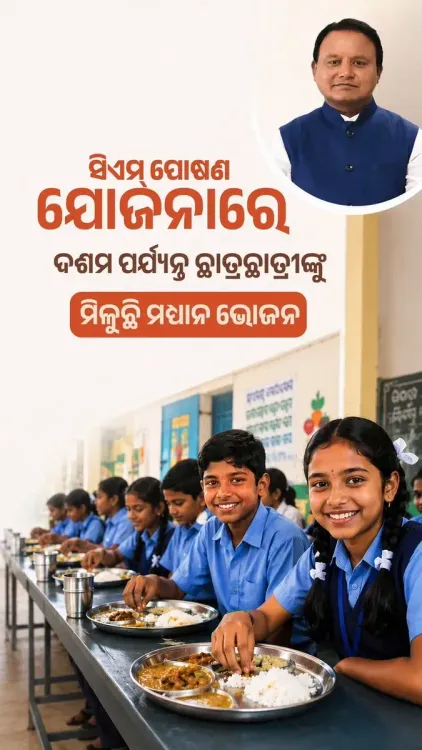
The Mukhya Mantri Poshan Yojana extends midday meals to students in Classes 9 and 10 , beyond the coverage of the national scheme.
Both schemes target the twin barriers of financial hardship and nutritional deprivation that drive early school exit.
Odisha's tribal belts have historically recorded elevated dropout rates linked to economic stress and geographic remoteness.
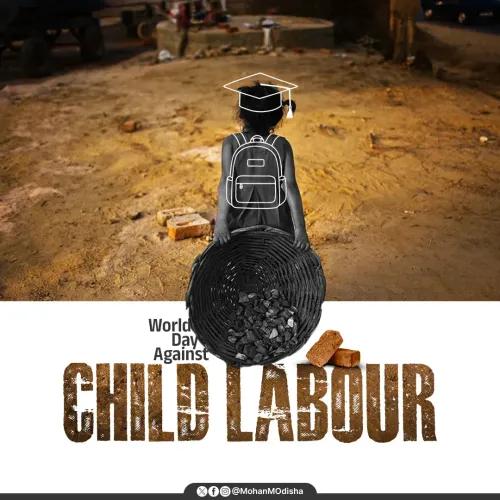
The government stated that no student should be denied education due to poverty or lack of nutrition.
The Chief Minister's Office of Odisha on Sunday, June 7, 2026, reaffirmed the state government's commitment to universal education by highlighting two flagship welfare schemes aimed at reducing school dropout rates, particularly in tribal regions.
Posting in Odia, the CMO stated: 'ପ୍ରତ୍ୟେକ ଛାତ୍ରଛାତ୍ରୀଙ୍କ ଶିକ୍ଷା ଅଧିକାରକୁ ସୁନିଶ୍ଚିତ କରିବା ଲୋକଙ୍କ ସରକାରଙ୍କ ପ୍ରାଥମିକତା' — 'Ensuring every student's right to education is the priority of the people's government.' The post underlined that no child should be denied schooling due to financial hardship or nutritional deprivation.
Context
Odisha's tribal belts have historically recorded elevated school dropout rates, driven by economic stress on families and inadequate nutrition for children. The state government has identified these twin barriers — financial and nutritional — as the primary drivers of early school exit, especially at the secondary level. The CMO's post signals a deliberate policy push to address both simultaneously.Policy Backdrop
Two schemes are at the centre of this effort. The Madho Singh Hat Karch Yojana provides direct financial assistance to students in tribal areas, functioning as a pocket-money or incidental-expense support to ease the economic burden on families that might otherwise pull children out of school. Separately, the Mukhya Mantri Poshan Yojana extends midday meal benefits to students in Classes 9 and 10 — a significant expansion beyond the national Mid-Day Meal Scheme, which India launched in 2001 and which has traditionally covered only primary and upper-primary grades. By bringing hot meals to secondary-level students, Odisha is filling a well-documented nutrition gap that often coincides with the age at which dropout rates spike. India's Right to Education Act mandates free and compulsory education up to Class 8, but secondary schooling remains outside its ambit. State-level interventions such as these are therefore critical to sustaining enrolment through Classes 9 and 10, a transition point where economic pressures on adolescent students — particularly girls and children from scheduled tribe communities — tend to peak.Stakeholders and Impact
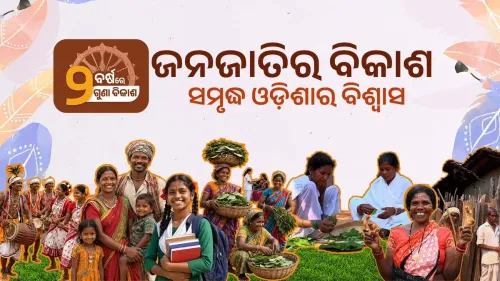
The primary beneficiaries are students from Odisha's tribal districts, where communities belonging to scheduled tribes face compounded disadvantages of poverty, geographic remoteness, and limited access to quality schooling. Class 9 and Class 10 students across the state also benefit directly from the midday meal extension under the Mukhya Mantri Poshan Yojana. Broader stakeholders include parents, local school administrations, and panchayat-level bodies responsible for scheme implementation. Indian states have progressively expanded education-linked welfare measures in tribal belts, and Odisha's dual approach — combining cash support with nutrition entitlements — mirrors this national trend toward operationalising equity goals in high-poverty districts.What's Next
Attention will now turn to official dropout statistics for tribal blocks, which would provide a measurable benchmark for assessing how effectively these schemes are working. Any forthcoming state budget announcements on scaling the Mukhya Mantri Poshan Yojana to additional classes, or expanding the geographic reach of the Madho Singh Hat Karch Yojana, will be closely watched by education-policy observers. The government's stated resolve — 'ଲୋକଙ୍କ ସରକାର ଦୃଢ଼ ସଂକଳ୍ପବଦ୍ଧ' ('the people's government is firmly resolved') — sets an expectation of continued and potentially expanded investment in keeping tribal and secondary-level students in school.Point of View
' the ruling dispensation is staking a direct electoral and moral claim to the welfare of Odisha's scheduled tribe communities. The extension of midday meals to Classes 9 and 10 is particularly significant: it represents a state-funded expansion of a central scheme's logic, signalling Odisha's willingness to invest beyond federal mandates. The broader arc here is one of competitive welfare federalism, where state governments use targeted social-sector schemes to demonstrate responsiveness to communities historically underserved by the formal education system.
NationPress
22 Oct 2026
Frequently Asked Questions
What is the Madho Singh Hat Karch Yojana in Odisha?
The Madho Singh Hat Karch Yojana is an Odisha state scheme that provides financial assistance to students in tribal areas to help reduce school dropout rates by easing the economic burden on families.
What is the Mukhya Mantri Poshan Yojana in Odisha?
The Mukhya Mantri Poshan Yojana is an Odisha government programme that extends midday meals to students in Classes 9 and 10, going beyond the coverage of the national midday meal scheme which traditionally covers primary grades.
Why is school dropout high in Odisha's tribal areas?
Dropout rates in Odisha's tribal belts are historically elevated due to economic hardship on families, nutritional deprivation among children, geographic remoteness, and limited access to quality schooling.
Does India's national midday meal scheme cover Class 9 and 10 students?
No, India's national Mid-Day Meal Scheme launched in 2001 has traditionally covered primary and upper-primary grades. Odisha's Mukhya Mantri Poshan Yojana fills this gap by extending meals to Class 9 and 10 students at the state's own initiative.
What is the Odisha government doing to ensure every child's right to education?
The Odisha government is running the Madho Singh Hat Karch Yojana to provide financial support in tribal areas and the Mukhya Mantri Poshan Yojana to provide midday meals to secondary students, aiming to ensure no child drops out due to poverty or lack of nutrition.