CM Majhi Marks 2 Years of Tribal Welfare Push in Odisha
Synopsis
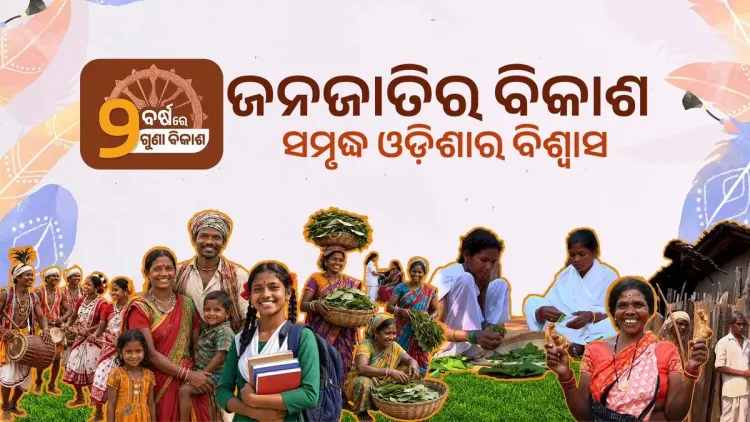
The Chief Minister's Office of Odisha marked two years of the Majhi-led BJP government on June 18, 2026, highlighting tribal welfare, cultural identity protection, and improvements in education, health, and basic infrastructure for the state's 62 notified tribal communities.
Key Takeaways
The Chief Minister's Office of Odisha posted on June 18, 2026 , marking two years of the Mohan Charan Majhi -led government's tribal welfare initiatives.
Odisha has over 22 per cent Scheduled Tribe population across 62 notified tribal communities , one of the largest such demographics in India.
The government cited education, health, and basic infrastructure as the three pillars of its tribal development approach.
Cultural identity preservation and economic advancement were highlighted alongside material development goals.
The post was tagged #2YearsofLokankaSarakar , situating the tribal welfare message within the BJP government's broader two-year anniversary communication.
Policy lineage includes the Tribal Sub-Plan , OTELP , Vanbandhu Kalyan Yojana , and the Forest Rights Act, 2006 , which form the structural backbone of Odisha's tribal welfare architecture.
The Chief Minister's Office of Odisha, on Thursday, June 18, 2026, highlighted two years of tribal welfare and empowerment initiatives undertaken under the leadership of Chief Minister Mohan Charan Majhi, stating that a 'new chapter' has been created in the state's approach to Scheduled Tribe development.
Context
Posting in Odia, the Chief Minister's Office stated that under CM Majhi's 'visionary leadership' (ଦୂରଦର୍ଶୀ ନେତୃତ୍ୱ), the past two years have seen a new chapter written in tribal welfare and empowerment in Odisha. The post underscores that the state government has accorded 'highest priority' to the holistic development of tribal communities, protection of cultural identity, and economic advancement. Education, health, and basic infrastructure are cited as the three pillars of this effort. The post was accompanied by a video and carries the hashtags #2YearsofLokankaSarakar (Two Years of the People's Government) and #BikasharaDharaOdishaSara (Stream of Development for All of Odisha), framing the messaging within a broader two-year anniversary communication from the ruling BJP government.Policy Backdrop
Odisha has one of India's largest Scheduled Tribe populations, with over 22 per cent of the state's residents belonging to 62 notified tribal communities. Constitutional obligations under Articles 46 and 275 of the Indian Constitution mandate that states take special measures for the educational and economic advancement of Scheduled Tribes and provide grants for tribal welfare schemes. The state has a long policy lineage in this domain. The Tribal Sub-Plan mechanism, in use since the 1970s, channels dedicated funds toward Scheduled Tribe areas. The Odisha Tribal Empowerment and Livelihoods Programme (OTELP), launched in 2004-05, targeted livelihood improvement across tribal districts with central assistance. The Vanbandhu Kalyan Yojana, rolled out from 2014 onwards, focused on education, health, and infrastructure in tribal blocks. The Forest Rights Act, 2006, also remains a key legislative instrument recognising individual and community rights over forest land for tribal households in the state.Stakeholders and Impact
The primary beneficiaries of the policies referenced are Adivasi households and tribal communities spread across Odisha's forested and interior districts. The CMO's statement claims that the collective effort has brought 'widespread improvement in the living standards of tribal society' and has 'further enriched the glory of Odisha.' Cultural identity preservation alongside economic uplift signals a dual-track approach that distinguishes between material development and the protection of indigenous heritage, language, and customs. The framing of the post — emphasising cooperation and inclusive progress — reflects the government's intent to present tribal welfare not as a targeted intervention but as integral to the state's overall development narrative under the BJP administration that came to power in June 2024.What's Next
The two-year milestone communication is likely a precursor to more detailed policy announcements. Observers will watch the next state budget for district-level rollout details of any new education or health schemes earmarked for tribal areas. The government's ability to demonstrate measurable improvements in school enrolment, healthcare access, and household income in tribal blocks will determine whether the broad claims made in the anniversary post translate into verifiable on-ground outcomes.Point of View
Positioning the BJP government's record on Adivasi development ahead of what could be a sustained public outreach cycle. Odisha's tribal demographic — over a fifth of the population — has historically been a decisive electoral constituency, making visible welfare claims strategically significant. The dual emphasis on cultural identity alongside economic metrics signals an attempt to broaden the BJP's appeal among communities that have traditionally been courted through both material and identity-based narratives. Whether the broad claims in the post are backed by verifiable district-level data will be the key question for accountability.
NationPress
20 Sept 2026
Frequently Asked Questions
What has the Odisha government done for tribal welfare in two years?
The Chief Minister's Office of Odisha stated on June 18, 2026, that the Majhi-led government has prioritised holistic development of tribal communities over two years, focusing on education, health, basic infrastructure, cultural identity protection, and economic advancement, though specific scheme names or quantitative metrics were not detailed in the post.
Who is the Chief Minister of Odisha in 2026?
Mohan Charan Majhi is the Chief Minister of Odisha, having assumed office in June 2024 after the BJP formed the state government following assembly elections.
How large is the tribal population in Odisha?
Odisha has over 22 per cent of its population belonging to Scheduled Tribes, spread across 62 notified tribal communities , making it one of the states with the largest Adivasi demographics in India.
What is the Vanbandhu Kalyan Yojana in Odisha?
The Vanbandhu Kalyan Yojana is a scheme rolled out in Odisha from 2014 onwards that focuses on education, health, and infrastructure development in tribal blocks across the state.
What does #2YearsofLokankaSarakar mean?
#2YearsofLokankaSarakar translates to 'Two Years of the People's Government' and is the official hashtag used by the Odisha government to mark the second anniversary of the BJP administration under Chief Minister Mohan Charan Majhi.