CM Majhi's Odisha Marks 2 Years With Women Welfare Push
Synopsis
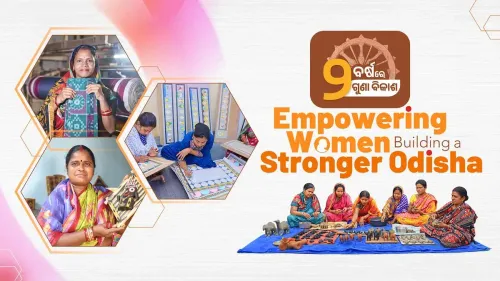
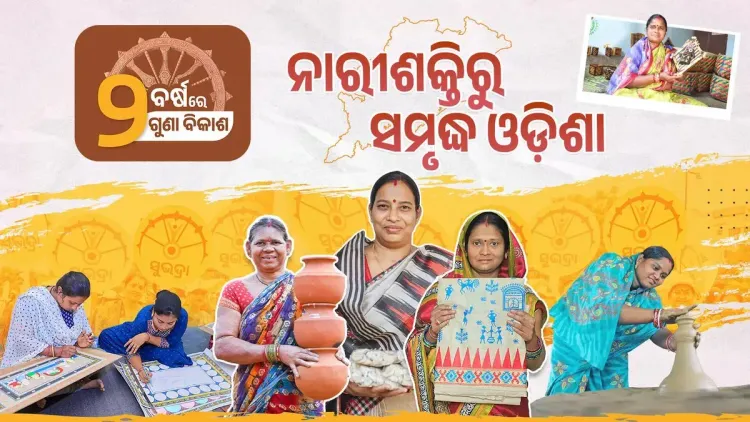
The Chief Minister's Office of Odisha marked two years of the Majhi government on June 14, 2026, spotlighting women's empowerment as the administration's top development priority — covering financial aid, entrepreneurship, transport skilling, and girl-child safety under the vision 'Empowered Women, Prosperous Odisha.'
Key Takeaways
The CMO Odisha on June 14, 2026 marked two years of the Majhi government with a focus on women's welfare achievements.
The government claims 'unprecedented success' in women's financial assistance and creation of women entrepreneurs at scale.
Transport-sector skill development for women and girl-child protection (kanya suraksha) are highlighted as new-era policy additions.
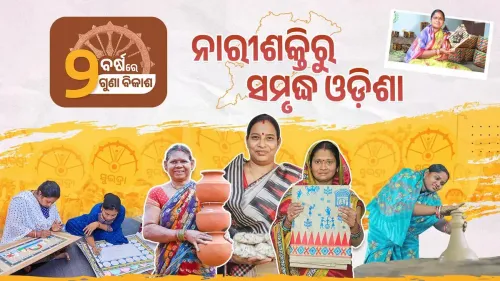
The administration's overarching slogan is 'Sashakta Nari, Samruddha Odisha' — 'Empowered Women, Prosperous Odisha.' Mission Shakti , Odisha's women's SHG programme running since 2001 , forms the policy foundation on which the current government is building.
Budget allocations and new scheme phases for 2026-27 are expected to follow this two-year review communication.
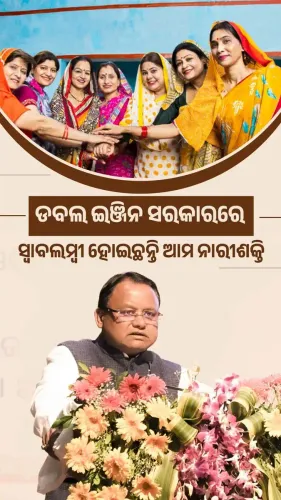
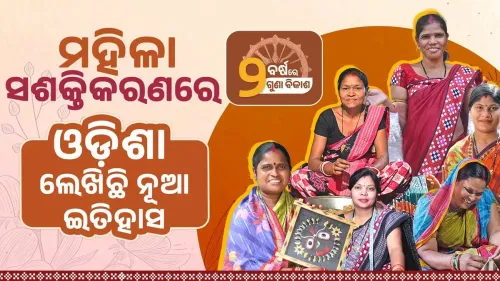
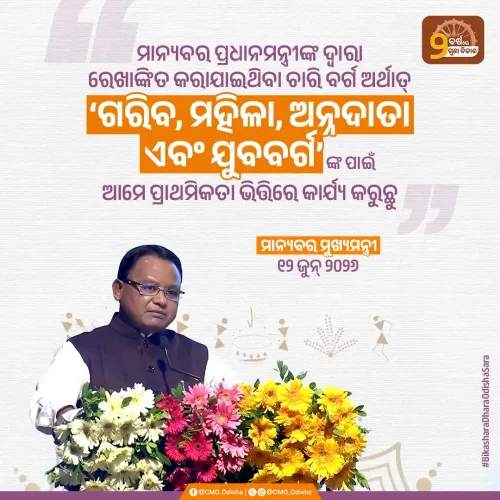
The Chief Minister's Office of Odisha on Sunday, June 14, 2026, highlighted two years of the state government under Chief Minister Mohan Charan Majhi, asserting that women's empowerment has been accorded the highest priority in Odisha's development agenda — spanning financial assistance, entrepreneurship, transport skilling, and girl-child safety.
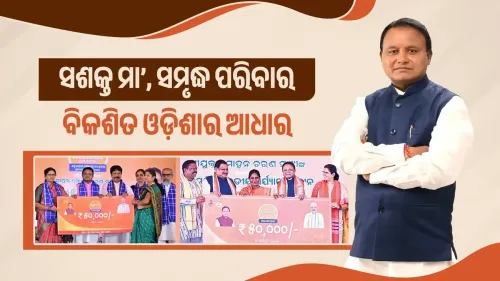
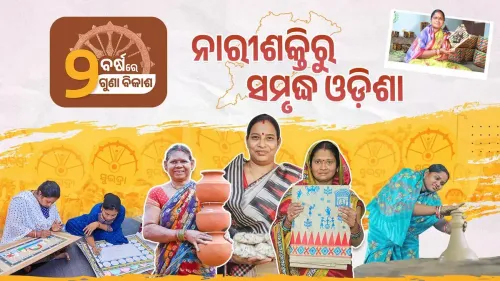
The official post, written in Odia, stated: 'ସଶକ୍ତ ନାରୀ, ସମୃଦ୍ଧ ଓଡ଼ିଶା' ['Empowered Women, Prosperous Odisha'] — framing this as the governing vision of the Majhi administration as it completes its second year in office.
Context
Mohan Charan Majhi became Chief Minister of Odisha in June 2024 following the BJP's victory in the state assembly elections, ending over two decades of Biju Janata Dal rule. The government's two-year mark has prompted a formal stocktaking of policy outcomes, with women's welfare positioned as a centrepiece of its governance narrative.
The CMO post specifically cites financial support to women, creation of women entrepreneurs at scale, skill development in the transport sector, and social security and girl-child protection measures as the pillars of this push.
Policy Backdrop
Odisha's women-focused policy ecosystem has deep roots. The state's flagship Mission Shakti programme — launched in 2001 — has for over two decades supported women's self-help groups (SHGs) with financial linkages and livelihood promotion. The scheme has been expanded and reoriented across successive governments and is widely regarded as one of India's most extensive SHG networks.
The current administration's emphasis on women entrepreneurship and transport-sector skilling signals an effort to move beyond subsistence-level SHG models toward income-generating and employment-linked outcomes — a shift that mirrors gender-responsive budgeting trends visible in several other Indian states.
Stakeholders and Impact
The primary beneficiaries identified in the government's communication are women entrepreneurs, women in the transport sector, and girl children covered under safety and protection schemes. The framing of 'unprecedented success' in self-reliance — the post uses the Odia word swabalaambhana — suggests the government is benchmarking outcomes against prior administrations' SHG and livelihood metrics.
Decisions described as 'epoch-making' (yugantakari) on social security and kanya suraksha (girl-child protection) are cited as strengthening both safety and dignity for women across the state, though specific scheme names or beneficiary numbers were not enumerated in the post.
What's Next
The two-year milestone communication is likely a precursor to more detailed policy announcements or budget allocations in the 2026-27 Odisha legislative session. Observers will watch for new phases of women entrepreneurship schemes, expanded transport-sector training programmes, and any legislative moves on girl-child protection.
The 'Empowered Women, Prosperous Odisha' slogan, now formally articulated by the CMO, is expected to anchor the administration's gender-policy messaging in the run-up to its mid-term governance review.
Point of View
Prosperous Odisha' as a governing slogan, the CMO is also building a narrative architecture ahead of the 2026-27 budget cycle. The absence of specific numbers in the post, however, leaves the 'unprecedented success' claim open to scrutiny from opposition and civil society. This pattern of milestone-anniversary communications tied to women's welfare is increasingly common across BJP-governed states, reflecting a national-level strategic alignment on gender-responsive optics.
NationPress
14 Sept 2026
Frequently Asked Questions
What has the Odisha government done for women in the last two years?
The Majhi government, in its two-year review, highlights financial assistance to women, creation of women entrepreneurs, transport-sector skill development, and girl-child protection measures as key achievements since June 2024.
What is Mission Shakti in Odisha?
Mission Shakti is Odisha's flagship women's self-help group programme launched in 2001. It provides financial linkages and livelihood support to women across the state and is one of India's largest SHG networks.
What does 'Sashakta Nari, Samruddha Odisha' mean?
'Sashakta Nari, Samruddha Odisha' is an Odia phrase meaning 'Empowered Women, Prosperous Odisha' — the stated vision of the Mohan Majhi-led state government for women's development.
Who is the Chief Minister of Odisha in 2026?
Mohan Charan Majhi is the Chief Minister of Odisha. He assumed office in June 2024 after the BJP won the Odisha state assembly elections, ending over two decades of Biju Janata Dal governance.
What is kanya suraksha in Odisha?
Kanya suraksha refers to girl-child protection initiatives undertaken by the Odisha government, encompassing social security measures aimed at strengthening the safety and dignity of girls in the state.