CM Majhi Spotlights Sahid Madho Singh Scheme for Tribal Students
Synopsis
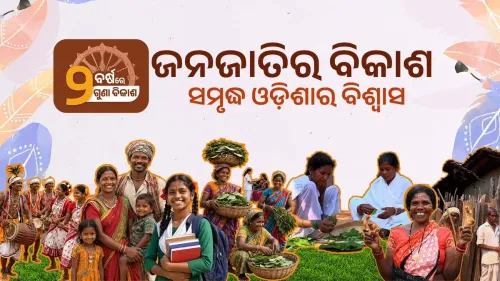
Odisha Chief Minister Mohan Charan Majhi highlighted the Sahid Madho Singh Haat Kharcha Yojana, a state scheme giving tribal students cash incentives on enrolment in Class 9 and Class 11. He framed it as a confidence booster honouring the tribal martyr's legacy and central to building an educated, prosperous Odisha.
Key Takeaways
CM Mohan Charan Majhi spotlighted the Sahid Madho Singh Haat Kharcha Yojana in a post on 3 June 2026.
The scheme provides incentive money to tribal students on enrolment in Class 9 and Class 11 .
It is named after tribal martyr Sahid Madho Singh , linking welfare with community heritage.
The Chief Minister called it 'not just financial assistance' but 'a new beginning of self-confidence'.
Scheduled Tribes form roughly a quarter of Odisha's population, with high secondary-stage dropout risk.
Delivery is anchored by the state's ST and SC Development Department .
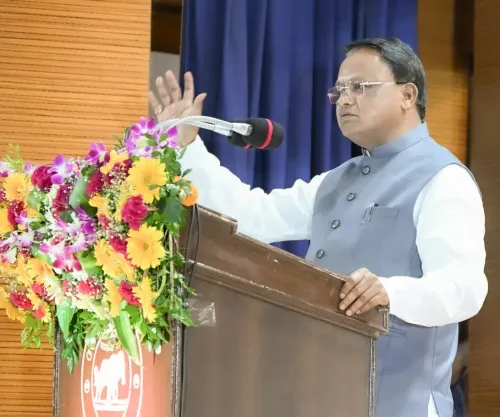
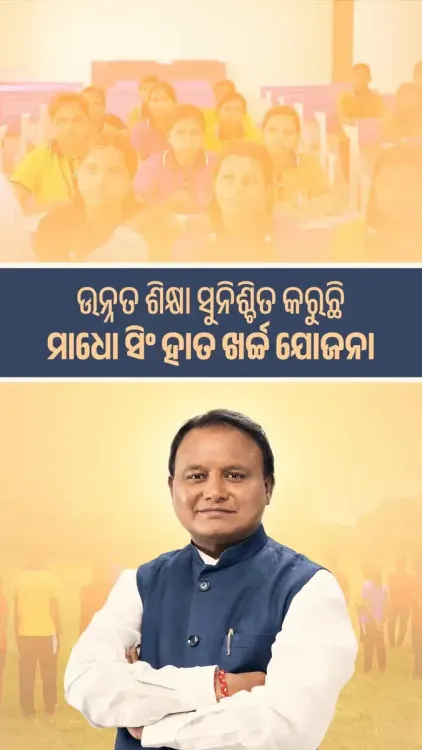
Odisha Chief Minister Mohan Charan Majhi on 3 June 2026 highlighted the state's Sahid Madho Singh Haat Kharcha Yojana, describing it as a confidence-building intervention for tribal students who enrol in Class 9 and Class 11. In a post on X, the Chief Minister framed the cash incentive as more than financial aid, positioning it as a tribute to the tribal martyr after whom the scheme is named.
Writing in Odia, the Chief Minister said the initiative is meant 'to make the dreams of tribal students meaningful and to ease their educational journey further.' He added that the support arrives at the point of enrolment in the ninth and eleventh standards, and that it is 'not just financial assistance, but a new beginning of self-confidence,' invoking the memory of Sahid Madho Singh as inspiration for building 'an educated and prosperous Odisha.'
Context
The Sahid Madho Singh Haat Kharcha Yojana is an Odisha government scheme that disburses an incentive to Scheduled Tribe students at two critical transition points in secondary education — entry into Class 9 and entry into Class 11. These two stages are widely recognised as the steepest dropout cliffs for tribal learners across eastern India.
The scheme is named after Sahid Madho Singh, a tribal martyr remembered in Odisha for resistance against colonial authority. Naming a welfare programme after a community icon is a deliberate signal that the state is linking material support with cultural recognition.
Policy backdrop
Tribal education support in India has a long lineage, anchored by constitutional safeguards under Articles 15(4) and 46 and by central instruments such as the Post-Matric Scholarship for Scheduled Tribe students, which has operated since the post-independence decades. State governments have layered their own incentives on top, often targeting the secondary stage where central pre-matric and post-matric scholarships meet a transition gap.
Odisha, where Scheduled Tribes account for roughly a fourth of the population, has steadily expanded such top-up programmes through the ST and SC Development Department. The Haat Kharcha incentive — literally pocket-money support — is designed to defray the small but persistent out-of-pocket costs that often push first-generation learners out of school.
Stakeholders and impact
The most direct beneficiaries are tribal adolescents moving from upper-primary to secondary, and from secondary to higher secondary — the two thresholds the Chief Minister singled out. For families in interior districts such as Koraput, Malkangiri, Mayurbhanj, Sundargarh and Kandhamal, even modest cash transfers at enrolment can offset costs of uniforms, stationery and transport.
Schools and hostels run by the ST and SC Development Department are the delivery arm, with the scheme dovetailing into the department's broader ecosystem of Ekalavya Model Residential Schools and Ashram schools. For the BJP-led state government, the messaging also dovetails with a wider political narrative of tribal welfare that has been central to the party's outreach in Odisha since it formed government in 2024.
What's next
Attention will turn to enrolment and retention figures released by the ST and SC Development Department for the current academic session, which will indicate whether the incentive is translating into measurable gains at the Class 9 and Class 11 entry points. Budget documents in the next state financial cycle will also reveal whether the allocation is being scaled up or extended to additional class levels.
The Chief Minister's framing — pairing fiscal support with the memory of a tribal martyr — suggests the government intends to keep the scheme visible as a flagship of its tribal welfare agenda. The longer-term test will be whether incentive-led enrolment converts into completion and transition to higher education for Odisha's tribal learners.
Point of View
Not just budgetary line items. The Class 9 and Class 11 trigger points are policy-smart, targeting the steepest dropout cliffs. The real test, however, lies in retention and transition data, not enrolment headlines.
NationPress
18 Oct 2026
Frequently Asked Questions
What is the Sahid Madho Singh Haat Kharcha Yojana?
It is an Odisha government scheme that provides incentive money to Scheduled Tribe students at the time of enrolment in Class 9 and Class 11 to support their secondary education.
Who was Sahid Madho Singh?
Sahid Madho Singh is remembered in Odisha as a tribal martyr, and the state scheme for tribal students has been named after him to honour his legacy.
Which students are eligible under the Haat Kharcha Yojana?
Scheduled Tribe students in Odisha who enrol in Class 9 or Class 11 are the targeted beneficiaries under the scheme.
Which department implements tribal education schemes in Odisha?
The Odisha ST and SC Development Department implements tribal education and welfare schemes, including residential schools and incentive programmes for ST students.
Why is the scheme considered important for tribal students?
Class 9 and Class 11 are recognised dropout thresholds, especially for first-generation tribal learners, so an enrolment-linked incentive can help offset out-of-pocket costs and improve retention.