CM Majhi: Rs 2,066 Cr Released to 51 Lakh Farmers via CM-Kisan

Synopsis
Odisha Chief Minister Mohan Charan Majhi announced on 11 June 2026 that Rs 2,066 crore has been disbursed to over 51 lakh farmer families under the CM-Kisan Yojana in 2025-26, with more than 5 lakh new beneficiaries added including landless cultivators, PVTGs and urban farmers.
Key Takeaways
Rs 2,066 crore disbursed to 51 lakh+ farmer families under CM-Kisan Yojana in 2025-26 .
More than 5 lakh new beneficiaries added to the scheme in the current fiscal year.
Coverage expanded to landless agricultural families , PVTGs , and urban farmers — categories historically excluded from farm income-support programmes.
The announcement coincides with the Majhi government's second anniversary in office, marking two years since the BJP came to power in Odisha in June 2024.
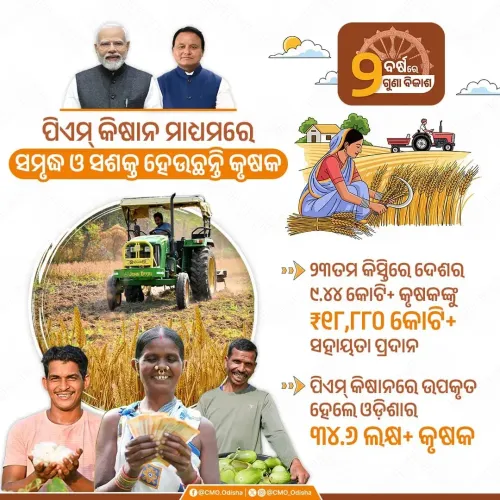
The CM-Kisan Yojana operates alongside the central PM-KISAN scheme, which provides Rs 6,000 annually to eligible landholding farmers across India.
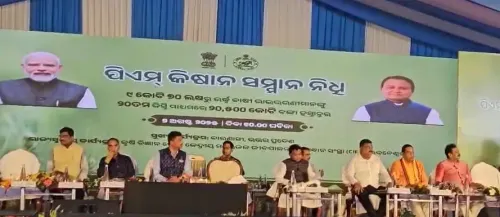
Odisha Chief Minister Mohan Charan Majhi on Thursday, 11 June 2026 announced that the state government has disbursed Rs 2,066 crore to more than 51 lakh farmer families under the CM-Kisan Yojana during the 2025-26 financial year, marking a significant expansion of the scheme's reach to previously excluded categories of cultivators.
Context
Posting in Odia on X, Chief Minister Majhi declared: 'Ama annadatanka samruddhi hi amara lakshya' ('The prosperity of our farmers is our goal'). He stated that over 5 lakh new beneficiaries have been added to the scheme, with direct benefits now flowing to small and marginal farmers, landless agricultural families, Particularly Vulnerable Tribal Groups (PVTGs), and urban farming households — categories that were not always covered under earlier frameworks.
The post was accompanied by hashtags marking 12 years of Kisan Samriddhi and two years of the current Odisha government, signalling that the announcement was timed to coincide with the administration's second anniversary in office.
Policy Backdrop
The CM-Kisan Yojana is Odisha's state-level direct income-support scheme for farmer families, functioning alongside the central PM-KISAN programme, which has since 2019 provided an annual transfer of Rs 6,000 to eligible landholding farmers nationwide. Odisha's own farmer-support architecture traces its lineage to the KALIA scheme, launched in 2018 under the previous government, which extended assistance to both cultivators and landless rural households.
When Mohan Charan Majhi led the BJP to power in Odisha in June 2024 — ending 24 years of BJD rule — the new administration repositioned farmer welfare as a flagship priority, aligning state programmes more closely with central direct-benefit-transfer models. The reported expansion to PVTGs and urban farmers reflects a broader trend across Indian states of widening income-support eligibility beyond titled landowners.
Stakeholders and Impact
Agriculture remains the primary livelihood for more than half of Odisha's population, with the state characterised by fragmented smallholdings and significant tribal landholdings. The inclusion of landless agricultural families and PVTG communities addresses a long-standing gap in farm-support policy, where those who till the land without formal title have historically been excluded from income-transfer programmes.
Urban farmers — a smaller but growing category — are also listed as direct beneficiaries, a relatively uncommon inclusion in state farm-welfare schemes. The addition of more than 5 lakh new beneficiaries in a single fiscal year suggests a deliberate effort to broaden the scheme's footprint ahead of the government's two-year mark.
What's Next
Attention will now turn to Odisha's state budget for 2026-27 and whether the expanded beneficiary list will be formalised through a revised scheme notification or legislative session. Any convergence between the CM-Kisan Yojana and the central PM-KISAN framework — including shared beneficiary databases or top-up arrangements — will be closely watched by farm-welfare advocates and opposition legislators. With the government marking two years in office, sustained delivery on the scheme's expanded coverage will be a key benchmark for the Majhi administration's agrarian credibility heading into the next electoral cycle.
Point of View
Landless families and urban cultivators broadens the coalition of beneficiaries in ways that could matter electorally in tribal-dominated constituencies. More substantively, the move tests whether Odisha's administrative machinery can sustain a wider beneficiary base without diluting per-household transfers — a challenge that has tripped up similar expansions elsewhere. The scheme's long-term credibility will depend on whether the 2026-27 budget backs the expanded coverage with commensurate allocations.
NationPress
27 Sept 2026
Frequently Asked Questions
What is the CM-Kisan Yojana in Odisha?
CM-Kisan Yojana is an Odisha state government scheme that provides direct income support to farmer families, including small, marginal and landless cultivators, PVTGs and urban farming households. In 2025-26, the scheme disbursed Rs 2,066 crore to over 51 lakh families.
How much money has Odisha given to farmers under CM-Kisan in 2025-26?
The Odisha government disbursed Rs 2,066 crore to more than 51 lakh farmer families under the CM-Kisan Yojana during the 2025-26 financial year, according to Chief Minister Mohan Charan Majhi's announcement on 11 June 2026.
Who are the new beneficiaries added to CM-Kisan Yojana?
Over 5 lakh new beneficiaries were added in 2025-26, including landless agricultural families, Particularly Vulnerable Tribal Groups (PVTGs), small and marginal farmers, and urban farming households.
What is the difference between CM-Kisan and PM-KISAN?
PM-KISAN is a central government scheme launched in 2019 that provides Rs 6,000 annually to landholding farmer families across India. CM-Kisan is Odisha's state-level scheme that extends income support more broadly, including to landless and urban cultivators not always covered by the central programme.
When did the BJP come to power in Odisha?
The BJP came to power in Odisha in June 2024, with Mohan Charan Majhi sworn in as Chief Minister, ending 24 years of Biju Janata Dal (BJD) rule in the state.