CM Sai Hails ₹3,230 Cr 'Yugе Yugin Bharat Museum' Nod
Synopsis
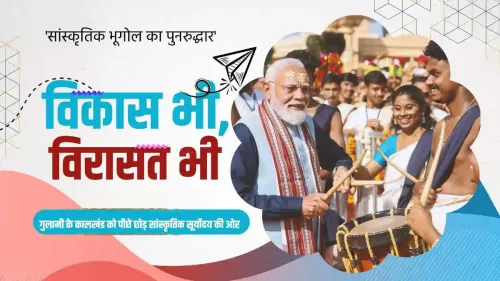
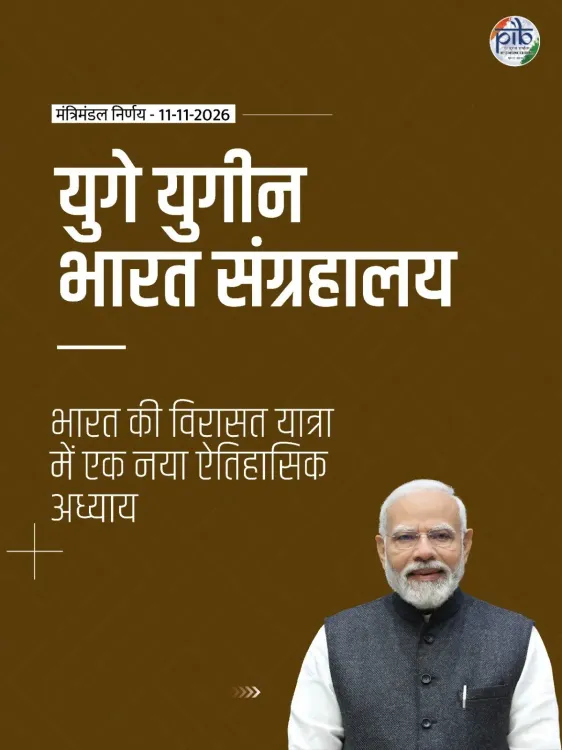
India's Union Cabinet approved a ₹3,230 crore 'Yuge Yugin Bharat Museum' at New Delhi's historic North and South Block complex. Chhattisgarh CM Vishnu Deo Sai hailed the decision as a historic step under PM Modi's 'Vikas Bhi, Virasat Bhi' cultural vision.
Key Takeaways
The Union Cabinet, chaired by PM Narendra Modi , approved the Yuge Yugin Bharat Museum (YYBM) at the North and South Block complex in New Delhi.
The project carries an approved cost of ₹3,230 crore , making it one of the largest cultural infrastructure investments in India's capital.
Chhattisgarh CM Vishnu Deo Sai publicly welcomed the decision on November 11, 2026 , linking it to the government's 'Vikas Bhi, Virasat Bhi' philosophy.
North Block and South Block , built in the colonial era and housing key ministries for nearly a century, would be repurposed once ministries shift to new Central Vista offices.
The project continues the broader Central Vista redevelopment arc that began in 2020 , integrating physical infrastructure with cultural display.
Detailed project timelines, the tendering process, and the ministerial relocation schedule remain to be announced.
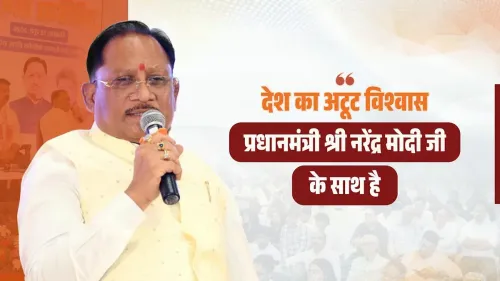
A ₹3,230 crore museum set inside two of India's most storied government buildings — that is the scale of ambition the Union Cabinet has just greenlit. Chhattisgarh Chief Minister Vishnu Deo Sai on Wednesday, November 11, 2026, welcomed the Cabinet decision to develop the 'Yuge Yugin Bharat Museum' (YYBM) within the North and South Block complex in New Delhi, calling it a historic step toward honouring India's civilisational legacy.
What the Cabinet greenlit inside North and South Block
The Cabinet, chaired by Prime Minister Narendra Modi, approved the development of the Yuge Yugin Bharat Museum — a name that roughly translates to 'India Across the Ages' — at the iconic North and South Block premises on Raisina Hill, New Delhi. The two sandstone buildings, colonial-era landmarks that currently house critical ministries including the Prime Minister's Office and the Finance Ministry, have long been central to India's administrative identity. Repurposing them as a world-class cultural institution marks one of the most significant adaptive-reuse decisions in the capital's post-independence history.
CM Sai described the move as 'abhinavdaniya' (commendable), saying the museum 'will present India's rich culture, glorious history and diverse traditions to the world in a grand form.'
'Vikas Bhi, Virasat Bhi' — the mantra made concrete
The project is framed explicitly under the government's cultural philosophy of 'Vikas Bhi, Virasat Bhi' — 'Development as well as Heritage' — a twin-track slogan that has anchored several of the current administration's flagship cultural investments. From the Central Vista redevelopment approved in 2020 to the new Parliament building inaugurated in 2023, successive projects have linked physical infrastructure upgrades in Delhi's historic core with expanded cultural display spaces. The YYBM is, by cost alone, among the most ambitious chapters in that arc.
At ₹3,230 crore, the museum is intended to serve not just as a repository of artefacts but as a living connector between contemporary India and its civilisational past — a point CM Sai underscored when he called it 'an important medium for preserving our cultural heritage and connecting future generations with their glorious legacy.'
North and South Block: from power corridors to cultural landmark
North Block and South Block were built by the British colonial administration and completed in the 1930s as part of the grand imperial capital designed by Edwin Lutyens and Herbert Baker. For nearly a century they have been the nerve centres of India's executive government. Their transition into a museum — once ministries relocate to the new Central Vista offices — would redefine the visual and symbolic meaning of Raisina Hill for generations of visitors. Project timelines, tendering details and the precise schedule for ministerial relocations are still awaited.
Why a Chhattisgarh CM is weighing in
The post is a reflection of a wider pattern: state-level BJP leaders routinely amplify central Cabinet decisions on cultural and heritage matters, signalling party-wide ownership of the 'Virasat' agenda. For CM Sai, who leads a state rich in tribal art, ancient temples and UNESCO-recognised heritage sites, the alignment between New Delhi's museum ambitions and Chhattisgarh's own cultural identity lends the endorsement extra resonance. The museum, if executed at the scale envisioned, could ultimately become a destination that draws attention — and tourists — toward the full breadth of India's regional civilisations, Chhattisgarh's among them.
The world's largest democracy is betting that its most visited administrative address can become its most compelling cultural one. Watch for the first project milestones — tendering and the ministerial relocation calendar — to test whether that bet holds.
Point of View
Signalling that the government views heritage rebranding — not just administrative efficiency — as a core legacy goal. Converting North and South Block from power corridors into a civilisational showcase is a high-stakes symbolic move: it recasts Raisina Hill from a site of colonial-era governance into a statement of indigenous cultural assertion. For the BJP's broader political architecture, it cements the 'Virasat' half of its 'Vikas-Virasat' dual mandate ahead of future electoral cycles. The speed of state leaders like CM Sai amplifying the decision reflects a coordinated effort to build nationwide cultural ownership around centrally driven projects.
NationPress
11 Nov 2026
Frequently Asked Questions
What is the Yuge Yugin Bharat Museum?
The Yuge Yugin Bharat Museum (YYBM) is a proposed national museum to be developed at the historic North and South Block complex in New Delhi at an approved cost of ₹3,230 crore. It aims to present India's culture, history and traditions in a grand format for citizens and global visitors.
Where will the Yuge Yugin Bharat Museum be located?
The museum will be housed in the North Block and South Block buildings on Raisina Hill, New Delhi — iconic colonial-era structures that currently serve as the offices of key central government ministries.
What is the cost of the Yuge Yugin Bharat Museum?
The Union Cabinet approved the museum at a cost of ₹3,230 crore, making it one of the largest single cultural infrastructure investments in New Delhi's history.
What will happen to the ministries currently in North and South Block?
The ministries housed in North Block and South Block are expected to relocate to new Central Vista offices as part of the broader redevelopment project, freeing the heritage buildings for the museum. Detailed relocation timelines have not yet been officially announced.
Why did Chhattisgarh CM Vishnu Deo Sai comment on this Cabinet decision?
CM Vishnu Deo Sai welcomed the Cabinet's approval as it aligns with the BJP government's 'Vikas Bhi, Virasat Bhi' cultural philosophy. As a BJP state leader heading a state with rich tribal and heritage traditions, he expressed support for the federal initiative to preserve and showcase India's civilisational legacy.