CM Sai Marks 12 Years of Modi Govt's Cultural Revival
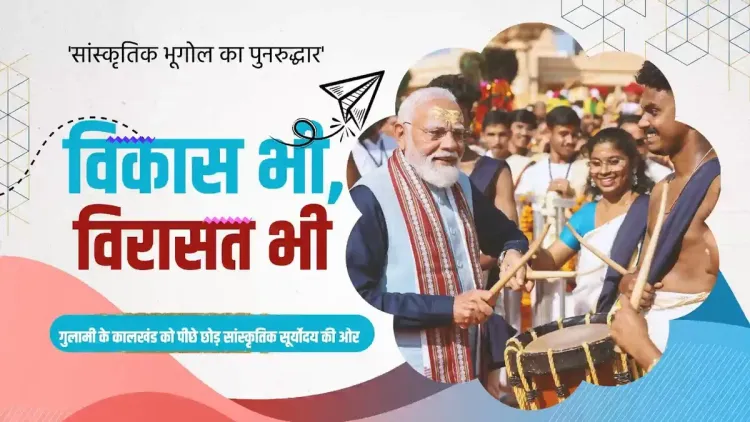
Synopsis
Chhattisgarh Chief Minister Vishnu Deo Sai marked 12 years of PM Modi's government by highlighting India's cultural renaissance — from the Ayodhya Ram Temple consecration and Kashi Vishwanath Dham redevelopment to manuscript digitisation and tribal heritage museums — as proof of the 'Vikas Bhi Virasat Bhi' (development and heritage) agenda.
Key Takeaways
CM Vishnu Deo Sai posted on 18 June 2026 crediting PM Modi 's 12 years in office with a cultural renaissance under the hashtag #12YearsOfVikasBhiVirasatBhi .
The Ram Temple pran pratishtha at Ayodhya was held on 22 January 2024 , cited as a landmark cultural milestone.
The Kashi Vishwanath Corridor was formally opened in 2021 , redeveloping one of Hinduism's most sacred precincts.
The Statue of Unity — the world's tallest statue at 182 metres — was inaugurated on 31 October 2018 as a symbol of national pride.
Manuscript digitisation and tribal freedom fighter museums were highlighted as efforts to connect heritage to ordinary citizens.
Sai framed the initiatives within the Amrit Kaal vision of balancing modernity with civilisational pride toward India's independence centenary in 2047 .
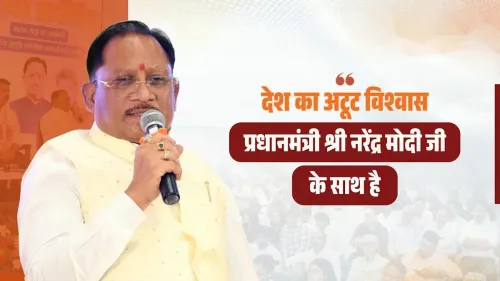
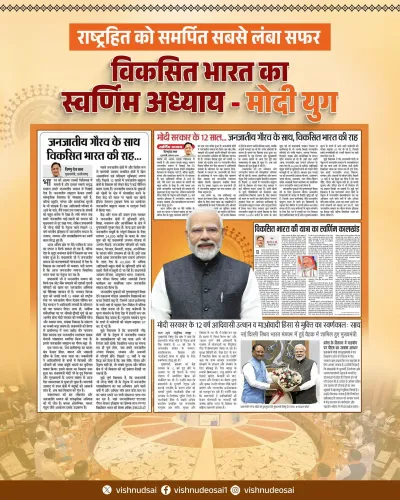
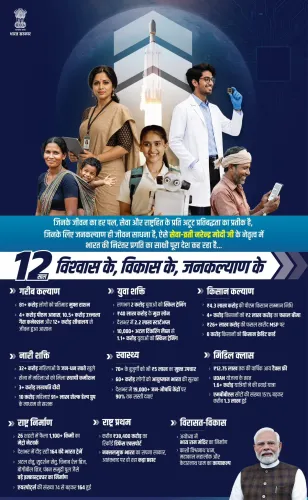
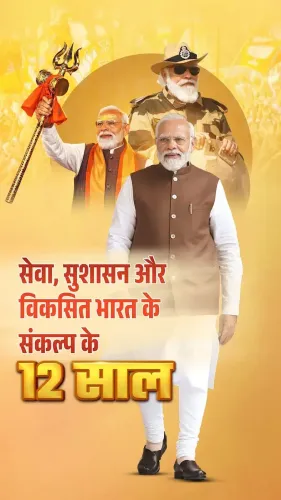
Chhattisgarh Chief Minister Vishnu Deo Sai on Thursday, 18 June 2026, credited Prime Minister Narendra Modi's twelve years in office with ushering in a cultural renaissance in India, citing milestones from the consecration of the Ram Temple at Ayodhya to the redevelopment of the Kashi Vishwanath Dham corridor. Sai made the remarks in a post on X under the hashtag #12YearsOfVikasBhiVirasatBhi ('12 years of both development and heritage').
Context
In his post, Sai wrote that under Modi's leadership, India has 'sांस्कृतिक पुनर्जागरण का नया इतिहास रचा है' ('scripted a new history of cultural renaissance') by advancing development and heritage preservation simultaneously. He pointed to the pran pratishtha (consecration) ceremony at Ayodhya Dham on 22 January 2024 and the grand redevelopment of the Kashi Vishwanath Dham corridor — formally opened in 2021 — as defining moments of this revival. The Mahakumbh pilgrimage and the Statue of Unity in Gujarat, inaugurated on 31 October 2018, were also cited as symbols of national pride.
Policy Backdrop
The post reflects a central strand of BJP governance since 2014: pairing large-scale infrastructure and tourism projects with the restoration and promotion of religious and civilisational heritage sites. The Kashi Vishwanath Corridor project transformed the precinct around one of Hinduism's most sacred shrines, drawing millions of additional pilgrims annually. The Statue of Unity, at 182 metres, remains the world's tallest statue and was built as a tribute to independence-era statesman Sardar Vallabhbhai Patel.
Sai also highlighted efforts to preserve Indian languages and knowledge traditions, including the digitisation of manuscripts under programmes such as the National Mission for Manuscripts (launched in 2003 and continued under successive governments), and the establishment of museums honouring tribal freedom fighters. These initiatives, he said, have connected India's 'rich heritage to every citizen.'
Stakeholders and Impact
The cultural projects referenced have direct bearing on pilgrims, tribal communities, and scholars of Indian history. The Ayodhya Ram Temple consecration drew an estimated audience of hundreds of millions via television and digital platforms, making it one of the most-watched religious events in India's recent history. Tribal freedom fighter museums, where established, serve communities whose contributions to the independence movement have historically received limited mainstream recognition.
For Chhattisgarh, a state with one of India's largest tribal populations, the emphasis on tribal heritage has particular resonance. CM Sai himself belongs to the Gondi tribal community, making his articulation of this policy strand politically and symbolically significant.
What's Next
Further phases of state-supported heritage museums and ongoing manuscript digitisation programmes are expected to continue as part of the Amrit Kaal cultural agenda — the government's framework for India's development journey toward the centenary of independence in 2047. The next cycle of Mahakumbh preparations will also serve as a barometer of how the government scales these cultural investments. As the BJP approaches its governance milestone, such messaging is likely to feature prominently in political communication ahead of upcoming state and national electoral cycles.
Point of View
Kashi corridor, Mahakumbh, Statue of Unity, and tribal heritage museums in a single narrative, Sai reinforces the 'Vikas Bhi Virasat Bhi' frame as an electoral and ideological cornerstone — not merely a policy slogan. The tribal heritage angle is notable coming from a Chief Minister who is himself from a tribal community, lending the claim a degree of personal credibility that a non-tribal leader could not easily assert. Broader pattern: as the BJP consolidates its position in states with significant tribal and OBC populations, the fusion of development optics with civilisational pride is likely to intensify as the 2047 centenary narrative builds momentum.
NationPress
18 Sept 2026
Frequently Asked Questions
What is the meaning of 'Vikas Bhi Virasat Bhi'?
'Vikas Bhi Virasat Bhi' is a Hindi phrase meaning 'both development and heritage,' used by the BJP government to describe its policy approach of pursuing modern infrastructure alongside the preservation and promotion of India's cultural and religious traditions.
When was the Ram Temple consecrated at Ayodhya?
The pran pratishtha (consecration) ceremony of the Ram Temple at Ayodhya Dham was held on 22 January 2024, and is cited by CM Sai as one of the defining cultural milestones of PM Modi's tenure.
What is the Kashi Vishwanath Corridor?
The Kashi Vishwanath Corridor is a redevelopment project in Varanasi that transformed the precinct around the historic Kashi Vishwanath temple. It was formally inaugurated in 2021 and significantly expanded access and infrastructure for pilgrims.
Why did CM Vishnu Deo Sai mention tribal freedom fighter museums?
CM Sai highlighted tribal freedom fighter museums as part of efforts to recognise communities whose contributions to India's independence struggle have historically been underrepresented. Sai himself belongs to the Gondi tribal community, giving the reference added political and personal significance.
What is Amrit Kaal in the context of Indian governance?
Amrit Kaal refers to the 25-year period from India's 75th independence anniversary in 2022 to its centenary in 2047. The government uses this framework to set long-term development and civilisational goals, blending economic modernisation with cultural identity.