CM Sai Hails 12 Years of Modi Govt's Defence Gains
Synopsis
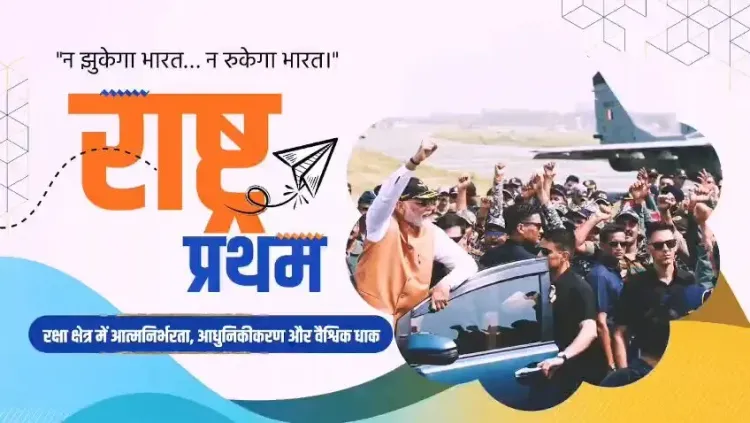
Chhattisgarh CM Vishnu Deo Sai marked twelve years of the Modi government on June 17, 2026, crediting the administration with stronger borders, decisive counter-terror action, and a growing indigenous defence industry under the Atmanirbhar Bharat mission.
Key Takeaways
CM Vishnu Deo Sai posted on June 17, 2026 crediting PM Modi's 12-year tenure with transforming India's national security architecture.
The post highlights three pillars: secure borders, a strengthened military, and a self-reliant defence sector under the Atmanirbhar Bharat mission.
Make in India (launched September 2014 ) and successive negative import lists have pushed defence procurement toward indigenous design and away from licence-based production.
The September 2016 surgical strikes across the Line of Control are a key reference point for the government's claim of proactive counter-terrorism action.
The #12YearsOfSurakshitBharat hashtag signals a coordinated BJP state-leader amplification campaign tied to the government's anniversary.
Upcoming FY 2027 defence budget allocations and new import-restriction lists will be key indicators of whether the policy momentum continues.
Chhattisgarh Chief Minister Vishnu Deo Sai on Wednesday, June 17, 2026, credited Prime Minister Narendra Modi's twelve-year tenure with a decisive strengthening of India's national security, citing border infrastructure, counter-terrorism operations, and defence self-reliance as the pillars of a transformed strategic posture.
Context
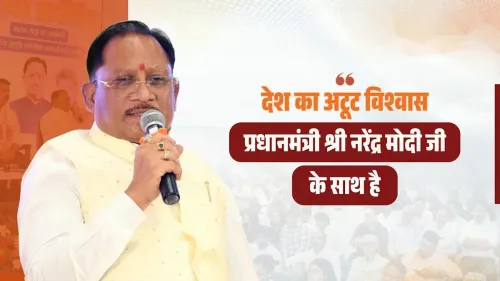
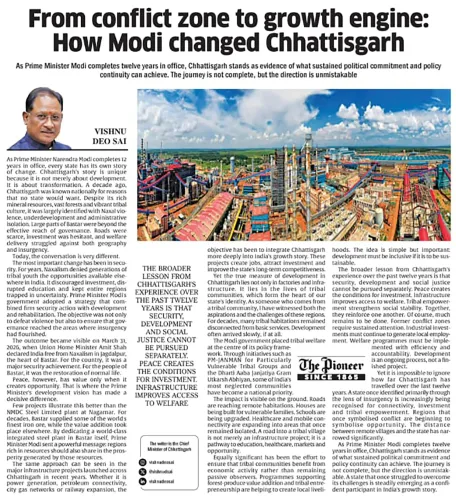
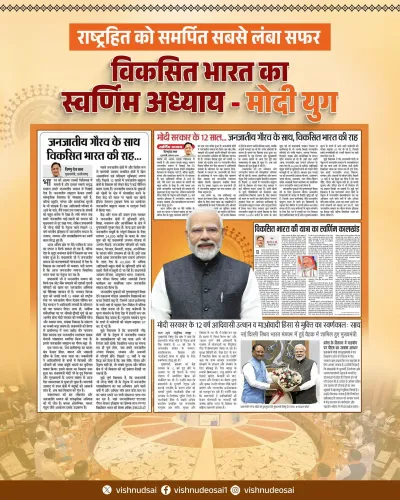
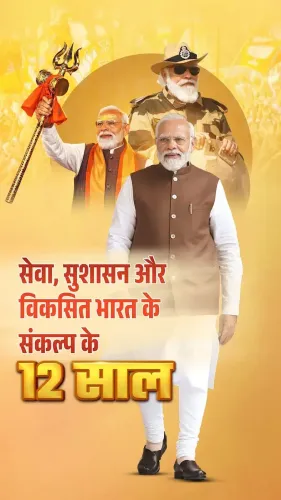
Posting under the hashtag #12YearsOfSurakshitBharat ('12 Years of a Secure India'), CM Sai wrote: 'Secure borders, an empowered army, and a self-reliant defence sector — this is the identity of the new India.' The post, accompanied by a video, marks a coordinated BJP messaging effort on the anniversary of the Modi government completing twelve years in office.
Sai argued that decisions under the current dispensation 'are no longer deferred — they are implemented swiftly,' framing speed of execution as a defining feature of the administration's security governance. The post tags Prime Minister Modi's official handle directly, signalling a top-down party communication drive.
Policy Backdrop
The claims in the post draw on a series of concrete policy shifts since 2014. The Make in India initiative, launched in September 2014, explicitly designated defence manufacturing as a priority sector, triggering successive reforms to licensing, foreign direct investment caps, and procurement procedures.
The Atmanirbhar Bharat self-reliance mission, announced in 2020, added dedicated defence production targets and a series of 'negative import lists' — catalogues of weapons and platforms that must henceforth be sourced domestically. Union Budgets from 2015 onward have progressively raised the capital outlay earmarked for domestic defence procurement, nudging the acquisition pipeline away from licence-based production and toward indigenous design and, more recently, export capability.
On the counter-terrorism front, the September 2016 surgical strikes across the Line of Control were widely cited by the government as evidence of a shift to proactive responses — a posture Sai's post implicitly references when it speaks of 'decisive action against terrorism.'
Stakeholders and Impact
The constituencies most directly affected by these policy trajectories are the Indian Armed Forces and the populations of border states — including Chhattisgarh's own districts that adjoin sensitive Maoist-affected zones, even if the post's primary frame is the external border. Accelerated road and forward-base construction in frontier regions has practical implications for logistics, civilian connectivity, and military readiness alike.
For India's nascent private defence-manufacturing sector, the indigenisation push has opened procurement windows that were historically closed. Firms in aerospace, electronics, and shipbuilding have benefited from the revised industrial licensing regime, though analysts note that the transition from licence-based to fully indigenous design remains a work in progress.
What's Next
Attention will now turn to the Union Budget for FY 2027 and whether the Ministry of Defence announces further additions to the negative import list or new private-sector manufacturing corridors. The #12YearsOfSurakshitBharat campaign is likely to intensify in the coming days as BJP leaders across states amplify the national-security narrative ahead of any upcoming electoral cycles. How the government translates the rhetorical milestone into fresh policy announcements will determine whether the messaging carries substantive policy weight or remains a consolidation of existing gains.
Point of View
Designed to nationalise the party's security credentials ahead of electoral cycles. The framing — 'decisions no longer deferred' — directly counters a long-standing opposition critique of policy paralysis, making this as much a political contrast-draw as a policy statement. Anchoring the message in defence indigenisation is strategically significant: it ties economic nationalism (Make in India, Atmanirbhar Bharat) to hard security, a pairing that has broad cross-constituency appeal. The durability of this messaging will depend on whether upcoming budget allocations and procurement milestones provide fresh substantive proof-points.
NationPress
20 Sept 2026
Frequently Asked Questions
What is the #12YearsOfSurakshitBharat campaign about?
#12YearsOfSurakshitBharat is a BJP-led social media campaign marking twelve years of the Narendra Modi government, highlighting achievements in border security, counter-terrorism, and indigenous defence manufacturing since 2014.
What has India done to boost indigenous defence production under Modi?
India launched the Atmanirbhar Bharat mission in 2020 with dedicated defence production targets, introduced multiple negative import lists mandating domestic sourcing of specified weapons platforms, and progressively increased capital budgets for domestic procurement since 2015.
Why did Chhattisgarh CM Vishnu Deo Sai post about national defence?
As a senior BJP leader and state chief minister, Sai regularly amplifies central government achievements; his June 17, 2026 post was part of a coordinated party effort to mark twelve years of the Modi administration's security record.
What were India's surgical strikes and why are they significant?
In September 2016, Indian Army special forces conducted surgical strikes across the Line of Control targeting militant launch pads, which the government cited as a shift to proactive counter-terrorism — a posture referenced in Sai's post on 'decisive action against terrorism.'
What is Atmanirbhar Bharat in defence?
Atmanirbhar Bharat ('Self-Reliant India') in the defence context refers to a 2020 policy framework that set targets for domestic defence production, restricted imports of specified items, and encouraged private-sector participation in weapons and platform manufacturing to reduce India's dependence on foreign suppliers.