CM Saini Hails Modi Era as India's Golden Age of Progress
Synopsis
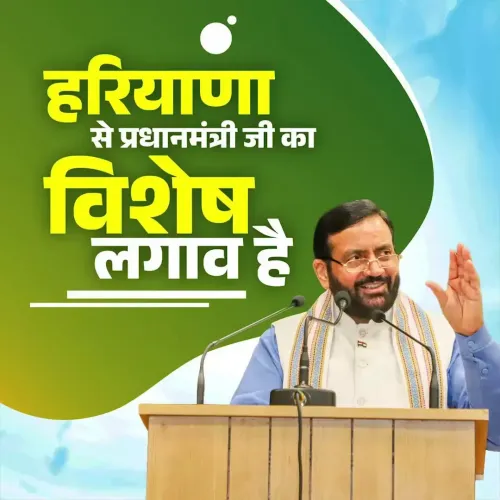
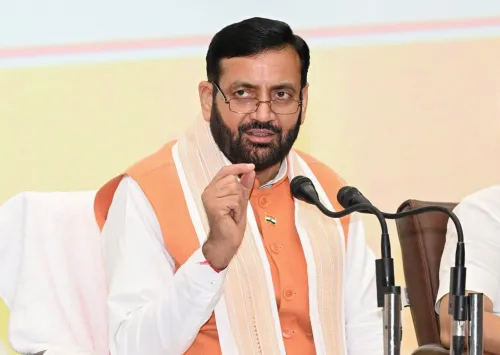
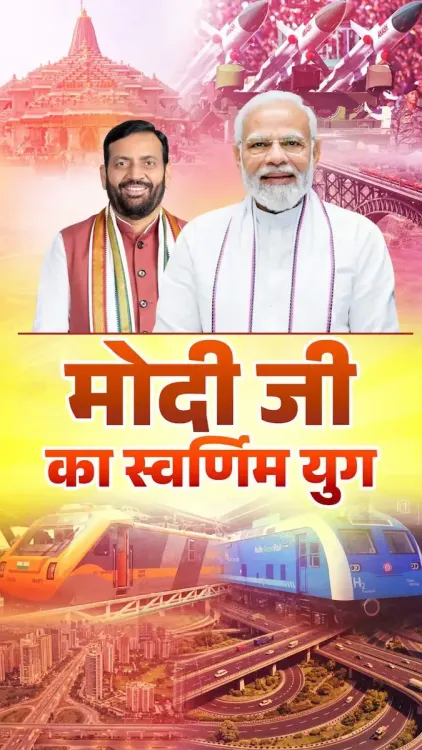
Haryana Chief Minister Nayab Singh Saini declared on X that India has entered a 'golden age of optimism and development' under PM Modi, sharply contrasting the current era with what he termed the darkness of Congress-led governance before 2014.
Key Takeaways
Haryana CM Nayab Singh Saini posted on X on 11 November 2026 praising PM Modi's leadership.
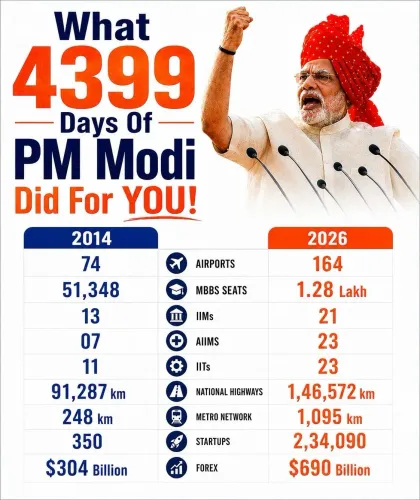
Saini described India's post-2014 era as a 'golden age of optimism, self-confidence, and development.' The post explicitly contrasts the BJP era with what he called the 'darkness of Congress's pessimism.' The messaging mirrors BJP's national 'New India' narrative deployed since the 2014 general election .
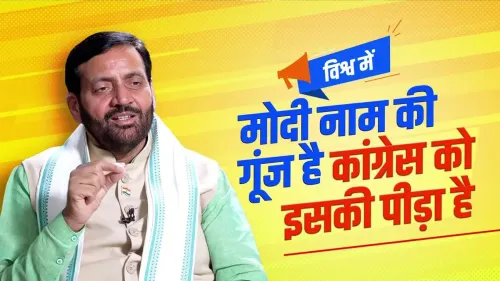
Saini, who became Haryana's Chief Minister in 2024 , attached a video to the post, signalling a prepared communication.
Routine political messaging turned pointed contrast on Wednesday, 11 November 2026, when Haryana Chief Minister Nayab Singh Saini took to X to frame Prime Minister Narendra Modi's tenure as a civilisational turning point — positioning India's last decade as a clean break from what he called the 'darkness of Congress's pessimism.'
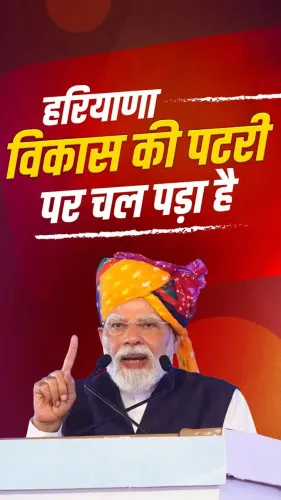
Posting in Hindi, Saini wrote: 'Kaangres ke niraashavaad ke andhakaar se nikalkar Pradhanmantri Shri Narendra Modi ji ke netritva mein Bharat ne aashavaad, aatmavishvaas aur vikaas ke svarnim yug mein pravesh kiya hai.' In English: 'Emerging from the darkness of Congress's pessimism, India — under the leadership of Prime Minister Shri Narendra Modi — has entered a golden age of optimism, self-confidence, and development. This is the new identity, new resolve, and new flight of a New India.'
The 'New India' script and its Haryana echo
The language Saini deploys is not incidental — it is the load-bearing vocabulary of BJP's national narrative since 2014. The 'New India' frame, first amplified ahead of the 2019 general election, casts every scheme, infrastructure project, and economic milestone as evidence of a decisive civilisational upgrade. By invoking it from Chandigarh, Saini plugs Haryana's own governance story directly into that larger arc.
The contrast with the Indian National Congress — which led the central government through the UPA years until 2014 — is equally deliberate. BJP communications consistently characterise that period as one of drift, corruption, and low ambition, a backdrop against which the current administration's achievements are meant to shine brighter. Saini's post is a textbook deployment of that contrast.
Why a state chief minister is amplifying central messaging
Saini assumed office as Haryana's Chief Minister in 2024, giving the post both state and national resonance. For a BJP chief minister, reinforcing PM Modi's brand is simultaneously good politics and good governance signalling — it ties Haryana's development record to a nationally trusted leadership image. The video attached to the post suggests this was a prepared communication, not an offhand remark.
When state leaders speak the same language as the Centre, it is rarely accidental. It maps a unified political front — and in a state that has seen competitive elections, that alignment carries strategic weight.
India's ruling party has long understood that optimism, repeated loudly enough, becomes a policy position of its own.
Point of View
Light versus darkness, self-reliance versus drift. That the message comes from a state chief minister rather than the party's central apparatus is itself notable: it reflects how deeply the national narrative has been internalised at the state level as a tool of political identity. For the Congress, such sustained framing of the UPA years as a period of failure represents an ongoing reputational challenge that the opposition has struggled to rebut with equal rhetorical force. The persistence of this messaging into late 2026 also signals that BJP sees the contrast with the Congress era as an evergreen electoral asset, not a time-limited campaign device.
NationPress
11 Nov 2026
Frequently Asked Questions
What did Haryana CM Nayab Singh Saini say about PM Modi?
CM Saini said India has entered a 'golden age of optimism, self-confidence, and development' under PM Modi's leadership, contrasting it with what he called the 'darkness of Congress's pessimism' before 2014.
What is BJP's 'New India' narrative?
BJP's 'New India' narrative, promoted since its 2014 election victory, frames India's governance trajectory after 2014 as a decisive break from the preceding Congress-led UPA governments, emphasising optimism, self-reliance, and economic growth.
When did Nayab Singh Saini become Haryana Chief Minister?
Nayab Singh Saini became Chief Minister of Haryana in 2024.
Why do BJP state leaders echo PM Modi's messaging?
Aligning with the Prime Minister's national brand helps state BJP leaders connect their local governance record to a nationally trusted leadership image, reinforcing both political unity and electoral appeal.
What is the Congress response to BJP's 'pessimism' framing?
The Indian National Congress, as the principal opposition party, has consistently disputed the BJP's characterisation of the UPA years, though the party has found it challenging to counter the narrative with comparable rhetorical consistency.