CM Mohan Yadav Backs Cabinet's ₹5,000 Cr Mudra Guarantee Move
Synopsis
The Union Cabinet under PM Modi approved extending the Credit Guarantee Fund for Micro Units to 2031 with a ₹5,000 crore corpus and a fee cut from 1% to 0.75%, targeting ₹12.6 lakh crore in Mudra loans. MP CM Dr. Mohan Yadav welcomed the move as a boost for small entrepreneurs.
Key Takeaways
Credit Guarantee Fund for Micro Units (CGFMU) extended to March 31, 2031 by the Union Cabinet.
Fresh corpus of ₹5,000 crore approved to sustain guarantee cover for Mudra lenders.
Annual guarantee fee reduced from 1% to 0.75% , lowering the effective cost of borrowing for micro-enterprises.
Extension expected to facilitate ₹12.6 lakh crore in Pradhan Mantri Mudra Yojana loans over the next five years.
Madhya Pradesh CM Dr.
Mohan Yadav publicly welcomed the decision as a catalyst for small-industry economic progress.
PMMY , launched in April 2015 , provides collateral-free loans to non-corporate, non-farm micro and small enterprises.
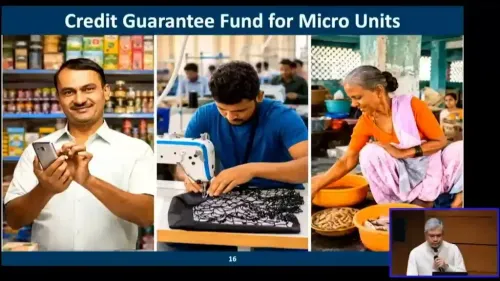
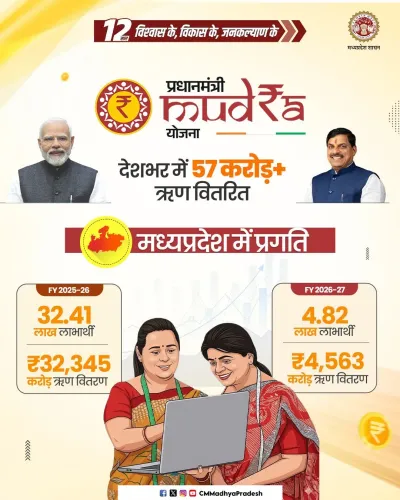
A single Cabinet decision just made borrowing cheaper for millions of India's smallest entrepreneurs. Madhya Pradesh Chief Minister Dr. Mohan Yadav on Wednesday, November 11, 2026 welcomed the Union Cabinet's approval to extend the Credit Guarantee Fund for Micro Units (CGFMU) until March 31, 2031, back it with a fresh corpus of ₹5,000 crore, and trim the annual guarantee fee from 1% to 0.75% — a package the Chief Minister says will power small-industry growth across the country.
What the Cabinet Cleared — and Why the Numbers Matter
The Cabinet, chaired by Prime Minister Narendra Modi, approved the CGFMU extension alongside a projection that the fund will help channel ₹12.6 lakh crore in loans under the Pradhan Mantri Mudra Yojana (PMMY) over the next five years. That is not a small figure — it represents the cumulative credit flow targeted at micro-enterprises that have no collateral to pledge and no large balance sheet to show a bank.
The fee cut from 1% to 0.75% per annum may look incremental, but for a micro-entrepreneur running a street-food stall or a small tailoring unit on a ₹50,000–₹2 lakh Mudra loan, every basis point shaved off the effective cost of borrowing matters. Dr. Mohan Yadav put it plainly in his post: 'chote udyamiyon ko aage badhane mein sahayata milegi' — 'it will help small entrepreneurs move forward.'
Mudra's Journey Since 2015 — and the Guarantee Mechanism Behind It
Pradhan Mantri Mudra Yojana was launched in April 2015 to provide collateral-free credit to non-corporate, non-farm micro and small enterprises across three tiers — Shishu (up to ₹50,000), Kishore (₹50,000–₹5 lakh), and Tarun (₹5 lakh–₹10 lakh). The CGFMU was created alongside it to shoulder the default risk on behalf of lending institutions, essentially giving banks and microfinance lenders the confidence to disburse without demanding security from borrowers.
The fund has seen periodic corpus top-ups since inception — each enhancement a signal that disbursement volumes are running ahead of the guarantee cover available. Extending the fund to 2031 locks in that safety net for another full lending cycle, removing uncertainty for lenders who plan Mudra book growth years in advance.
What It Means for Madhya Pradesh's Micro-Economy
Madhya Pradesh has consistently ranked among the larger Mudra-disbursing states, with a substantial share of Shishu-category borrowers — the most financially vulnerable tier. For Dr. Mohan Yadav, the Cabinet decision lands as direct support for the state's informal manufacturing clusters, artisan groups, and first-generation entrepreneurs who depend on Mudra credit as their primary formal financing route.
The Chief Minister's public acknowledgment of Prime Minister Modi for the decision — 'maananiya Pradhanmantri ji ka hardik aabhar' — underlines the BJP's broader pitch: that credit-access reform is not just fiscal policy but a grassroots economic dignity argument ahead of the next political cycle.
With ₹12.6 lakh crore in targeted Mudra lending and a freshly capitalised guarantee fund in place, the architecture is set — the real test will be in the disbursement data, state-level absorption, and whether the fee reduction actually reaches the borrower's bottom line.
Point of View
Amplifying these decisions through state chief ministers like Dr. Mohan Yadav serves a dual purpose: it nationalises the credit-access narrative while giving regional leaders a pro-entrepreneur platform. The five-year ₹12.6 lakh crore disbursement projection will be the credibility test — actual numbers at the halfway mark will determine whether the guarantee fund is being utilised or merely exists on paper.
NationPress
11 Nov 2026
Frequently Asked Questions
What is the Credit Guarantee Fund for Micro Units (CGFMU)?
The CGFMU is a government-backed fund that provides third-party guarantees on loans disbursed under the Pradhan Mantri Mudra Yojana, reducing default risk for lending institutions and enabling collateral-free credit to micro-enterprises.
Until when has the CGFMU been extended?
The Union Cabinet approved extending the CGFMU until March 31, 2031 , with a fresh corpus of ₹5,000 crore .
What is the new Mudra Yojana guarantee fee after the Cabinet decision?
The annual guarantee fee under CGFMU has been reduced from 1% to 0.75% , making Mudra loans slightly cheaper for micro-entrepreneurs.
How much lending is expected under Mudra Yojana in the next five years?
The Cabinet decision is projected to facilitate ₹12.6 lakh crore in loans under the Pradhan Mantri Mudra Yojana over the next five years.
What is Pradhan Mantri Mudra Yojana and who can avail it?
Launched in April 2015 , Pradhan Mantri Mudra Yojana provides collateral-free loans to non-corporate, non-farm micro and small enterprises in three categories — Shishu (up to ₹50,000), Kishore (₹50,000–₹5 lakh), and Tarun (₹5 lakh–₹10 lakh).