CM Samrat Choudhary Backs Cabinet's ₹5,000 Cr Mudra Fund Extension
Synopsis
Bihar Chief Minister Samrat Choudhary has welcomed the Union Cabinet's decision to extend the Pradhan Mantri Mudra Yojana's Credit Guarantee Fund for five more years with a ₹5,000 crore corpus, calling it a boost for micro entrepreneurs and the Atmanirbhar Bharat vision.
Key Takeaways
The Union Cabinet approved a five-year extension of the Credit Guarantee Fund under Pradhan Mantri Mudra Yojana .
The extension comes with a financial provision of ₹5,000 crore to sustain the guarantee corpus.
The fund enables banks to extend collateral-free loans to micro and small enterprise borrowers.
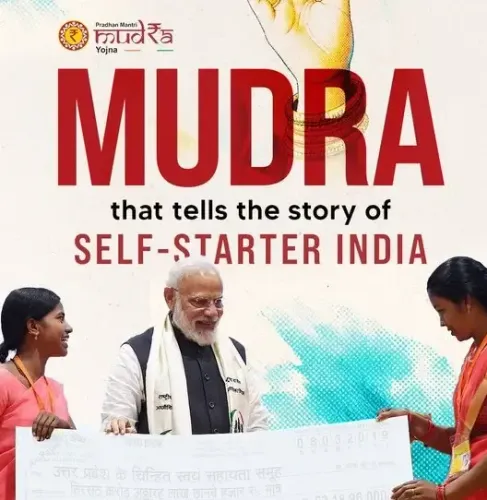
PMMY was originally launched in April 2015 , offering loans up to ₹10 lakh to non-corporate, non-farm micro enterprises.
Bihar CM Samrat Choudhary linked the decision to PM Modi's leadership and the broader Atmanirbhar Bharat self-reliance initiative.
Ministry of Finance quarterly disbursement data will be key to tracking real-world impact of the extended fund.
Collateral-free credit for India's smallest entrepreneurs just got a five-year lifeline. Bihar Chief Minister Samrat Choudhary on Wednesday, November 11, 2026, welcomed the Union Cabinet's decision to extend the Credit Guarantee Fund under the Pradhan Mantri Mudra Yojana (PMMY) for the next five years, backed by a ₹5,000 crore financial provision — a move he described as pivotal for micro entrepreneurs seeking to expand without offering security.
Posting in Hindi, CM Choudhary credited the decision to Prime Minister Narendra Modi's 'visionary leadership,' writing that the continuation of the guarantee-free loan facility will help sūkṣhma udyamī (micro entrepreneurs) grow their businesses and 'create new opportunities.' He framed it as a direct step toward realising the vision of an Ātmanirbhar Bhārat — a self-reliant India — while also pushing self-employment and entrepreneurship across the country.
What the Mudra Credit Guarantee Fund actually does
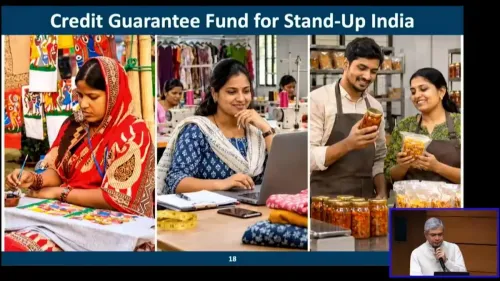
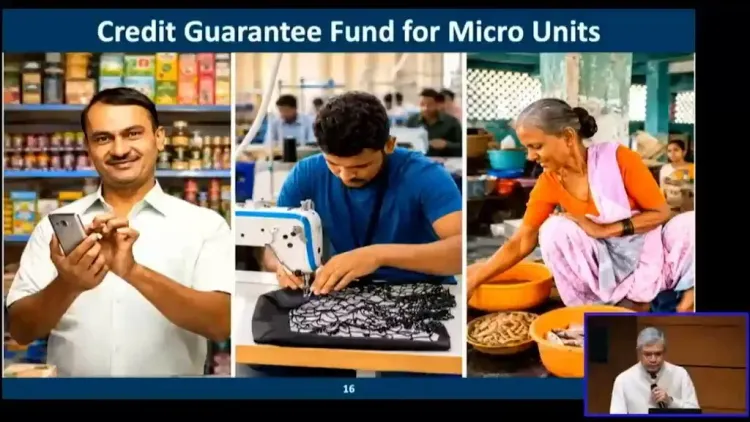
Launched in April 2015, the Pradhan Mantri Mudra Yojana was designed to solve a stubborn problem: millions of micro and small business owners — street vendors, tailors, repair-shop owners, home-based producers — could not access formal credit because they had nothing to pledge as collateral. PMMY addresses that gap by providing loans of up to ₹10 lakh to non-corporate, non-farm micro enterprises, with the Credit Guarantee Fund absorbing the default risk on behalf of lending banks.
That guarantee mechanism is the load-bearing wall of the entire scheme. Without it, banks have little incentive to lend to borrowers with no credit history or fixed assets. The Cabinet's decision to replenish and extend the fund for another five years effectively keeps that wall standing — and signals continued federal commitment to the informal sector's credit pipeline well into the next decade.
Bihar's stake in Mudra's reach
Bihar has consistently ranked among the states with high volumes of Mudra loan disbursements, given its large informal economy and dense population of micro enterprises in agriculture-adjacent trades, food processing, and small manufacturing. For CM Choudhary, championing this Cabinet call carries direct political and developmental logic: the scheme's extension translates into tangible credit access for a voter base that skews heavily toward self-employment and small trade.
The broader Atmanirbhar Bharat framework — announced in 2020 — has anchored successive government moves to deepen MSME credit flows. The Mudra extension fits squarely within that arc, reinforcing the idea that collateral-free credit is not a one-time emergency measure but a permanent structural feature of India's small-business ecosystem.
What the ₹5,000 crore figure means in practice
The ₹5,000 crore provision represents the government's guarantee corpus — the reserve from which the fund compensates banks for defaults on Mudra loans. A larger corpus allows banks to extend more loans without breaching risk thresholds, which in turn expands the total credit available to borrowers at the bottom of the pyramid. Successive Union Budgets since 2015 have periodically topped up this fund; this five-year commitment signals an intent to stabilise that support rather than revisit it year by year.
The Ministry of Finance's quarterly utilisation reports will be the first real test of whether the extended fund translates into measurable upticks in first-time borrowers — especially in states like Bihar where the gap between credit demand and formal supply remains wide. That data, when it arrives, will tell the fuller story of whether this Cabinet decision lands as policy or just promise.
Point of View
Suggesting the government views collateral-free micro-credit as a permanent pillar rather than a periodic safety net. For CM Samrat Choudhary, amplifying this decision reinforces the BJP's narrative of economic inclusion in a state where informal-sector employment is a defining political variable. The ₹5,000 crore corpus extension also quietly raises the ceiling on how aggressively banks can lend under the scheme, which could meaningfully widen credit access in underbanked districts. The real policy test, however, will come in the utilisation data: past Mudra cycles have shown that disbursement volumes can outpace quality outcomes if default risk is not carefully monitored.
NationPress
11 Nov 2026
Frequently Asked Questions
What is the Pradhan Mantri Mudra Yojana Credit Guarantee Fund?
The Credit Guarantee Fund under PMMY is a central government mechanism that provides guarantee cover to banks and financial institutions for collateral-free loans extended to micro and small enterprise borrowers, reducing the risk for lenders and enabling credit access for first-time borrowers with no assets to pledge.
How much has the government allocated for the Mudra Credit Guarantee Fund extension?
The Union Cabinet approved a financial provision of ₹5,000 crore for the Credit Guarantee Fund under PMMY, extending it for the next five years.
What is the maximum loan amount under Pradhan Mantri Mudra Yojana?
PMMY offers loans of up to ₹10 lakh to non-corporate, non-farm micro and small enterprises without requiring any collateral from the borrower.
Why did Bihar CM Samrat Choudhary welcome the Mudra Fund extension?
CM Samrat Choudhary welcomed the Cabinet decision as a boost for micro entrepreneurs, self-employment, and the Atmanirbhar Bharat vision, noting that Bihar's large informal economy stands to benefit significantly from continued collateral-free credit access.
When was the Pradhan Mantri Mudra Yojana launched?
PMMY was launched in April 2015 by the central government to facilitate formal credit access for micro enterprises that lacked collateral or a formal credit history.