CM Samrat Choudhary backs Stand-Up India 5-yr extension, ₹4,111 cr fund
Synopsis
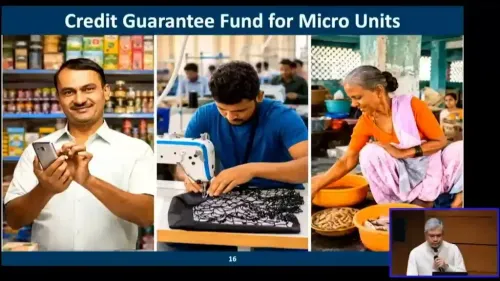
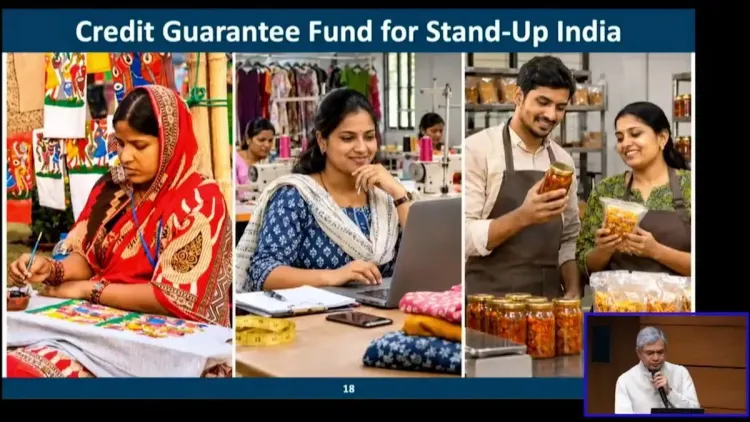
Bihar CM Samrat Choudhary praised the Union Cabinet's decision to extend the Stand-Up India scheme for five more years, backed by a ₹4,111 crore corpus and a 0.50% annual guarantee fee, calling it a boost to economic self-reliance for women and SC/ST entrepreneurs.
Key Takeaways
The Union Cabinet approved the Stand-Up India scheme's extension for five years under PM Narendra Modi's leadership.
A dedicated fund of ₹4,111 crore has been earmarked for the extended scheme period.
The loan guarantee fee is fixed at 0.50% per annum with no additional risk premium for borrowers.
The scheme, originally launched on 5 April 2016 , provides composite bank loans of ₹10 lakh to ₹1 crore to SC/ST and women entrepreneurs for greenfield enterprises.
Bihar CM Samrat Choudhary linked the extension to the broader Aatmanirbhar Bharat self-reliance campaign and said it will promote self-employment and financial independence.
A ₹4,111 crore fund, a 0.50% annual guarantee fee, and zero additional risk premium — the Union Cabinet has just handed women and SC/ST entrepreneurs a five-year runway to build businesses on their own terms. Bihar Chief Minister Samrat Choudhary on Wednesday, 11 November 2026 welcomed the Cabinet's decision to extend the Stand-Up India scheme for another five years, calling it a critical step toward building an Aatmanirbhar Bharat (self-reliant India).
What the Cabinet approved for Stand-Up India
The Cabinet, under the leadership of Prime Minister Narendra Modi, cleared the continuation of Stand-Up India for the next five years with a dedicated corpus of ₹4,111 crore. The guarantee charge on loans will remain capped at 0.50% per annum — and critically, no extra risk premium will be levied on borrowers. CM Choudhary posted in Hindi: 'ऋण पर गारंटी शुल्क 0.50% सालाना रहेगा और कोई अतिरिक्त जोखिम प्रीमियम नहीं देना होगा' — 'The guarantee fee on loans will remain 0.50% annually and no additional risk premium will have to be paid.'
That detail matters. For a first-generation entrepreneur from a Scheduled Caste household or a woman stepping into formal credit for the first time, every basis point shaved off the cost of borrowing is the difference between a viable business and a loan that feels like a trap. The low, flat fee is a deliberate design choice to widen access.
Stand-Up India: a decade of credit-linked entrepreneurship
Launched on 5 April 2016 by the Government of India, the Stand-Up India scheme was built around a simple but powerful premise: provide composite bank loans between ₹10 lakh and ₹1 crore to SC/ST and women entrepreneurs specifically for greenfield — that is, brand-new — enterprises. The scheme targeted the structural gap in India's credit landscape where marginalised communities historically struggled to access formal institutional finance for starting businesses.
Over the first decade, the scheme operated as a credit-guarantee-backed channel through scheduled commercial banks, nudging lenders to approve loans for a demographic that conventional risk models often penalise. The five-year extension signals that the government views the instrument as still essential — that the gap it was designed to close has not yet closed.
The Aatmanirbhar Bharat connection
CM Choudhary explicitly anchored the announcement to the Aatmanirbhar Bharat (self-reliant India) framework — the national campaign launched in 2020 that brought together credit support, manufacturing incentives, and entrepreneurship promotion for marginalised groups under a single strategic umbrella. The framing is intentional: self-reliance, in this reading, is not just macroeconomic — it is personal and community-level, built one greenfield business at a time.
For Bihar, one of India's most populous states with a large SC/ST population, the scheme's renewal carries particular weight. State-level coordination on disbursement targets and tracking business survival rates over the extension period will be the real test of whether the renewed commitment translates into ground-level change.
Half a trillion rupees in guaranteed credit capacity, a fixed low fee, and five more years on the clock. The architecture is in place — now comes the harder work of filling it with actual businesses that last.
Point of View
Amplifying the announcement through state chief ministers like Samrat Choudhary is a deliberate ground-up communication strategy, connecting a central policy win to state-level constituencies with large SC/ST and women voter bases. The low 0.50% guarantee fee signals an intent to genuinely lower the cost of formal credit access, not merely expand nominal loan volumes. The five-year horizon also suggests the government acknowledges that first-generation entrepreneurship support requires sustained institutional commitment, not short-cycle interventions.
NationPress
11 Nov 2026
Frequently Asked Questions
What is the Stand-Up India scheme?
Stand-Up India is a central government scheme launched on 5 April 2016 that provides composite bank loans between ₹10 lakh and ₹1 crore to Scheduled Caste, Scheduled Tribe, and women entrepreneurs specifically for setting up greenfield enterprises.
How long has the Stand-Up India scheme been extended?
The Union Cabinet approved an extension of the Stand-Up India scheme for five more years, with a dedicated fund of ₹4,111 crore allocated for the extended period.
What is the guarantee fee under the extended Stand-Up India scheme?
The guarantee fee on loans under the extended scheme remains at 0.50% per annum, and no additional risk premium will be charged to borrowers.
Why did Bihar CM Samrat Choudhary comment on the Stand-Up India extension?
Bihar CM Samrat Choudhary, a senior BJP leader, welcomed the Cabinet decision on his official X account, framing it as a key step toward Aatmanirbhar Bharat and economic empowerment for women and SC/ST communities in India.
Who benefits from the Stand-Up India scheme?
Women entrepreneurs and entrepreneurs from Scheduled Caste and Scheduled Tribe communities are the primary beneficiaries, receiving bank credit support for starting or expanding greenfield businesses in the formal sector.