SC: Perception of one HC being better for IP disputes 'misguided'
Synopsis
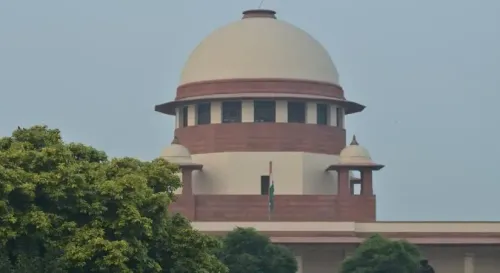
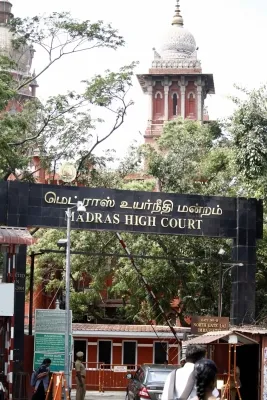
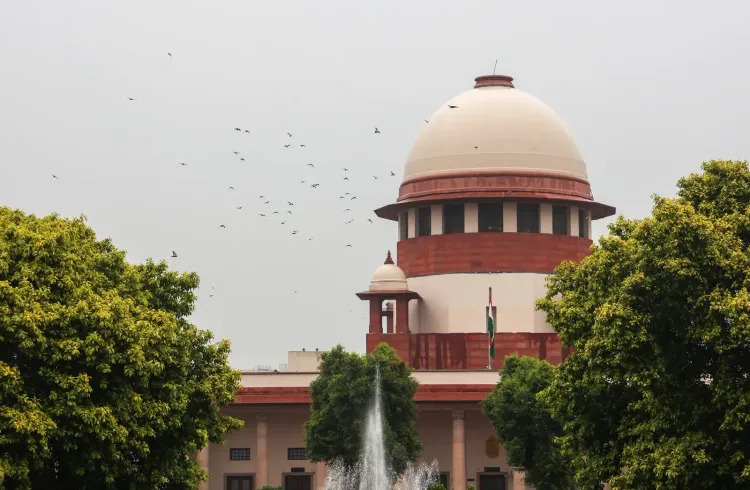
The Supreme Court has drawn a sharp line against forum shopping in intellectual property litigation, ruling that the belief one High Court is inherently better suited for certain disputes is 'misguided and erroneous' — and transferring a commercial suit away from Delhi HC to Madras HC because both parties operate out of southern India.
Key Takeaways
The Supreme Court transferred commercial IP suit CS(COMM) 625/2026 from the Delhi High Court to the Madras High Court on 11 November 2026 .
The bench, led by Justice B.V.
Nagarathna and Justice R.
Mahadevan , ruled the perception of one HC being better suited for specific disputes is 'entirely misguided and erroneous' .
Petitioners operate from Chennai ; plaintiffs are based in Nelamangala, Bengaluru Rural district — both parties in southern states, far from Delhi.
The court warned that territorial jurisdiction alone cannot justify forum shopping or perpetuate a hierarchy among India's High Courts.
Respondents may appear before the Madras High Court in person or via video conferencing .
The Supreme Court of India has transferred a commercial intellectual property suit from the Delhi High Court to the Madras High Court, firmly ruling that forum selection cannot be driven by any perception that one High Court is better equipped to adjudicate a specific category of disputes. The order was delivered on 11 November 2026 by a bench comprising Justice B.V. Nagarathna and Justice R. Mahadevan.
Background of the Transfer Petition
The transfer petition was filed by Sai Maghalakshmi Traders, Sri Lakshmi Srinivasa Enterprises, and M.P.K. Traders — the defendants in the original suit — against M/s Sri Lakshmi Srinivasa Agro Foods and SLS Agro Ventures. The original commercial suit, bearing case number CS(COMM) 625/2026, had been instituted by the plaintiffs before the Delhi High Court.
The apex court noted that the petitioners carry on business in Chennai, while the plaintiffs have their principal place of business at Nelamangala in Karnataka's Bengaluru Rural district — both parties thus operating out of neighbouring southern states, far removed from Delhi.
What the Supreme Court Observed
The Justice Nagarathna-led bench raised pointed questions about the choice of forum, stating: "We fail to understand as to why the respondents/plaintiffs have filed the suit before the Delhi High Court when both the parties are residing in the neighbouring States of Karnataka and Tamil Nadu and the Madras High Court also has original jurisdiction to entertain the suit."
The bench was unequivocal that the issue extended well beyond mere party convenience. It called the perception of a particular High Court being better suited to hear a specific category of disputes "entirely misguided and erroneous", adding that territorial jurisdiction alone cannot justify forum shopping or perpetuate notions of hierarchy among the country's High Courts.
Key Legal Principle: No Hierarchy Among High Courts
The Supreme Court articulated a broader principle of judicial equality: "The mere existence of territorial jurisdiction in various courts cannot on its own become justification for forum shopping and cannot result in the perpetuation of notions of a hierarchy among the High Courts of this country."
The court further emphasised that where the parties, the genesis of the dispute, and its factual locus are rooted in a particular location, courts in that region are ordinarily better positioned to appreciate the nuances of the case. This reasoning reinforced the transfer on substantive as well as procedural grounds.
Earlier Proceedings and the Transfer Order
The transfer petition had previously come before the apex court on 10 August, when a bench of Justice Sanjay Kumar had issued notice to the respondents and stayed further proceedings in the commercial suit before the Delhi High Court. The final order now directs that the case be transferred in full to the High Court of Judicature at Madras.
The court also clarified that the respondents retain the liberty to appear before the transferee court either in person or through video conferencing, easing any geographic burden on the plaintiffs.
Implications for Intellectual Property Litigation
The ruling carries significance beyond this individual dispute. Forum shopping — the practice of selecting a court perceived to be more favourable — has long been a concern in Indian commercial litigation, particularly in intellectual property matters where certain High Courts have historically been viewed as more experienced. This judgment signals that the Supreme Court is prepared to intervene when such perceptions distort the natural venue for a dispute. Notably, this reinforces an evolving judicial stance that the interests of justice and expeditious disposal must anchor venue decisions, not strategic advantage.
Point of View
The bench has signalled that strategic venue-picking will face scrutiny at the highest level. What the judgment does not fully resolve is the structural reason why litigants gravitate toward Delhi in the first place: a perception shaped by decades of IP jurisprudence concentrated in a handful of courts. That perception will not dissolve with one order; it will require consistent intervention and, arguably, a systematic strengthening of IP benches across all High Courts.
NationPress
11 Nov 2026
Frequently Asked Questions
Why did the Supreme Court transfer this IP suit from Delhi HC to Madras HC?
The Supreme Court transferred the suit because both parties — the plaintiffs based in Bengaluru Rural district and the defendants based in Chennai — are located in neighbouring southern states, making the Madras High Court the natural and convenient forum. The court also found that filing before the Delhi HC appeared to be an instance of forum shopping.
What is forum shopping and why did the Supreme Court criticise it here?
Forum shopping refers to the practice of choosing a court perceived to be more favourable rather than the most appropriate one. The Supreme Court criticised it in this case because the choice of the Delhi High Court could not be justified by proximity, factual nexus, or any ground other than a misguided belief that Delhi HC is better suited to hear intellectual property disputes.
What did the Supreme Court say about hierarchy among High Courts?
The court stated that the perception of one High Court being better suited to hear a specific category of disputes is 'entirely misguided and erroneous.' It further ruled that the mere existence of territorial jurisdiction in various courts cannot justify forum shopping or perpetuate notions of a hierarchy among India's High Courts.
Who are the parties involved in this case?
The petitioners — defendants in the original suit — are Sai Maghalakshmi Traders, Sri Lakshmi Srinivasa Enterprises, and M.P.K. Traders. The respondents — the plaintiffs — are M/s Sri Lakshmi Srinivasa Agro Foods and SLS Agro Ventures. The original commercial suit was filed by the respondents before the Delhi High Court.
Can the respondents still participate after the transfer to Madras HC?
Yes. The Supreme Court clarified that the respondents are at liberty to appear before the Madras High Court either in person or through video conferencing, ensuring the geographic shift does not unduly burden either party.