SC upholds Madras HC order striking down TN Muslim convert reservation benefit
Synopsis
The Supreme Court has shut the door on Tamil Nadu's attempt to let Hindu-origin converts to Islam carry their BC or SC reservation status into their new faith. Striking down G.O. No. 31 of 2024, the court reaffirmed that caste-based social disadvantage cannot travel across religious lines — a ruling with far-reaching implications for how India balances conversion rights and reservation policy.
Key Takeaways
The Supreme Court on 15 October 2026 dismissed the Tamil Nadu government's SLP, upholding the Madras HC order that struck down G.O.
31 dated 9 March 2024 .
The order had allowed converts from BC, MBC, Denotified Communities , and Scheduled Castes to claim Backward Class (Muslim) reservation benefits after converting to Islam.
The apex court held that social backwardness linked to caste identity cannot be transferred to a new religious community upon conversion.
The case originated from a plea by Sameer Ahamed N. , who converted to Islam in 2015 and sought a Muslim Lebbai community certificate.
The ruling follows a 24 March Supreme Court judgment that similarly held converts to Christianity cannot retain Scheduled Caste status under the Constitution (Scheduled Castes) Order, 1950 .
The Supreme Court on Thursday, 15 October 2026, upheld a Madras High Court judgment declaring unconstitutional a Tamil Nadu government order that allowed individuals from Backward Classes (BC), Most Backward Classes (MBC), Denotified Communities, and Scheduled Castes (SC) to claim Backward Class (Muslim) reservation benefits upon converting to Islam. The ruling effectively bars converts from carrying forward caste-linked reservation entitlements into a new religious identity.
What the Supreme Court Ruled
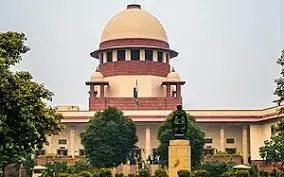
A Bench of Justices Prashant Kumar Mishra and Shree Chandrashekhar dismissed the Tamil Nadu government's Special Leave Petition (SLP) challenging the High Court's decision. The apex court affirmed the constitutional principle that social backwardness tied to a person's original caste and religious identity cannot be automatically transferred to a different religious community following conversion.
The court observed that once a person embraces another religion, the caste-based social disadvantage that underpinned their original reservation eligibility does not travel with them into the new faith community.
The Government Order That Was Struck Down
The case centred on Government Order (G.O.) No. 31, issued by the Tamil Nadu government on 9 March 2024, which had permitted converts from BC, MBC, Denotified Communities, and Scheduled Castes to be treated as Backward Class Muslims for the purposes of reservation. The Madras High Court had already invalidated the order, and the Supreme Court's ruling on Thursday closes the door on the state's legal challenge.
The dispute originated with a plea filed by Sameer Ahamed N., who was born into a Hindu family and converted to Islam in 2015. After conversion, he sought a community certificate recognising him as a Muslim Lebbai — a notified Backward Class Muslim community — but his application was rejected by Tamil Nadu's revenue authorities.
What the Madras High Court Had Said
A Division Bench of Justices G.R. Swaminathan and P.B. Balaji of the Madras High Court had upheld the rejection and struck down G.O. No. 31, holding that the government could not use an executive order to override binding judicial precedents on the consequences of religious conversion.
Citing an earlier Madras High Court judgment, the Division Bench had observed: "When a Hindu gets converted to Islam, he becomes just a Mussalman, and his place in Muslim society is not determined by the caste to which he belonged before his conversion."
The High Court had further found G.O. No. 31 arbitrary, noting that it sought to club people from distinct categories — Scheduled Castes and Backward Classes — into the single category of Backward Class Muslims. It had concluded that membership in a notified Backward Class Muslim community cannot be claimed merely on the basis of conversion, stating: "As a corollary, we hold that a convert to Islam cannot claim the status of Backward Class Muslim. He is only a Muslim, and that's all there is to it."
Broader Legal Pattern on Conversion and Reservation
Thursday's ruling is consistent with a line of recent Supreme Court decisions on conversion and reservation entitlements. Notably, in a judgment passed on 24 March, a Bench of Justices Prashant Kumar Mishra and N.V. Anjaria upheld an Andhra Pradesh High Court ruling that a person who converts to Christianity and continues to practise that faith cannot retain Scheduled Caste status.
In that case, the apex court held that "no person who professes a religion other than Hinduism, Sikhism or Buddhism can be regarded as a member of the Scheduled Caste" under the Constitution (Scheduled Castes) Order, 1950, and that conversion to a religion outside this list results in the "immediate and complete loss" of SC status. A subsequent review petition was also dismissed, with the court finding no error warranting reconsideration.
Together, the two rulings signal a hardening of the Supreme Court's jurisprudence on the intersection of religious conversion and constitutionally protected reservation rights. The Tamil Nadu government has not yet indicated whether it will pursue further legislative or legal remedies.
Point of View
And conversion — whatever its spiritual or personal rationale — severs that entitlement. What mainstream coverage glosses over is the administrative paradox this creates: a person born into a disadvantaged community does not become less disadvantaged the day they change religion, yet the law now makes that the decisive cut-off point. The real policy gap is that India has no mechanism to assess post-conversion socioeconomic status independently of caste origin. Until parliament addresses that, the courts will continue resolving a fundamentally political question through constitutional interpretation alone — and the most marginalised converts will bear the cost.
NationPress
15 Oct 2026
Frequently Asked Questions
What did the Supreme Court rule on Tamil Nadu's Muslim convert reservation order?
The Supreme Court upheld the Madras High Court's judgment striking down Tamil Nadu's G.O. No. 31 of 9 March 2024, which had allowed BC, MBC, Denotified Community, and Scheduled Caste converts to Islam to claim Backward Class Muslim reservation benefits. The court held that caste-based social backwardness cannot be automatically carried over to a new religion after conversion.
What was Tamil Nadu's G.O. No. 31, and why was it challenged?
G.O. No. 31, issued on 9 March 2024, permitted individuals from Backward Classes, Most Backward Classes, Denotified Communities, and Scheduled Castes to be treated as Backward Class Muslims for reservation purposes after converting to Islam. It was challenged as unconstitutional because it sought to override judicial precedents on the consequences of religious conversion, and the Madras High Court found it arbitrary for merging distinct reservation categories into one.
Who was the petitioner in the original case?
The case originated from a plea filed by Sameer Ahamed N., who was born into a Hindu family and converted to Islam in 2015. He had sought a community certificate recognising him as a Muslim Lebbai — a notified Backward Class Muslim community — but his application was rejected by Tamil Nadu revenue authorities, triggering the legal proceedings.
How does this ruling relate to the earlier Supreme Court judgment on Christian converts?
In a judgment dated 24 March, the Supreme Court upheld an Andhra Pradesh High Court ruling that a person who converts to Christianity cannot retain Scheduled Caste status, holding that only those professing Hinduism, Sikhism, or Buddhism qualify under the Constitution (Scheduled Castes) Order, 1950. The Tamil Nadu ruling follows the same constitutional logic, extending it to conversions to Islam and BC reservation.
What are the implications of this judgment for reservation policy in India?
The ruling reinforces that reservation entitlements tied to Hindu caste identity are lost upon conversion to Islam or Christianity. It effectively means converts from disadvantaged backgrounds cannot access caste-based affirmative action in their new religious identity, a position that critics argue fails to account for continued socioeconomic disadvantage post-conversion, while supporters say it preserves the constitutional integrity of the reservation framework.