Rajnath Singh: India Strikes Back, From Surgical to Op Sindoor
Synopsis
Union Defence Minister Rajnath Singh invoked a trilogy of Indian military operations — the Surgical Strike, Balakot Air Strike, and Operation Sindoor — to declare that the 'new India' strikes decisively at terrorism's roots rather than absorbing provocations.
Key Takeaways
Union Defence Minister Rajnath Singh posted on 15 October 2026 asserting India's zero-tolerance posture against terrorism.
Singh cited three operations in sequence: the 2016 Surgical Strike , the 2019 Balakot Air Strike , and Operation Sindoor .
The 2016 Surgical Strike targeted terrorist launch pads across the Line of Control following the Uri attack .
The 2019 Balakot Air Strike hit a Jaish-e-Mohammed camp inside Pakistan following the Pulwama attack that killed 40 CRPF personnel .
Singh framed all three operations as evidence of a consistent, evolving doctrine of sovereignty defence and deterrence.
The post, written in Hindi, signals the message is aimed at a broad domestic audience as much as external observers.
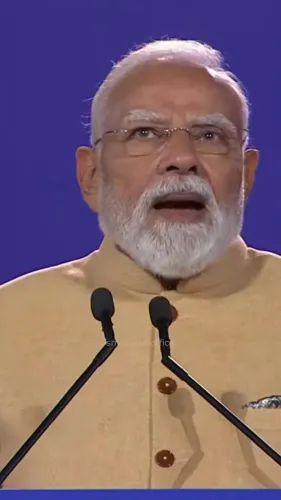
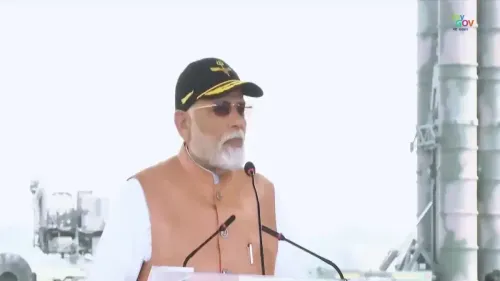
India does not flinch in the face of terror — it strikes at the root. Union Defence Minister Rajnath Singh made that declaration emphatically on Thursday, 15 October 2026, invoking a decade-long arc of kinetic responses to cross-border terrorism in a post that named three landmark operations in a single breath.
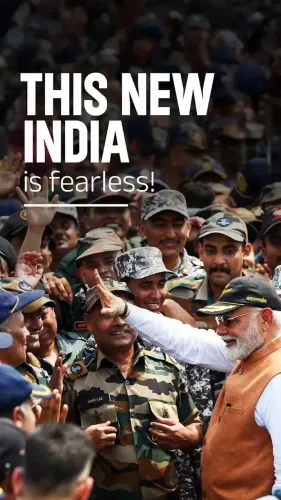
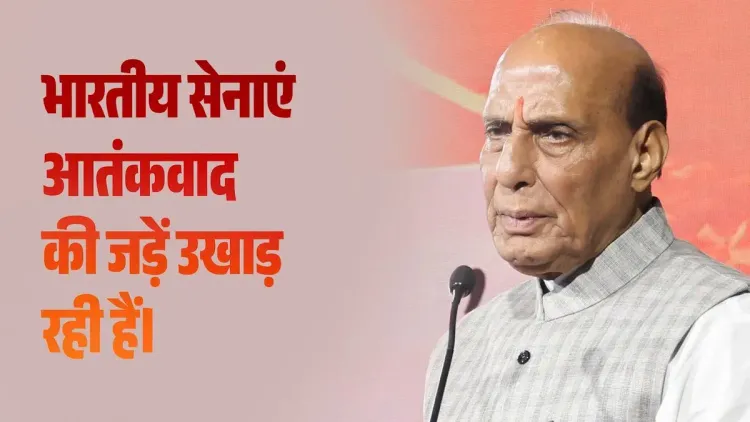
Writing in Hindi, Singh stated: 'यह नया भारत है, जो आतंकवाद के सामने झुकता नहीं, बल्कि उसे जड़ से उखाड़ने के लिए निर्णायक प्रहार करता है' — 'This is the new India, which does not bow before terrorism, but strikes decisively to uproot it.' He drew a direct line from the 2016 Surgical Strike to the 2019 Balakot Air Strike and, in the same breath, to Operation Sindoor, asserting that anyone challenging India's sovereignty and security 'will receive a befitting reply.'
From Uri to Balakot: The Doctrine Takes Shape
The two verified operations Singh cited represent a foundational shift in India's security posture. After the Uri attack of September 2016, the Indian Army conducted cross-border surgical strikes on terrorist launch pads across the Line of Control — the first time India publicly acknowledged and claimed such an operation. Three years later, following the Pulwama suicide bombing of February 2019 that killed 40 CRPF personnel, the Indian Air Force struck a Jaish-e-Mohammed camp deep inside Balakot, Pakistan — a qualitative escalation that took the response beyond the LoC for the first time in decades.
Together, these two operations effectively retired the doctrine of 'strategic restraint' that had governed India's response to cross-border terrorism since the 1999 Kargil conflict. Senior government voices have since made it a point of policy communication to cite both operations as proof that the threshold for inaction has been permanently lowered.
Operation Sindoor: The Newest Name in the Deterrence Ledger
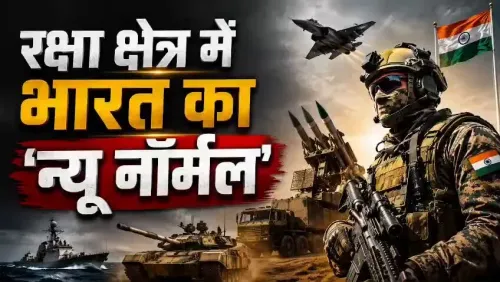
The inclusion of Operation Sindoor alongside its two well-documented predecessors is the sharpest signal in Singh's post. By placing a third operation in the same rhetorical sequence — 'Surgical Strike to Balakot Air Strike to Operation Sindoor' — the Defence Minister frames it as a natural continuation of India's escalating counter-terrorism doctrine rather than an isolated event. Singh's framing is unambiguous: the pattern is not accidental, and it is not over.
A Doctrine Stated Loudly, for Multiple Audiences
Public declarations of this kind by a sitting Defence Minister serve a calculated purpose. They simultaneously reassure a domestic audience, signal resolve to adversaries, and cement an official narrative that proactive military response is now niti — policy — not exception. Singh's choice to post in Hindi amplifies reach to a broad domestic readership, underlining that this message is as much about national identity as it is about military capability.
Since 2014, India's security establishment has methodically built the legal, political, and operational architecture for cross-border responses. Each named operation adds a data point to that architecture. The message from the Defence Ministry on 15 October 2026 is that the ledger is open — and being updated.
Point of View
Less-detailed operation and anchor it within an established narrative of escalating resolve. By stringing the three operations together without pausing on specifics, the Defence Minister invites the audience to extend the credibility of the Surgical Strike and Balakot onto Operation Sindoor. This is a deliberate signalling exercise: the audience is domestic voters, potential adversaries, and India's strategic partners simultaneously. The consistent invocation of this trilogy by senior BJP leaders also suggests the party has identified counter-terrorism kinetics as a durable pillar of its national-security identity ahead of any future electoral cycle.
NationPress
15 Oct 2026
Frequently Asked Questions
What did Rajnath Singh say about Operation Sindoor?
Singh cited Operation Sindoor alongside the 2016 Surgical Strike and the 2019 Balakot Air Strike as examples of India's decisive military responses to terrorism, framing all three as part of a consistent doctrine of striking at the roots of terror.
What was the Surgical Strike of 2016?
The 2016 Surgical Strike was a cross-border operation by the Indian Army that targeted terrorist launch pads across the Line of Control. It followed the Uri attack on an Indian Army base and was the first such operation India publicly acknowledged.
What was the Balakot Air Strike?
The Balakot Air Strike was an Indian Air Force operation in February 2019 that struck a Jaish-e-Mohammed training camp in Balakot, Pakistan. It came in response to the Pulwama suicide bombing that killed 40 CRPF personnel.
What is India's counter-terrorism doctrine after 2014?
Since 2014, India has moved away from 'strategic restraint' toward a proactive doctrine of cross-border responses to terrorism. The Surgical Strike and Balakot Air Strike are the most cited examples of this shift in official communications.
Why did Rajnath Singh post in Hindi about defence operations?
Posting in Hindi maximises reach to India's broad domestic readership. It signals that the message about India's counter-terrorism resolve is aimed as much at national identity and public confidence as it is at external or strategic audiences.