Rajnath Singh at SCO: Op Sindoor proved terrorism hubs no longer safe
Synopsis
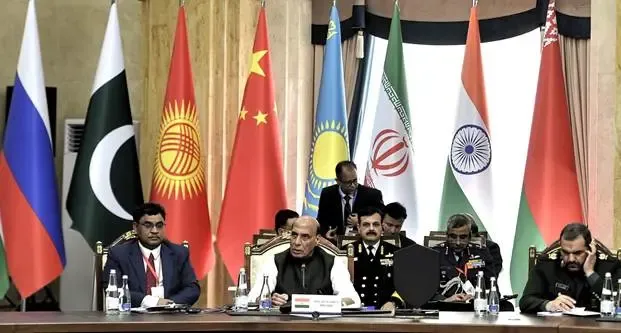
At the SCO Defence Ministers' Meeting in Bishkek, Rajnath Singh used Operation Sindoor to send an unambiguous message: India will strike terrorism at its source. His address combined a hard counter-terror doctrine with a call for a rules-based world order — positioning India as both a security actor and a moral voice within the SCO.
Key Takeaways
Defence Minister Rajnath Singh addressed the SCO Defence Ministers' Meeting in Bishkek on 28 April 2025 .
He cited Operation Sindoor as proof that terrorism epicentres are "no longer immune to justifiable punishment." Singh demanded the SCO take decisive steps against nations that support, shelter, or facilitate terrorism — rejecting all double standards.
He referenced the Tianjin Declaration and India's SCO Chairmanship joint statement on radicalisation as frameworks for collective action.
Singh invoked Mahatma Gandhi and 'Vasudhaiva Kutumbakam' to call for a rules-based, compassionate world order.
2026 marks the 25th anniversary of the SCO's founding, with members noting its growing relevance amid global uncertainty.
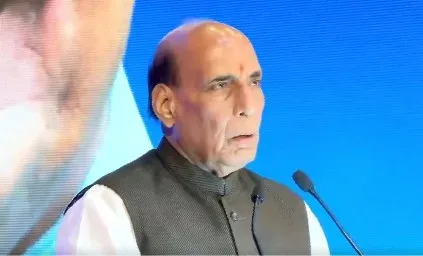
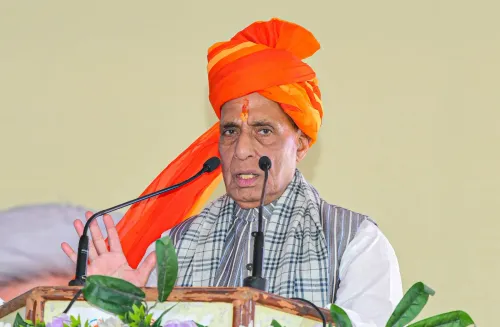
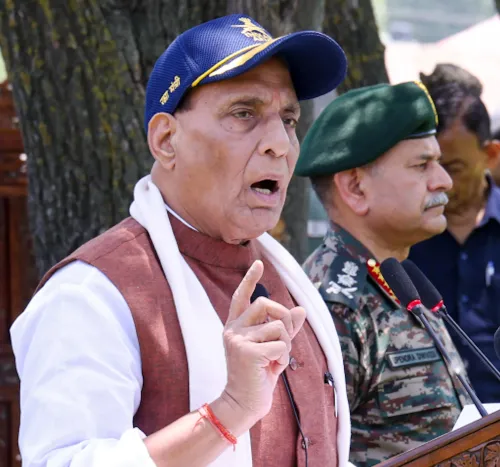
Defence Minister Rajnath Singh on Tuesday, 28 April addressed the Shanghai Cooperation Organisation (SCO) Defence Ministers' Meeting in Bishkek, Kyrgyzstan, asserting that Operation Sindoor demonstrated India's resolve that terrorism epicentres are no longer immune to punitive action. Singh called for a collective, uncompromising global stance against terrorism, separatism, and extremism, rejecting any political justification for such acts.
Operation Sindoor as a Statement of Intent
Rajnath Singh invoked Operation Sindoor as a defining signal of India's counter-terrorism posture. "Operation Sindoor demonstrated India's firm resolve that terrorism epicentres are no longer immune to justifiable punishment," he told the SCO gathering. The minister underscored that the global community must remain alert to the threat posed by state-sponsored cross-border terrorism, which he said directly undermines the sovereignty of nations.
He was unequivocal that there is no room for selective approaches or double standards when confronting such threats. "Terrorism has no nationality and no theology. Nations must take a firm and collective stance against terrorism," Singh stated.
Call to Dismantle Safe Havens and End Double Standards
Singh pressed the SCO to take decisive steps against those who support, shelter, or facilitate terrorist activities. "By tackling terrorism, separatism, and extremism without exception, we transform regional security from a challenge into a cornerstone for peace and prosperity," he said. He highlighted the organisation's Regional Anti-Terrorist Structure and referenced the Tianjin Declaration of the previous year as a reflection of India's zero-tolerance approach and collective commitment against terrorism and its perpetrators.
Notably, Singh also pointed to the joint statement issued during India's SCO Chairmanship on countering radicalisation as evidence of a shared commitment among member nations — a framework he argued must now be matched by consistent action.
Vision for a Rules-Based, Orderly World
Moving beyond counter-terrorism, Singh articulated a broader vision for global governance. "Do we need a new world order or a world which is more orderly?" he asked, arguing that the real crisis today is not the absence of order but the tendency to question the established rules-based framework. He called for a global consensus where "co-existence, co-habitation and compassion take precedence over chaos, competition and conflict."
Invoking the ancient Indian philosophy of 'Vasudhaiva Kutumbakam' — the world is one family — Singh positioned it as a spirit of global unity that transcends differences of race and religion. He also cited Mahatma Gandhi's warning that "an eye for an eye makes everyone blind," urging defence ministers to measure every action by its impact on the poor and the vulnerable.
SCO's Growing Relevance Amid Global Uncertainty
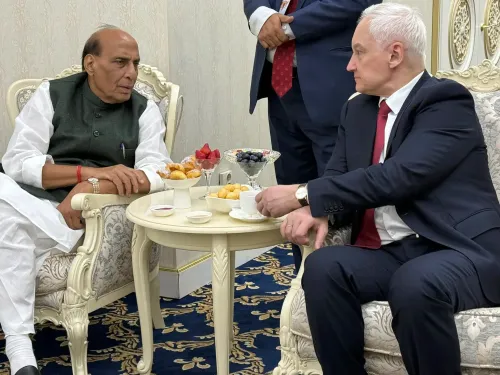
Singh reaffirmed India's belief that the SCO holds a crucial and growing role in an era of increasing global unpredictability. Member countries held detailed discussions on security, terrorism, radicalisation, and their broader implications for peace and stability. The gathering also acknowledged the significance of 2026, which marks the 25th anniversary of the SCO's founding, with members noting that the organisation's relevance has grown sharply amid rising global fragmentation.
Singh reiterated India's commitment to contributing constructively to the SCO's objectives, stressing that stronger cooperation and mutual trust — grounded in equality and respect — can position the bloc as a beacon of peace and prosperity.
Point of View
India is seeking to internationalise the legitimacy of pre-emptive counter-terror action, a doctrine with significant implications for regional security norms. The reference to 'double standards' and 'state-sponsored cross-border terrorism' leaves little ambiguity about the target audience. What mainstream coverage underplays is the inherent tension: India is simultaneously calling for dialogue and diplomacy while signalling military readiness to strike terror infrastructure. Whether the SCO — which includes China and Pakistan — can be a credible vehicle for India's counter-terror agenda remains the central unanswered question.
NationPress
6 Oct 2026
Frequently Asked Questions
What did Rajnath Singh say about Operation Sindoor at the SCO meeting?
Rajnath Singh said Operation Sindoor demonstrated India's firm resolve that terrorism epicentres are no longer immune to justifiable punishment. He made the statement at the SCO Defence Ministers' Meeting in Bishkek on 28 April 2025, using it to underscore India's zero-tolerance counter-terrorism doctrine.
What is the SCO Defence Ministers' Meeting in Bishkek?
It is a gathering of defence ministers from Shanghai Cooperation Organisation member states, held in Bishkek, Kyrgyzstan. The SCO is a major Eurasian political, economic, and security alliance that includes India, China, Pakistan, Russia, and Central Asian nations.
What did Rajnath Singh say about double standards in tackling terrorism?
Singh asserted there is no room for selective approaches or double standards in dealing with terrorism, separatism, and extremism. He called on SCO members to take decisive action against those who support, shelter, or facilitate terrorist activities without exception.
What is the significance of 2026 for the SCO?
2026 marks the 25th anniversary of the SCO's founding. Member nations at the Bishkek meeting noted that the organisation's relevance has grown significantly amid increasing global unpredictability and uncertainty.
What broader vision did Rajnath Singh outline at the SCO meet?
Singh called for a rules-based world order where co-existence, co-habitation, and compassion take precedence over chaos, competition, and conflict. He invoked 'Vasudhaiva Kutumbakam' and Mahatma Gandhi's philosophy to argue that the real test of power is using it to protect the weak, not to wage war.