Rajnath Singh meets Russia, China, Belarus defence chiefs at SCO Bishkek meet
Synopsis
Rajnath Singh used the SCO Defence Ministers' Meeting in Bishkek not just for bilateral talks with Russia, China, and Belarus — but to put Operation Sindoor on the multilateral record, framing India's military strike as a legitimate counter-terrorism act and demanding the SCO hold state sponsors of terror to account.
Key Takeaways
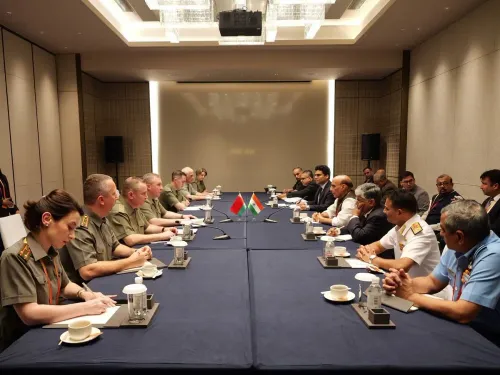
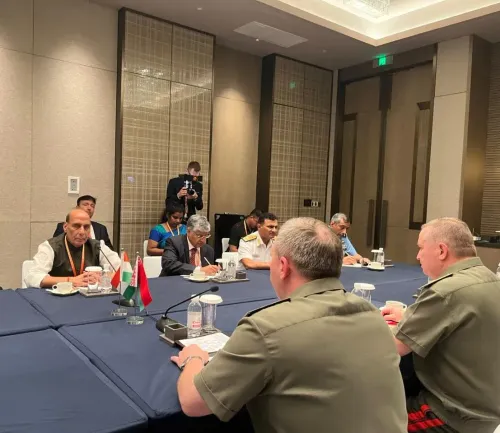
Defence Minister Rajnath Singh held bilateral meetings with counterparts from Russia , China , and Belarus in Bishkek on 28 April .
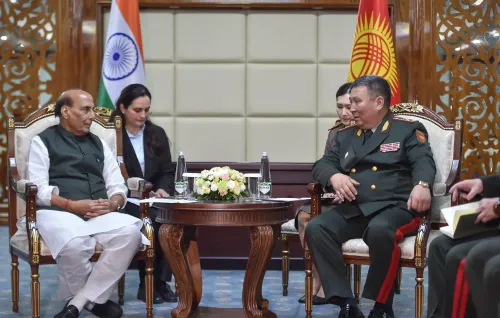
Singh met Chinese Defence Minister Admiral Dong Jun for talks focused on regional security and strengthening defence engagement.
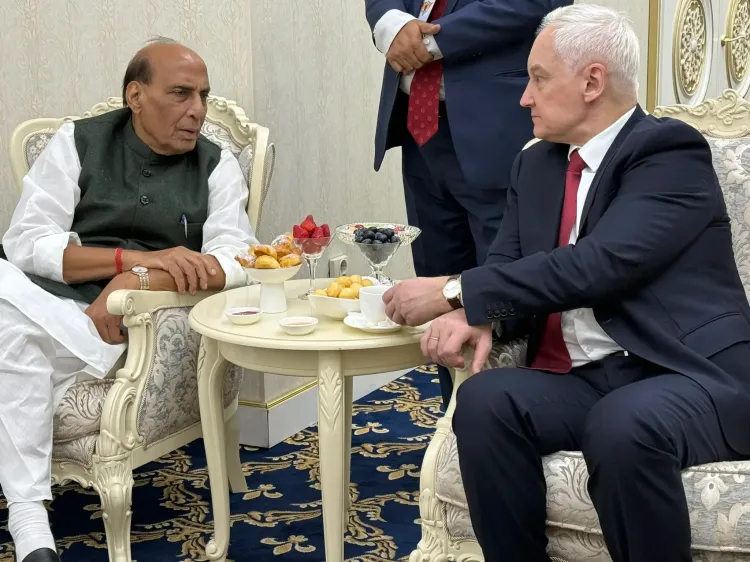
Talks with Russian counterpart Andrei Belousov covered key aspects of bilateral defence cooperation .
Singh invoked Operation Sindoor at the SCO gathering, stating terrorism epicentres are "no longer immune to justifiable punishment." He called on SCO members to dismantle terror safe havens and reject any political justification for terrorism, separatism, or extremism.
Singh referenced the Tianjin Declaration and the SCO's Regional Anti-Terrorist Structure (RATS) as pillars of collective counter-terrorism commitment.
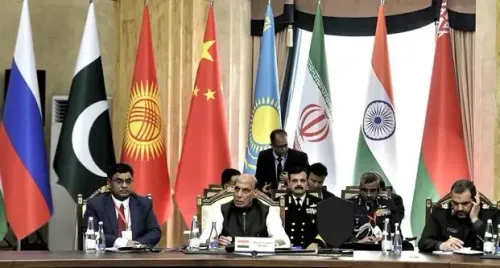
Defence Minister Rajnath Singh held back-to-back meetings with his counterparts from Russia, China, and Belarus on the sidelines of the Shanghai Cooperation Organisation (SCO) Defence Ministers' Meeting in Bishkek, Kyrgyzstan on Tuesday, 28 April. The bilateral engagements centred on regional security, bilateral defence cooperation, and India's firm stance against terrorism — underscored by a pointed reference to Operation Sindoor.
Key Bilateral Meetings
Singh met Russian Defence Minister Andrei Belousov to discuss key aspects of bilateral defence cooperation. The Ministry of Defence confirmed the meeting was a "productive interaction," though specific outcomes were not disclosed publicly.
In his meeting with Chinese Defence Minister Admiral Dong Jun, discussions focused on regional security and strengthening defence engagement between the two nations — a notable development given the ongoing efforts to stabilise India-China relations following the 2020 Galwan Valley standoff.
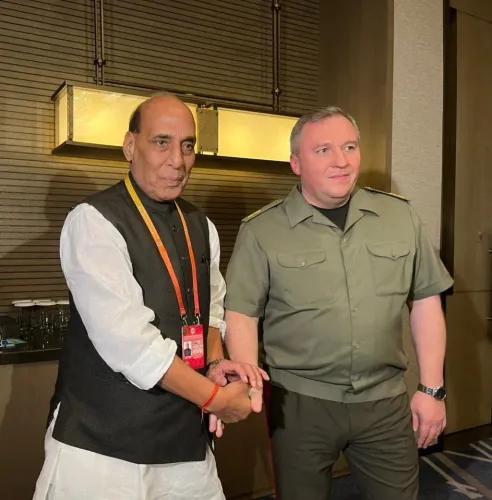
Singh also met Belarusian Defence Minister Lieutenant General Viktor Khrenin, posting on X that talks "focussed on strengthening defence cooperation between both the countries."
India's Counter-Terrorism Message at the SCO
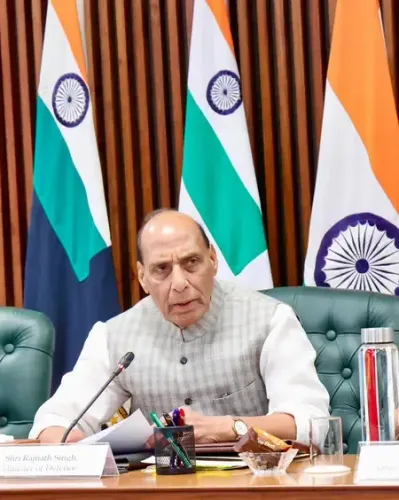
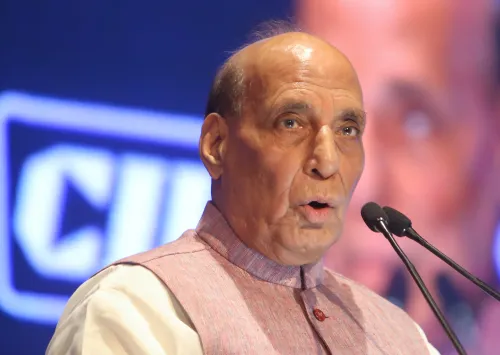
Addressing the full SCO Defence Ministers' gathering, Singh delivered a sharp counter-terrorism message, invoking Operation Sindoor as evidence of India's resolve. "Operation Sindoor demonstrated India's firm resolve that terrorism epicentres are no longer immune to justifiable punishment," he told the assembly.
Singh called for a collective and uncompromising approach to tackle terrorism, separatism, and extremism — specifically demanding the dismantling of safe havens and rejecting any political justification for such acts. He warned the global community against state-sponsored cross-border terrorism that undermines national sovereignty, asserting there is "no room for selective approaches or double standards."
On the Global Order and SCO's Role
Singh also addressed the broader geopolitical context, arguing that the SCO has a crucial role in times of increasing uncertainty and fragmentation. "Do we need a new world order or a world which is more orderly?" he asked, calling for an order where "co-existence, co-habitation and compassion take precedence over chaos, competition and conflict."
He referenced the Tianjin Declaration of the previous year as a reflection of India's zero-tolerance approach to terrorism, and highlighted the SCO's Regional Anti-Terrorist Structure (RATS) as a key institutional mechanism. He also cited the joint statement issued during India's SCO Chairmanship on countering radicalisation as a shared commitment among member nations.
Why This Matters
The Bishkek engagements are significant on multiple fronts. Singh's meeting with Admiral Dong Jun marks one of the more substantive India-China defence-level interactions in recent years, taking place amid cautious diplomatic thawing. The Russia meeting comes as India continues to navigate its defence partnership with Moscow despite Western pressure over the Ukraine conflict. Singh's invocation of Operation Sindoor at a multilateral platform signals India's intent to frame its recent military actions within an internationally recognised counter-terrorism framework.
With regional tensions simmering and the SCO's relevance increasingly debated, India's active diplomatic posture at Bishkek suggests New Delhi is leveraging multilateral forums to build consensus around its security priorities ahead of what could be a defining period for South Asian geopolitics.
Point of View
China, and Belarus — was a calculated move to legitimise India's military posture within an internationally recognised counter-terrorism framework. The India-China defence minister meeting, the most substantive in years, deserves close scrutiny: bilateral thawing at the military level does not automatically translate to resolution of the deeper border and trade tensions. Meanwhile, Singh's call for a 'more orderly world' rather than a 'new world order' is a subtle but pointed rebuke of revisionist powers — delivered, notably, in a room that includes several of them.
NationPress
20 Sept 2026
Frequently Asked Questions
Why did Rajnath Singh meet Chinese Defence Minister Admiral Dong Jun in Bishkek?
Singh met Admiral Dong Jun on the sidelines of the SCO Defence Ministers' Meeting in Bishkek on 28 April to discuss regional security and strengthening bilateral defence engagement. The meeting is among the most substantive India-China defence-level interactions in recent years, amid cautious diplomatic efforts to stabilise ties.
What is Operation Sindoor and why did Singh mention it at the SCO?
Operation Sindoor is a military operation that India has described as a counter-terrorism strike. Singh referenced it at the SCO Defence Ministers' Meeting to signal that India will not tolerate terrorism epicentres and to frame the action within a multilateral counter-terrorism context, calling such targets "no longer immune to justifiable punishment."
What was India's key demand at the SCO Defence Ministers' Meeting in Bishkek?
India called for a collective and uncompromising approach to tackle terrorism, separatism, and extremism — specifically demanding the dismantling of safe havens and rejecting any political or theological justification for such acts. Singh also warned against double standards and state-sponsored cross-border terrorism.
Who did Rajnath Singh meet at the SCO meeting in Bishkek?
Singh held bilateral meetings with Russian Defence Minister Andrei Belousov, Chinese Defence Minister Admiral Dong Jun, and Belarusian Defence Minister Lieutenant General Viktor Khrenin, all on the sidelines of the SCO Defence Ministers' Meeting in Bishkek on 28 April.
What is the SCO Regional Anti-Terrorist Structure (RATS)?
The SCO's Regional Anti-Terrorist Structure (RATS) is an institutional mechanism established by the Shanghai Cooperation Organisation to coordinate counter-terrorism efforts among member states. Singh highlighted its role at Bishkek and referenced the joint statement from India's SCO Chairmanship on countering radicalisation as a shared commitment.