Rajnath Singh: All DPSUs Now Profit-Making, India Builds Defence Self-Reliance
Synopsis
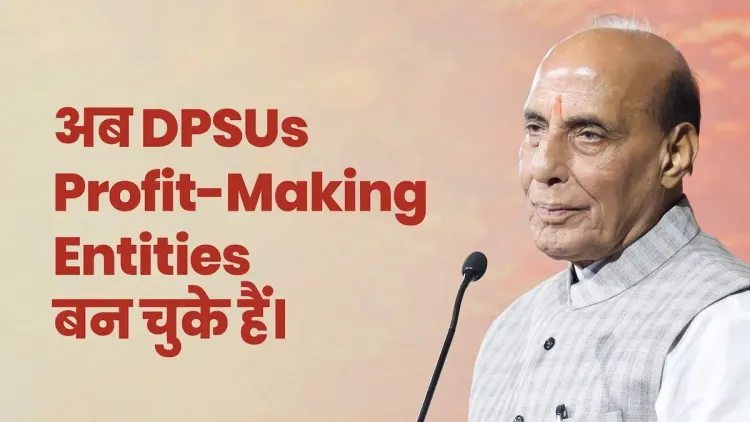
Union Defence Minister Rajnath Singh declared on October 15, 2026 that all DPSUs have become profit-making entities over 12 years of structural reforms, with India building an Atmanirbhar defence ecosystem through negative import lists, corporatisation, and indigenous production of advanced systems.
Key Takeaways
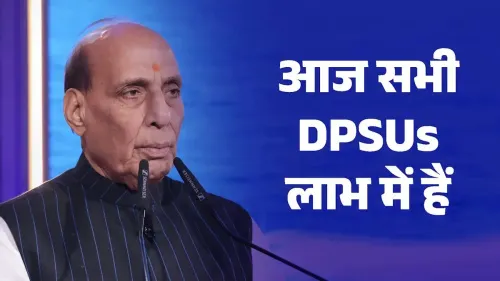
Rajnath Singh on October 15, 2026 stated all Defence Public Sector Undertakings (DPSUs) are now profit-making entities.
The Ordnance Factory Board was corporatised into seven new DPSUs in 2021 to introduce commercial accountability.
Negative import lists introduced from 2020 progressively ban overseas procurement of defence items to boost domestic sourcing.
The Defence Procurement Procedure was revised in 2016 to prioritise indigenously designed and developed systems.
Singh framed India's self-reliant defence ecosystem as a contributor to global security , signalling an export and strategic-provider ambition.
The next key markers are the upcoming defence budget and further updates to indigenisation and private-sector participation norms.
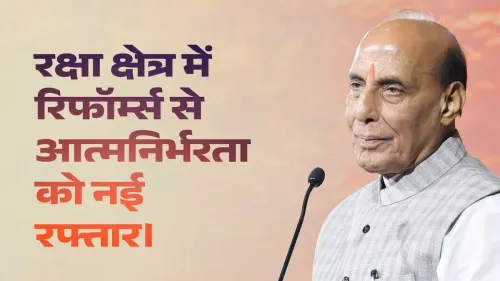
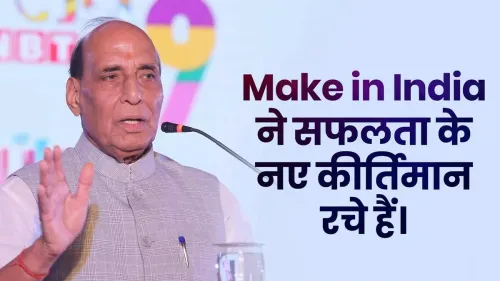
Twelve years of structural overhaul have quietly transformed India's defence manufacturing landscape — and Union Defence Minister Rajnath Singh wants the world to notice. On Thursday, October 15, 2026, Singh posted on X, asserting that every Defence Public Sector Undertaking has turned profitable and that indigenous production of advanced defence systems is now accelerating at scale.
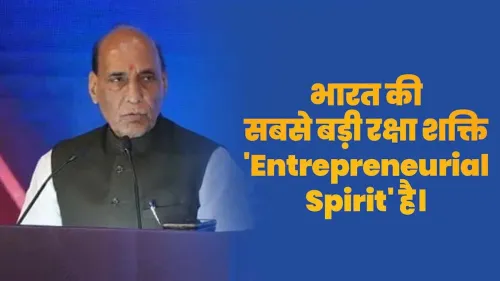
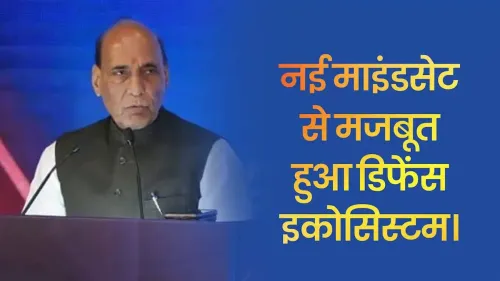
In his post, Singh wrote: 'पिछले 12 वर्षों में भारत के डिफेन्स सेक्टर में व्यापक स्ट्रक्चरल रिफॉर्म्स हुए हैं' — 'In the last 12 years, the defence sector has undergone comprehensive structural reforms.' He added that reducing import dependence and building domestic production of cutting-edge defence systems is moving India toward an Atmanirbhar (self-reliant) defence ecosystem that will 'strengthen national security while also contributing to global security.'
From Ordnance Factories to Profit-Making DPSUs
The centrepiece of Singh's claim is the turnaround of India's Defence Public Sector Undertakings. The journey began in earnest in 2021, when the legacy Ordnance Factory Board was corporatised into seven new DPSUs — a structural shift designed to inject commercial accountability into entities that had long operated as cost centres rather than competitive manufacturers. The move forced each company to stand on its own balance sheet, report revenues, and pursue orders in a market-like environment.
Before that, the Defence Procurement Procedure was revised in 2016 to create a new category that explicitly prioritised indigenously designed and developed systems over foreign licensed manufacture. That single procedural change rewired procurement incentives for a generation of defence planners and contractors.
The Negative Import Lists: Closing the Door on Foreign Supply
Perhaps the most consequential policy tool of this era has been the phased rollout of negative import lists — catalogues of defence items that the government has progressively banned from overseas procurement. Introduced from 2020 onwards, these lists have forced the armed forces and procurement agencies to source an expanding range of equipment domestically, creating guaranteed demand for Indian manufacturers and giving private-sector defence firms the long-term order visibility they need to invest in R&D.
The lists cover everything from ammunition and small arms to complex radar systems and military vehicles. Each successive revision has pushed the boundary further. The result, Singh argues, is a structural reduction in India's historic import dependence — a dependence that once made the country one of the world's largest arms importers.
Make in India, Atmanirbhar Bharat — and the Export Ambition
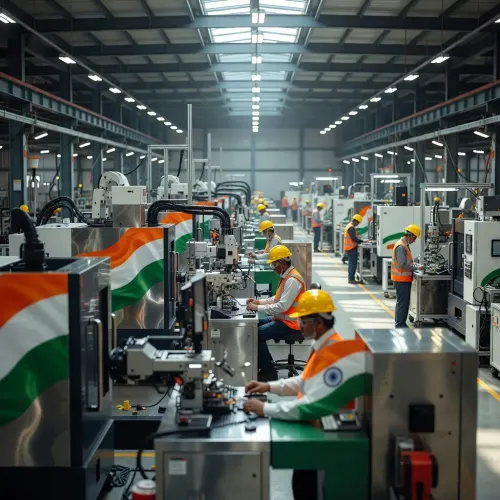
The broader scaffolding for all of this is the Make in India initiative, launched in 2014, which listed defence as a priority sector from day one. It was later reinforced by the Atmanirbhar Bharat framework, which translated the general self-reliance philosophy into specific defence-manufacturing targets, export corridors, and private-sector participation norms.
India's defence establishment has moved in parallel to grow exports — from a near-negligible base a decade ago to a position where domestically built systems, including helicopters, radar platforms, and ammunition, now reach foreign buyers. Singh's reference to contributing to 'global security' signals that the government frames this not merely as an industrial policy victory but as a strategic repositioning: India as a net security provider, not just a consumer of foreign defence technology.
What the 12-Year Reckoning Means for India's Armed Forces
For the Indian Army, Navy, and Air Force, a profitable and productive domestic defence industry changes the calculus on supply-chain resilience — a lesson underscored sharply by global supply disruptions in recent years. Indigenous production means spares, upgrades, and technology transfers stay within national control. It also means the armed forces are no longer entirely hostage to the diplomatic weather between New Delhi and foreign supplier capitals.
The next inflection point will come with the upcoming defence budget and any further expansions to indigenisation lists or private-sector participation norms. Singh's post, timed at a moment of heightened attention to defence readiness, is as much a progress report as it is a political argument: that a decade-plus of patient structural reform is now yielding measurable, strategic results.
India's defence sector transformation is no longer a promise on a policy document. It is, the minister says, a running machine — and it is only picking up speed.
Point of View
Arriving at a moment when India's strategic credibility is under close watch. By anchoring the narrative to institutional transformation — corporatisation, import bans, procurement reform — rather than individual platforms or contracts, he positions the entire reform arc as a structural achievement rather than a one-off milestone. The Atmanirbhar framing also does double duty: it addresses domestic voters who want 'Make in India' to mean something concrete, while simultaneously pitching India to potential partner nations as a reliable, self-sufficient supplier. The unanswered question is whether accelerating private-sector participation will be the next frontier, or whether the DPSUs will consolidate their newly profitable status into genuine competitive advantage.
NationPress
15 Oct 2026
Frequently Asked Questions
What are DPSUs and why does their profitability matter?
DPSUs are Defence Public Sector Undertakings — government-owned companies that manufacture and supply equipment to India's armed forces. Their profitability matters because it signals that these entities, previously structured as cost centres, can now operate competitively, reinvest in R&D, and reduce the defence establishment's reliance on foreign suppliers.
What is India's negative import list for defence?
India's negative import list is a policy tool introduced from 2020 onwards that progressively bans the procurement of specified defence items from foreign sources, compelling the armed forces and procurement agencies to source those items domestically and boosting indigenous manufacturers.
What structural reforms has India's defence sector seen in the last 12 years?
Key reforms include the revision of the Defence Procurement Procedure in 2016 to prioritise indigenous design, the introduction of negative import lists from 2020, and the corporatisation of the Ordnance Factory Board into seven new DPSUs in 2021 to improve efficiency and accountability.
What is Atmanirbhar Bharat in the context of defence?
Atmanirbhar Bharat, meaning 'self-reliant India,' is a policy framework that in the defence context translates into specific targets for indigenous manufacturing, curbing imports, building domestic production of advanced systems, and growing defence exports so India becomes a net contributor to global security.
What is the next big milestone to watch in India's defence indigenisation?
The next key inflection points are the upcoming defence budget, any further expansion of the negative import lists, and updates to private-sector participation norms — all of which will determine how quickly India can move from import substitution to competitive global defence exports.