Rajnath Singh: No DPSU in loss after OFB reforms
Synopsis
Union Defence Minister Rajnath Singh says the corporatisation of India's Ordnance Factory Board into seven DPSUs has yielded a zero-loss public sector, while over 16,000 MSMEs and startups now power the country's rapidly expanding defence manufacturing ecosystem.
Key Takeaways
Union Defence Minister Rajnath Singh stated on 27 September 2026 that India's defence manufacturing ecosystem is rapidly transforming.
Over 16,000 MSMEs and startups now participate in the domestic defence supply chain alongside private industry and DPSUs.
The OFB Corporatisation , effective 1 October 2021 , converted 41 ordnance factories into seven new DPSUs to improve autonomy and efficiency.
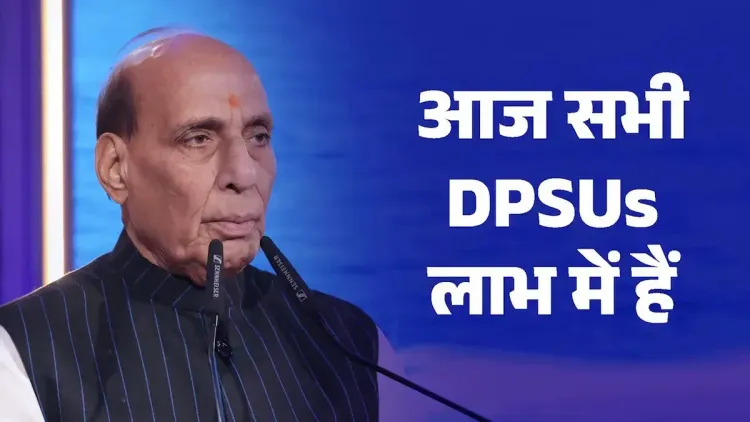
Singh claimed that not a single DPSU is currently running at a loss — a direct outcome he attributed to the corporatisation reform.
India's broader policy since 2020 has progressively opened more defence categories to private participation to reduce import dependence.
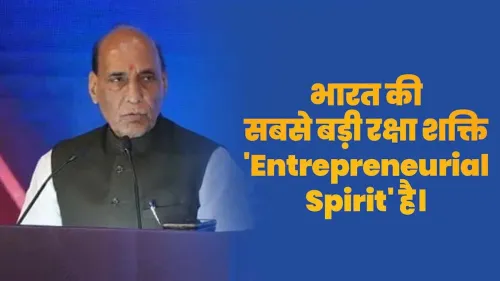
India's defence manufacturing landscape is undergoing one of its most consequential transformations in decades — and Union Defence Minister Rajnath Singh wants every stakeholder to know the scoreboard. On Sunday, 27 September 2026, the Minister posted on X that the domestic defence ecosystem, powered by private industry, over 16,000 MSMEs, and startups alongside the Defence Public Sector Undertakings (DPSUs), is now stronger than at any point in recent memory.
Posting in Hindi, Singh declared: 'भारत का डिफेंस मैन्युफैक्चरिंग इकोसिस्टम तेजी से बदल रहा है' — 'India's defence manufacturing ecosystem is changing rapidly.' The Minister highlighted that as a direct result of landmark structural reforms — most notably the corporatisation of the Ordnance Factory Board (OFB) — not a single DPSU is currently running at a loss. All, he said, are moving forward 'with new energy.'
What the OFB Corporatisation actually did
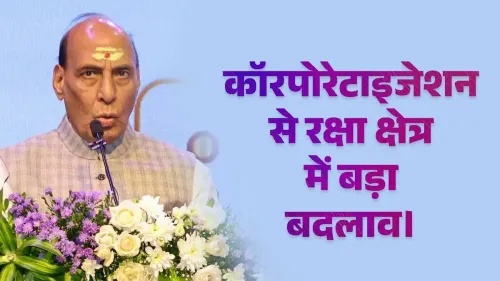
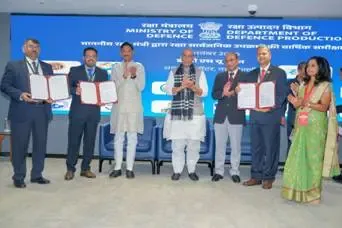
The reform Singh is pointing to was a decisive break from a century-old structure. Effective 1 October 2021, the government dissolved the Ordnance Factory Board and converted its 41 ordnance factories into seven new DPSUs — each a standalone corporate entity with its own board, balance sheet, and mandate. The idea was straightforward but long-overdue: grant public-sector arms producers the autonomy and accountability that only a corporate structure can impose. Legacy bureaucratic inertia, critics had long argued, kept the factories from innovating, pricing competitively, or expanding exports. Corporatisation was the surgical answer.MSMEs and startups: the new backbone of the supply chain
The numbers Singh cites tell a structural story beyond the DPSUs themselves. The entry of private defence firms and over 16,000 MSMEs and startups into the supply chain signals a deliberate policy of distributed manufacturing — components, sub-systems, and niche technologies flowing upward to both public and private prime contractors. Since 2020, the government has progressively opened more defence production categories to private participation, a policy designed to shrink import dependence while building domestic depth. Startups, in particular, have become a target constituency, with iDEX (Innovations for Defence Excellence) schemes seeding early-stage technology ventures that can graduate into the supply chain.Why the 'zero-loss DPSU' claim carries weight
Before corporatisation, several ordnance factories operated as cost centres rather than profit centres — they had no real incentive to control overheads or diversify their customer base because losses were absorbed by the government. The transformation into corporate entities changed that calculus. Singh's claim that every DPSU is now profitable — if borne out by annual ministry disclosures — would mark a genuine inflection point. It would suggest the reform didn't just reorganise letterheads; it changed behaviour. The next hard test will come when defence ministry annual reports publish DPSU financials for this fiscal year. India's ambition is not just self-sufficiency but exports — and a profitable, innovative domestic industry is the prerequisite. The Minister's post lands that message squarely.Point of View
Data-framed defence of the BJP government's 2021 OFB corporatisation — one of the most structurally significant defence reforms in independent India's history. By anchoring the narrative on DPSU profitability and MSME scale, the Minister is shifting the political conversation from procurement controversies to production outcomes. The emphasis on startups and private industry also signals a continued push to make the iDEX and defence industrial corridor frameworks politically visible ahead of the next defence export target review. Whether the zero-loss DPSU claim survives independent audit will determine how durable this narrative proves to be.
NationPress
27 Sept 2026
Frequently Asked Questions
What is OFB corporatisation and when did it happen?
The Ordnance Factory Board (OFB) was corporatised on 1 October 2021 , when the government dissolved the legacy board and converted its 41 ordnance factories into seven new Defence Public Sector Undertakings (DPSUs), each with independent corporate governance and accountability.
What are the seven DPSUs created after OFB corporatisation?
The seven DPSUs formed from the OFB's 41 factories include entities such as Munitions India Limited, Armoured Vehicles Nigam Limited, Advanced Weapons and Equipment India Limited, Troop Comforts Limited, Yantra India Limited, India Optel Limited, and Gliders India Limited — each specialising in a different segment of defence production.
How many MSMEs are involved in India's defence manufacturing?
According to Union Defence Minister Rajnath Singh's post on 27 September 2026, over 16,000 MSMEs and startups are now part of India's defence manufacturing supply chain, producing components and sub-systems for both public and private prime contractors.
Are all DPSUs profitable after corporatisation?
Minister Rajnath Singh asserted on 27 September 2026 that not a single DPSU is currently running at a loss, crediting the OFB corporatisation reform for this turnaround. Official annual ministry reports on DPSU financials will provide the definitive verification.
What is India's broader defence manufacturing policy?
Since 2020, India has pursued greater self-reliance in defence production by progressively opening more categories to private sector participation, reforming public sector units, and incentivising MSMEs and startups through schemes like iDEX — all aimed at reducing import dependence and growing defence exports.