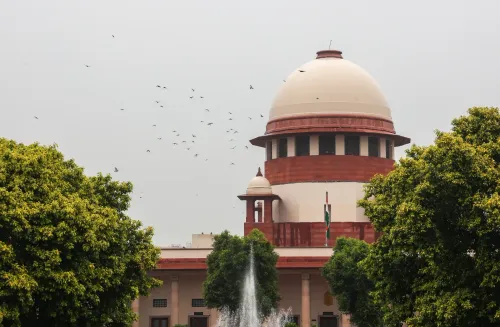
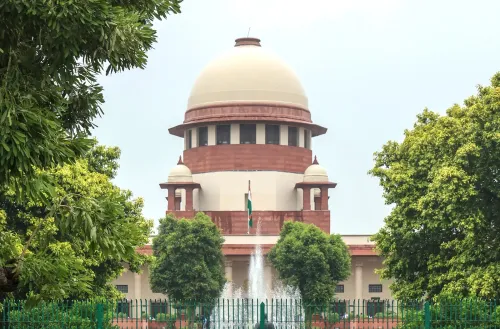
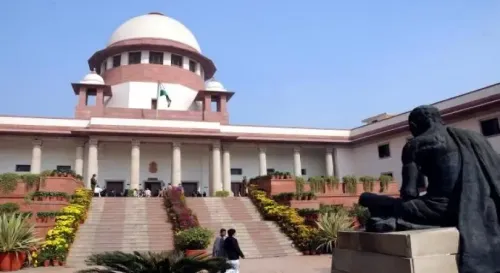
Supreme Court: HC judges must not hear cases involving former clients
Synopsis
The Supreme Court has drawn a firm line on judicial conflict of interest — ruling that a High Court judge who once represented a party as counsel cannot hear that same party's case. The bench's pointed observations, directed at an Uttarakhand High Court judge, go to the heart of a principle Indian courts have long proclaimed but rarely enforced so explicitly: justice must not only be done, it must be seen to be done.
Key Takeaways
The Supreme Court held on 30 July that a High Court judge must not hear cases involving a former client, especially on the same subject matter.
A bench of Justices Sanjay Kumar and Sanjeev Sachdeva made the ruling while disposing of SLPs filed by Prateek Resorts and Builders Private Limited .
The Uttarakhand High Court judge had earlier appeared as counsel for the same company in a 2013 writ petition over the same land.
The apex court also criticised the improper expansion of the scope of the two writ petitions through interim orders.
Existing interim orders were left undisturbed; the matter has been referred to an appropriate bench of the Uttarakhand High Court .
The Chief Justice of the Uttarakhand High Court has been directed to consider initiating a PIL if warranted.
The Supreme Court of India has ruled that a High Court judge ought not to hear or pass orders in a matter involving a former client — particularly when the dispute concerns the very same subject matter in which the judge had earlier appeared as counsel. The apex court stressed that 'justice must not only be done but must also be seen to be done.'
The observations were made by a bench of Justices Sanjay Kumar and Sanjeev Sachdeva while disposing of special leave petitions (SLPs) filed by Prateek Resorts and Builders Private Limited, which had challenged a series of interim orders passed by a judge of the Uttarakhand High Court in criminal writ proceedings relating to a land dispute.
What the Court Found
The Supreme Court found that the Uttarakhand High Court judge in question had previously appeared as counsel for Prateek Resorts and Builders Private Limited in a 2013 writ petition concerning the very same parcel of land that subsequently became the subject of the criminal writ petition heard before him.
In these circumstances, the apex court held that 'in the interest of judicial propriety', the judge ought not to have entertained the matter or passed any orders in it. 'Passing orders either in favour of or against a former client, a private entity, does not further that cause,' the Justice Sanjay Kumar-led bench observed.
Scope of Writ Petitions Improperly Expanded
The court also took strong exception to the manner in which the scope of the two writ petitions had been enlarged through interim orders. The apex court noted that the two petitions had been filed on 'altogether different issues' and that their scope had subsequently been widened by the judge to address matters unconnected with the original issues before the High Court.
'Even if such an exercise was taken up with the best of intentions, it was not proper for the learned Judge to do so in writ petitions which had nothing to do with the issues sought to be addressed,' the bench said.
The court added that if the judge believed the matter warranted consideration in public interest, the proper course would have been to place it before the High Court's Public Interest Litigation (PIL) Committee or refer it to the Chief Justice for appropriate action in accordance with established procedure.
Interim Orders Left Undisturbed for Now
Despite its sharp observations on judicial propriety, the Supreme Court declined to interfere with the existing interim orders at this stage. It noted that certain orders were presently in operation and that undertakings had been given regarding not cutting down trees on the disputed land.
'It is for the appropriate Bench of the High Court, as and when it takes up the matter, to go into all aspects on facts and in law, including the validity of the orders impugned presently. All issues are left open to be addressed before the said Bench,' the Supreme Court stated.
Directions to Uttarakhand High Court Chief Justice
The apex court directed that its order be communicated to the Chief Justice of the Uttarakhand High Court for taking suitable steps regarding the listing of the two criminal writ petitions before an appropriate bench. The court also asked the Chief Justice to consider initiating a public interest litigation, if warranted by the circumstances.
This ruling reinforces a foundational principle of judicial ethics — that the appearance of impartiality is as vital as impartiality itself — and places renewed scrutiny on recusal practices in India's higher judiciary.
Point of View
But their impact hinges on what the Uttarakhand High Court's Chief Justice does next — a detail the ruling leaves deliberately open. India's higher judiciary has long relied on voluntary recusal, a system that depends on individual conscience rather than institutional enforcement. This ruling does not create a binding recusal mandate, but it does create a public record that a named High Court failed the appearance-of-impartiality test. The more consequential issue the bench flags — judges expanding writ petition scope through interim orders — is a systemic pattern that goes well beyond this one case and deserves far more scrutiny than it typically receives.
NationPress
13 Sept 2026
Frequently Asked Questions
What did the Supreme Court rule about High Court judges hearing cases involving former clients?
The Supreme Court ruled that a High Court judge ought not to hear or pass orders in a matter involving a former client, particularly where the dispute concerns the same subject matter in which the judge had earlier appeared as counsel. The bench held this was necessary 'in the interest of judicial propriety' and to ensure justice is seen to be done.
What was the specific case that prompted this ruling?
The ruling arose from special leave petitions filed by Prateek Resorts and Builders Private Limited challenging interim orders passed by a judge of the Uttarakhand High Court. The Supreme Court found that the same judge had previously represented Prateek Resorts as counsel in a 2013 writ petition involving the same parcel of land.
Did the Supreme Court set aside the interim orders passed by the Uttarakhand High Court judge?
No. The Supreme Court declined to interfere with the existing interim orders at this stage, noting they were currently operative and that undertakings had been given regarding not cutting trees. The validity of those orders has been left open for an appropriate bench of the Uttarakhand High Court to decide.
What directions were given to the Uttarakhand High Court?
The Supreme Court directed that its order be communicated to the Chief Justice of the Uttarakhand High Court for listing the two criminal writ petitions before an appropriate bench, and for considering whether to initiate a public interest litigation in the matter.
What is the broader significance of this ruling for judicial ethics in India?
The ruling reinforces that the appearance of impartiality is as essential as impartiality itself in judicial proceedings. It also flags the improper practice of expanding the scope of writ petitions through interim orders, signalling that such conduct — even if well-intentioned — falls outside established judicial procedure.