Why are Authorities Remaining Silent on Forest Land Encroachment in Uttarakhand?
Synopsis
The Supreme Court has initiated a suo motu case against the Uttarakhand government for its inaction amidst large-scale forest land encroachments. This shocking oversight has raised serious questions about governmental accountability and the protection of environmental resources.
Key Takeaways
Supreme Court initiates suo motu case regarding forest land encroachment in Uttarakhand.
Government criticized for inaction amidst illegal activities.
Immediate stay on construction activities on forest land.
Private entities restricted from claiming rights over disputed land.
Fact-finding committee to investigate the extent of encroachment.
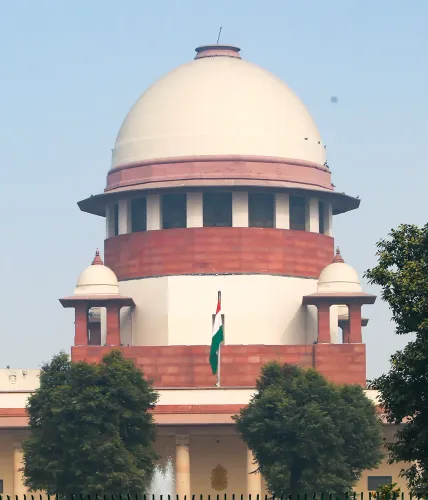
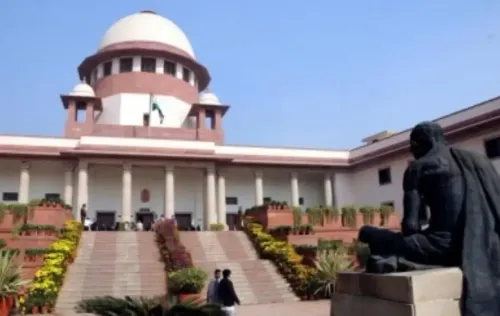
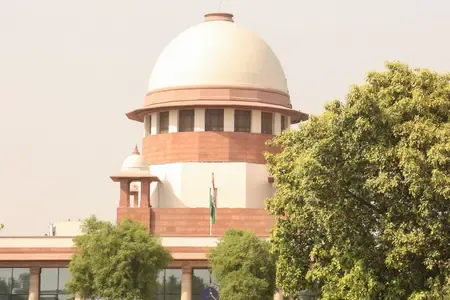
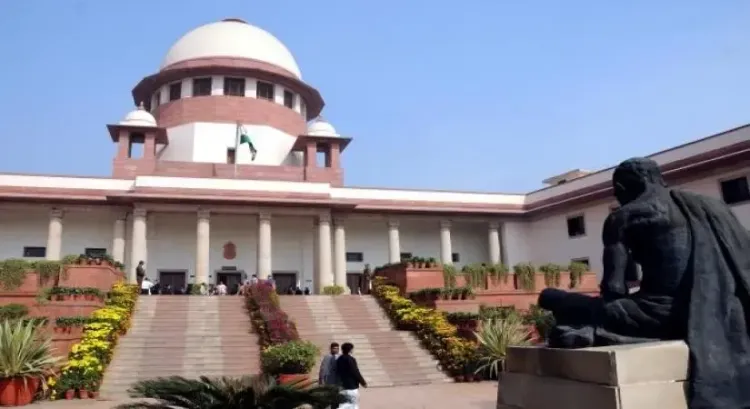
New Delhi, Dec 22 (NationPress) The Supreme Court expressed serious concerns regarding the Uttarakhand government and its officials as they faced allegations of extensive encroachment on forest land by private entities. In a suo motu (on its own initiative) case, a bench led by Chief Justice of India (CJI) Surya Kant and Justice Joymalya Bagchi criticized the authorities for being mere “mute spectators” while illegal activities unfolded.
The apex court found it “shocking” to witness protected land being overtaken without any substantial response from the government apparatus.
“What is shocking to us is that the State of Uttarakhand and its authorities are sitting like mute spectators when forest land is being grabbed in front of their eyes. Therefore, we are compelled to initiate a suo motu case,” stated the CJI Kant-led Bench.
As a temporary measure, the Supreme Court has mandated an immediate halt to all construction activities on forest land and prohibited private entities from establishing any third-party claims over the disputed areas.
The court further instructed that all unoccupied land, excluding residential houses, should be transferred to the Forest Department.
“Private parties are forbidden from alienating the land or establishing any third-party rights. No construction shall take place. Unoccupied land, apart from residential houses, shall be taken into possession by the Forest Department and the relevant Collector,” the Supreme Court directed.
Additionally, it tasked the Chief Secretary and the Principal Chief Conservator of Forests with forming a fact-finding committee to present a comprehensive report.
The Supreme Court noted that this fact-finding initiative was crucial to gauge the extent of the alleged land appropriation and evaluate how government entities have managed the situation over the years.
The CJI-led Bench commenced suo motu proceedings after reports emerged indicating that thousands of acres of forest land had been unlawfully occupied, including parcels previously leased to a private society but later claimed by individuals, despite reverting to the Forest Department.
The top court has scheduled its next hearing for January 5, where it will review the fact-finding committee’s findings and may issue further directives.
Point of View
It is imperative that the state's commitment to safeguarding forest lands is put under scrutiny, ensuring that such encroachments do not go unchecked in the future.
NationPress
19 Sept 2026
Frequently Asked Questions
What prompted the Supreme Court to take action?
The Supreme Court acted on its own motion after reports of extensive encroachment on forest land in Uttarakhand by private entities surfaced.
What is a suo motu case?
A suo motu case is initiated by a court on its own accord, without any external prompting or request.
What directives did the Supreme Court issue?
The court ordered a stay on construction activities on forest land and mandated that all unoccupied land, except residential properties, be handed over to the Forest Department.
When is the next hearing scheduled?
The next hearing is set for January 5, where the court will review the report from the fact-finding committee.
What is the significance of this case?
This case highlights the need for accountability in environmental governance and the protection of forest resources in India.