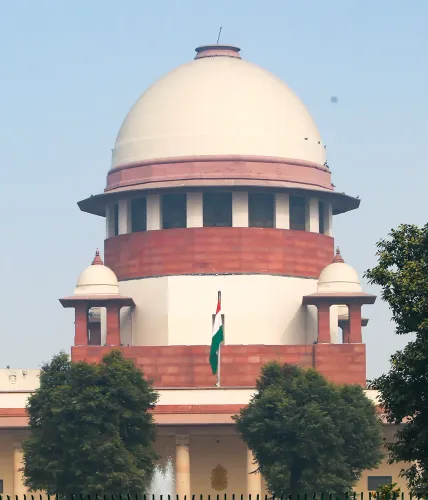
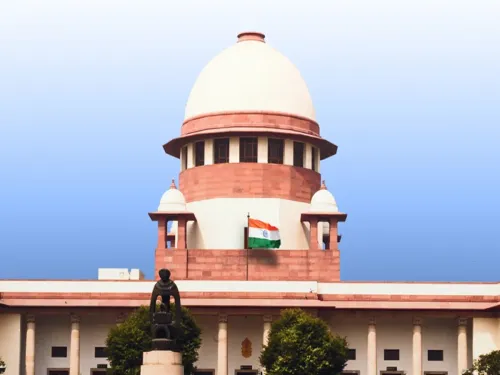
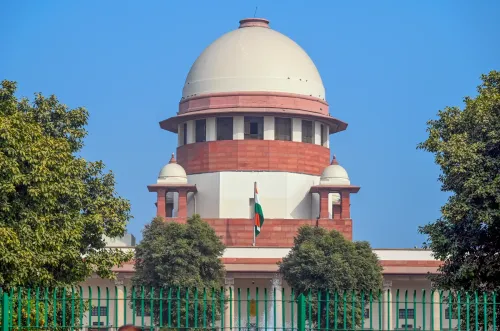
Supreme Court: Kapurthala royal private property follows personal law, not primogeniture

Synopsis
The Supreme Court has drawn a clear line between a former ruler's throne and his private estate — ruling that once sovereignty ended, private properties declared under merger covenants must follow personal succession law, not the ancient rule of male primogeniture. The Kapurthala judgment could unsettle property claims across multiple erstwhile royal families nationwide.
Key Takeaways
The Supreme Court ruled on 27 May that private properties of former princely rulers devolve under personal succession law , not male lineal primogeniture.
The case involved the erstwhile royal family of Kapurthala ; the bench comprised Justice Pankaj Mithal and Justice S.V.N.
The court set aside the Punjab and Haryana High Court ruling that had upheld Brigadier Sukhjit Singh's (retd) primogeniture claim.
The 1948 PEPSU covenant's Article XIV protects primogeniture only for succession to the 'Gaddi' (throne), not private estates.
The judgment relied on precedents including the Travancore , Rampur , and Faridkot royal property cases.
The ruling may affect pending property disputes involving other former princely families across India.
The Supreme Court of India has ruled that private properties declared by former princely rulers following their merger with the Indian Union must devolve according to personal succession laws — and not by the customary rule of male lineal primogeniture. The landmark judgment, delivered in a dispute involving the erstwhile royal family of Kapurthala, marks a significant clarification on the legal status of ex-rulers' private estates.
Background to the Dispute
The case pitted two branches of the Kapurthala royal family against each other. On one side stood Brigadier Sukhjit Singh (retd), recognised by the Centre as the ruler of Kapurthala, who claimed the disputed properties devolved exclusively upon him under the customary rule of primogeniture applicable to princely states. On the other were his estranged wife Gita Devi and their children, who sought partition of the family properties, arguing these were ancestral coparcenary assets subject to ordinary succession law.
The Punjab and Haryana High Court had sided with Brigadier Singh, upholding his primogeniture claim. The heirs of Gita Devi appealed to the Supreme Court, which has now set aside that finding entirely.
What the Supreme Court Ruled
A bench of Justice Pankaj Mithal and Justice S.V.N. Bhatti held that while succession to the 'Gaddi' (throne) continued to be governed by the rule of primogeniture even after accession, that principle did not extend to private properties declared by the ruler under the merger covenant.
'The covenant preserved the rule of primogeniture only in respect of succession to the Gaddi (throne) but in no way guaranteed this in respect of the private personal properties of the Maharaja,' the bench ruled.
The court further held that once merger agreements were signed and sovereignty ceased, former rulers became ordinary citizens — entitled to certain privileges such as privy purses and ceremonial recognition, but no more. Their declared private properties consequently fell under ordinary personal succession laws and were, in the bench's words, 'subject to taxation and acquisition in the ordinary way.'
The PEPSU Covenant and Its Interpretation
The judgment closely examined the covenant signed in 1948 for the formation of the Patiala and East Punjab States Union (PEPSU). The court noted that Article XIV of that covenant protected succession by custom only to the 'Gaddi' and personal dignities of the ruler, while Article XII separately recognised the ruler's ownership over declared private properties — without attaching any primogeniture condition to that ownership.
This textual distinction proved decisive. The bench concluded that the two categories — throne succession and private property succession — were never meant to be governed by the same rule.
Precedents Relied Upon
The Supreme Court drew on a line of earlier Constitution Bench and three-judge Bench decisions — including the Travancore case, the Rampur case, and the Faridkot royal property dispute — to reinforce its position. Taken together, these precedents establish that succession to private properties of former rulers cannot automatically follow the rule of primogeniture.
'The succession to such private ancestral properties must be in accordance with the personal law of the ruler and not as per any custom or rule of primogeniture,' the bench held, declaring the High Court's contrary conclusion 'illegal and unsustainable in law.'
Significance and What Comes Next
The ruling has implications beyond Kapurthala. Across India, several former princely families hold private estates whose succession has historically been contested along similar lines. This judgment effectively forecloses the primogeniture argument for any such private property, directing all such disputes toward personal succession law. Legal experts are likely to study its application to pending property cases involving other erstwhile royal families.
Point of View
And the court has now said so plainly. What is underreported is the downstream exposure: several erstwhile royal families across Rajasthan, Hyderabad, and the former hill states hold private estates where succession has been informally governed by primogeniture convention rather than statute. Each of those arrangements is now legally vulnerable. The judgment is also a quiet rebuke to courts that conflated ceremonial recognition with property rights — a conflation that served male heirs well for decades at the expense of female claimants and other legal heirs.
NationPress
19 Sept 2026
Frequently Asked Questions
What did the Supreme Court rule in the Kapurthala royal property case?
The Supreme Court ruled that private properties declared by former princely rulers after merging with the Indian Union must devolve according to personal succession laws, not the customary rule of male lineal primogeniture. The bench set aside a Punjab and Haryana High Court order that had upheld the primogeniture claim of Brigadier Sukhjit Singh (retd).
What is the rule of primogeniture and why was it contested here?
Primogeniture is the customary rule by which the eldest male heir inherits an estate or title exclusively. Brigadier Sukhjit Singh argued it applied to the Kapurthala family's private properties; the Supreme Court disagreed, holding that after merger and the end of sovereignty, only succession to the 'Gaddi' (throne) remained protected by that custom — not private property.
What is the significance of the 1948 PEPSU covenant in this judgment?
The court examined the covenant signed in 1948 for the Patiala and East Punjab States Union (PEPSU) and found that Article XIV protected primogeniture only for the 'Gaddi' and personal dignities, while Article XII separately recognised ownership of private properties — without attaching any primogeniture condition to them.
Which earlier cases did the Supreme Court rely on?
The bench drew on the Travancore case, the Rampur case, and the Faridkot royal property dispute — all of which established that succession to private properties of former rulers cannot automatically follow the rule of primogeniture.
How does this ruling affect other former royal families in India?
The judgment has broader implications for any erstwhile princely family where private estate succession has been claimed under primogeniture rather than personal law. Legal experts expect it to be cited in pending property disputes involving other former royal families across India.