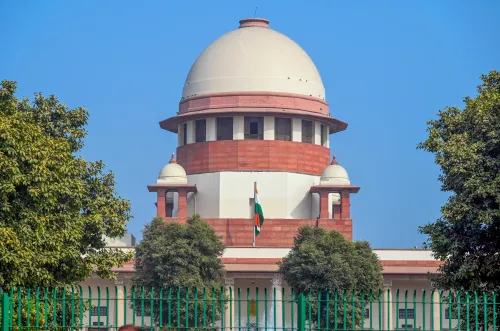
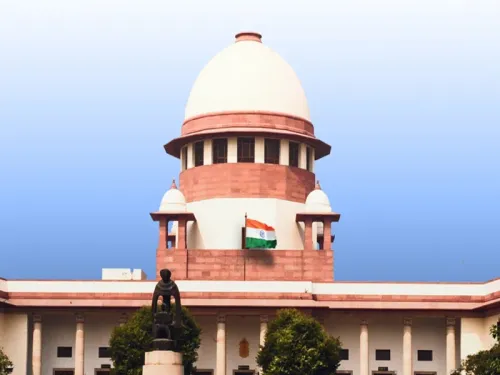
Supreme Court: Excluding natural heirs alone cannot invalidate a Will
Synopsis
The Supreme Court has drawn a clear line: cutting family out of a Will is not, by itself, proof of fraud. In a case spanning four courts and four decades, the Bench upheld a 1983 Karnataka Will that bypassed a wife and children entirely — reaffirming that the whole point of a Will is to override the default line of succession.
Key Takeaways
The Supreme Court upheld a Will dated 15 May 1983 by Karnataka-based chartered accountant B.
Sheena Nairi , bequeathing property to his sister Laxmi Nairthy .
The Bench of Justice Ujjal Bhuyan and Justice Vijay Bishnoi ruled that excluding natural heirs alone is not a suspicious circumstance to invalidate a Will.
The court affirmed that testimony of one attesting witness is sufficient to prove due execution under the Indian Succession Act .
Non-registration of a Will does not affect its validity; registration is not legally mandated.
Affidavits by attesting witnesses denying execution were rejected as inadmissible unless tested through cross-examination .
Mutation entries in revenue records confer no title and are only for fiscal purposes, the court reiterated.
The Supreme Court of India has upheld the validity of a Will executed by a Karnataka-based chartered accountant in favour of his sister, ruling on 24 May that the mere exclusion of natural heirs from inheritance cannot, by itself, constitute a suspicious circumstance sufficient to invalidate a testamentary document. The judgment reinforces settled principles on the proof and validity of Wills under Indian succession law.
Background of the Dispute
The case centred on properties owned by the late B. Sheena Nairi, including agricultural lands in Udupi district, Karnataka, bequeathed to his sister, Laxmi Nairthy, under a Will dated 15 May 1983. His wife and children were excluded from the bequest and subsequently challenged the Will, alleging it was forged and fabricated. They contended that the very exclusion of legal heirs created suspicious circumstances warranting invalidation.
The challenge was dismissed by the trial court, the first appellate court, and the Karnataka High Court — all of which upheld the Will's validity. The wife and children then appealed to the Supreme Court.
What the Supreme Court Ruled
A Bench of Justice Ujjal Bhuyan and Justice Vijay Bishnoi dismissed the appeal, affirming the concurrent findings of all lower courts. The Bench held that 'mere exclusion of the natural heirs from the property of the testator, by itself, cannot be construed as a suspicious circumstance so as to invalidate a Will outrightly.'
The court further observed: 'It is well-established that mere deprivation of natural heirs, by itself, may not amount to a suspicious circumstance because the whole idea behind the execution of a Will is to interfere with the normal line of succession.' The judgment also noted that the Will itself recorded that the testator had already given 'enough and more' to his wife and children residing in Bombay, and therefore no injustice had been caused to them.
Key Legal Principles Affirmed
On the standard of proof for Wills, the apex court reiterated that the testimony of one attesting witness is sufficient to establish due execution if it satisfies the requirements of the Indian Succession Act and the Evidence Act. Attesting witness B. Jagannatha Nairi had deposed that the testator signed the Will in his presence and that both signed it in each other's presence — testimony the court found credible.
The Bench also rejected the argument that delay in producing the Will cast doubt on its genuineness, noting that the beneficiary had moved a representation before the Tehsildar in 1984 itself, seeking mutation based on the Will. On mutation entries, the court reiterated that entries in revenue records do not confer title and are carried out only for fiscal purposes.
On Registration and Affidavits
The Supreme Court clarified that non-registration of a Will does not affect its legal validity, observing: 'There is nothing in law which requires the registration of a Will and Wills are in a majority of cases not registered at all.' The court declined to rely on affidavits allegedly filed by attesting witnesses denying execution of the Will, holding that an affidavit is not 'evidence' within the meaning of the Evidence Act unless the deponent is subjected to cross-examination.
Procedural Objection Rejected
The appellants had also argued that the first appellate court failed to comply with Order XLI Rule 31 of the Civil Procedure Code in framing points for determination. The Justice Bhuyan-led Bench held that mere technical defects in framing such points would not vitiate a judgment where there was substantial compliance and proper appreciation of evidence.
With all grounds rejected, the apex court affirmed the impugned judgment and dismissed the appeal, closing a dispute that had traversed four levels of the Indian judiciary over several decades.
Point of View
But it also highlights how frequently natural heirs attempt to weaponise the 'suspicious circumstances' doctrine to undo Wills they simply dislike. Four courts across several decades reached the same conclusion — which raises the question of why appellate access remained so open for a case with no credible evidence of forgery. The judgment's firmness on affidavits-as-non-evidence and on registration not being mandatory will be useful precedent, but the deeper issue is systemic: Will disputes in India are routinely used as delay tactics in property litigation, and the judiciary's bandwidth pays the price.
NationPress
9 Oct 2026
Frequently Asked Questions
What did the Supreme Court rule about excluding natural heirs from a Will?
The Supreme Court ruled that merely excluding natural heirs — such as a wife or children — from a Will does not, by itself, constitute a suspicious circumstance sufficient to invalidate it. The court held that the entire purpose of executing a Will is to override the normal line of succession.
What was the Will dispute in this Supreme Court case about?
The dispute involved properties of the late B. Sheena Nairi, including agricultural lands in Udupi district, Karnataka, which he bequeathed to his sister Laxmi Nairthy under a Will dated 15 May 1983, excluding his wife and children. The wife and children alleged the Will was forged, but all four courts, including the Supreme Court, upheld its validity.
Is it mandatory to register a Will in India?
No. The Supreme Court reaffirmed that there is no legal requirement to register a Will in India, and that non-registration does not affect its validity. The court noted that the majority of Wills in India are not registered at all.
How many witnesses are required to prove a Will in Indian courts?
The Supreme Court reiterated that the testimony of one attesting witness is sufficient to establish the due execution of a Will, provided it satisfies the requirements under the Indian Succession Act and the Evidence Act.
Can an affidavit by an attesting witness be used to challenge a Will?
No, according to this Supreme Court ruling. The court held that an affidavit is not 'evidence' within the meaning of the Evidence Act and cannot be relied upon to deny execution of a Will unless the deponent is subjected to cross-examination in court.