Has the Supreme Court Reserved Its Verdict on the ECI's SIR Challenge?
Synopsis
The Supreme Court's recent decision to reserve its verdict on petitions against the Election Commission's Special Intensive Revision (SIR) raises significant questions about voter eligibility and the transparency of electoral processes. With ongoing implications in multiple states, this legal battle highlights the intersection of law and democracy.
Key Takeaways
Supreme Court reserves verdict on ECI's SIR challenge.
Legal petitions question ECI's authority and process.
New directives aim to improve transparency in voter identification.
Inclusion of Aadhaar as an identity proof.
Impact on multiple states, including Tamil Nadu .
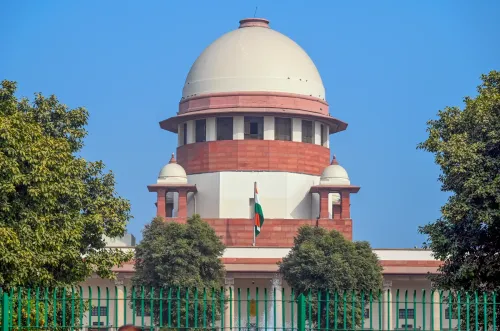
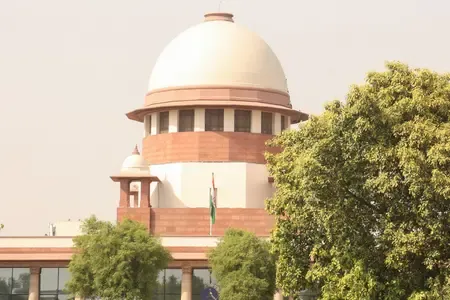
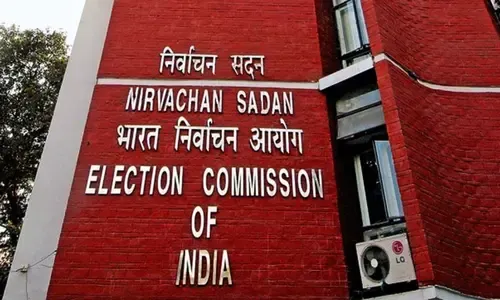
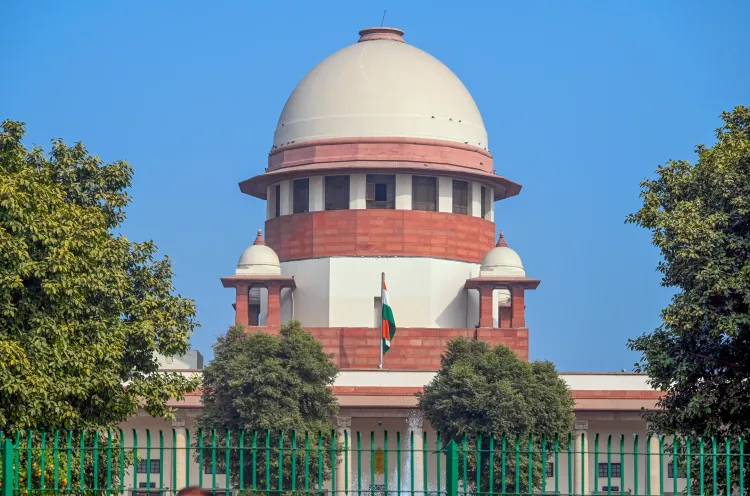
New Delhi, Jan 29 (NationPress) On Thursday, the Supreme Court set aside its judgment on a series of petitions contesting the Election Commission of India’s (ECI) move to execute a Special Intensive Revision (SIR) of electoral rolls in various states and Union Territories (UTs).
A bench comprising Chief Justice of India (CJI) Surya Kant and Justice Joymalya Bagchi wrapped up hearings on this matter while issuing additional directives to maintain transparency throughout the ongoing SIR process in Tamil Nadu.
The group of petitions questioned the legality of the voters’ list revision initiated by the ECI, asserting that this action exceeds the poll body’s authority under Article 326 of the Constitution, the Representation of the People Act, 1950, and the associated regulations.
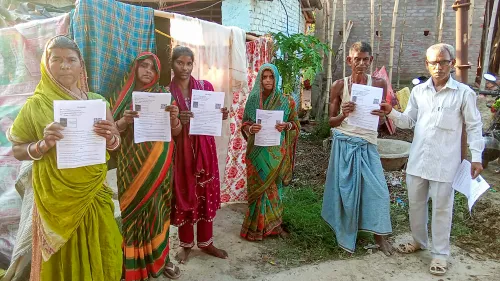
These petitions challenged the ECI’s stipulation that voters whose names were missing from the 2002 electoral rolls (or the 2003 rolls in some states) must establish ancestral ties to individuals whose names were recorded in those rolls.
Initially, the poll body identified 11 documents for identity verification. However, the Supreme Court later mandated the inclusion of Aadhaar as an additional form of identification.
A majority of the petitions were lodged in June of the previous year following the ECI’s decision to implement an SIR in Bihar. The initiative was subsequently expanded to include several states and UTs, such as the election-bound West Bengal, Kerala, and Tamil Nadu.
Earlier this month, the CJI-led bench had issued a range of directives concerning the SIR process in West Bengal, highlighting the importance of minimizing undue hardship for voters, especially those flagged for “logical discrepancies.”
On Thursday, the Supreme Court provided similar instructions for Tamil Nadu, directing the ECI to publicly post the names of individuals against whom “logical discrepancy” objections have been raised. These names are to be displayed at panchayat bhavans, taluka offices, and ward offices.
“Individuals whose names appear are permitted to submit documents in person or through authorized representatives within 10 days after the logical discrepancy list is displayed, which will also include a brief explanation for the discrepancy,” the court instructed.
The CJI-led bench noted that the poll body must strictly follow these directives wherever the SIR process is being conducted.
Point of View
It is crucial to emphasize the importance of electoral integrity. The Supreme Court's involvement signals a vital check on the Election Commission's authority, ensuring that voter rights are protected while maintaining the democratic process. This situation requires a balanced approach, advocating for both transparency and accessibility in our electoral systems.
NationPress
23 Sept 2026
Frequently Asked Questions
What is the purpose of the Special Intensive Revision (SIR)?
The SIR aims to update and maintain accurate electoral rolls to ensure fair representation and voter participation in elections.
Which documents are required for voter verification during the SIR process?
Initially, 11 documents were specified for verification, but the Supreme Court later included Aadhaar as an additional identity proof.
How does the Supreme Court's ruling impact voters in Tamil Nadu?
The ruling mandates the Election Commission to publish names of individuals with 'logical discrepancies,' allowing them to rectify issues within a specified timeframe.
What are 'logical discrepancies' in the context of the electoral rolls?
'Logical discrepancies' refer to inconsistencies found in voter records that may affect eligibility and participation in elections.
When did the Supreme Court hear the petitions regarding the SIR?
The Supreme Court concluded its hearings on the petitions on Thursday, Jan 29.