Supreme Court: Anticipatory bail can't double as civil injunction, sets aside property restraint
Synopsis
The Supreme Court has drawn a firm line: a bail court cannot do what a civil court has refused to do. By striking down a Madras High Court condition that barred accused persons from a disputed property — relief the civil court had never granted — the bench has reined in a practice that blurs the boundary between criminal bail and civil injunction.
Key Takeaways
The Supreme Court ruled on 8 June 2025 that anticipatory bail conditions cannot amount to substantive civil relief.
A bench of Justice J.B.
Pardiwala and Justice K.V.
Viswanathan set aside a Madras High Court order restraining accused from a disputed property.
The civil suit for permanent injunction has been pending since 2019 ; the civil court had granted no interim injunction .
The FIR was registered at Perunazhi Police Station , Ramanathapuram , under the Bharatiya Nyaya Sanhita (BNS), 2023 .
All other bail conditions imposed by the Madras High Court remain in force .
The complainant may seek property-related relief before the civil court or any competent forum.
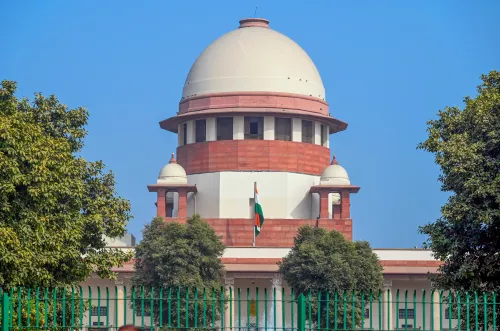
The Supreme Court of India has ruled that courts granting anticipatory bail cannot impose conditions that effectively deliver substantive relief in a parallel civil dispute — a significant clarification in bail jurisprudence handed down on 8 June 2025. The bench partly allowed appeals by accused persons who had challenged a Madras High Court order restraining them from interfering with a disputed property until a civil suit concluded.
What the Supreme Court Held
A bench of Justice J.B. Pardiwala and Justice K.V. Viswanathan set aside the impugned bail condition, holding that the High Court had overstepped its jurisdiction. 'We are of the view that while granting anticipatory bail, the High Court should not have imposed a condition which is tantamount to granting of some relief in the suit itself, which otherwise the civil court has not granted,' the bench said.
The court emphasised that anticipatory bail conditions must remain within the permissible scope of criminal procedure and cannot substitute for civil remedies that a competent civil court has not itself granted.
Background: The FIR and the Civil Dispute
The case originated from an FIR registered at Perunazhi Police Station in Ramanathapuram district, Tamil Nadu, under provisions of the Bharatiya Nyaya Sanhita (BNS), 2023. The allegations included trespass, damage to property — including fencing, banana crops, CCTV cameras, and electrical installations — and criminal intimidation against the complainant and her family.
A civil suit for permanent injunction had been filed by the complainant in 2019 before the sub-court at Mudukulathur. Notably, the civil court had not granted any interim injunction, and an application under Order 39 Rules 1 and 2 of the Code of Civil Procedure had not even been taken up for hearing.
The High Court's Order and Its Flaw
The Madurai Bench of the Madras High Court, while granting anticipatory bail on 24 February, had directed that the accused 'shall not interfere in the disputed property until the suit is over.' The High Court had taken note of rival ownership claims and the complainant's possession based on a mortgage, reasoning that restraining the accused was appropriate pending resolution.
The Supreme Court found this reasoning flawed. It recorded that the complainant as plaintiff had not even prayed for an injunction pending the suit, and that one of the accused claimed to have purchased the property and was a defendant in the very civil proceedings. Granting a restraint in bail proceedings that the civil court had declined to grant amounted, the apex court held, to impermissible judicial overreach.
What Remains and What Comes Next
The Supreme Court's order is narrow but consequential: all other bail conditions imposed by the Madras High Court continue to operate. The property-restraint condition alone was struck down.
The bench clarified that the complainant retains full recourse to civil remedies. 'If the complainant as plaintiff has any apprehension as regards the breach of peace, interference with the suit property, etc., he may pray for appropriate relief before the civil court or any appropriate forum in accordance with law,' the court said. The ruling sets a clear precedent that anticipatory bail hearings are not the venue for resolving property disputes.
Point of View
Bypassing the procedural safeguards those proceedings carry. The Madras High Court's intent may have been protective, but the effect was to grant the complainant what the civil court had not, without the evidentiary rigour a civil court would apply. The Supreme Court's correction is timely: bail jurisprudence has been expanding in scope, and without guardrails, bail hearings risk becoming parallel civil forums. The bench's direction that civil remedies remain available is not just a consolation — it is a reminder that the correct forum matters as much as the outcome.
NationPress
24 Oct 2026
Frequently Asked Questions
What did the Supreme Court rule on anticipatory bail conditions?
The Supreme Court held that courts granting anticipatory bail cannot impose conditions that effectively deliver substantive relief in a pending civil dispute. The ruling came on 8 June 2025, when the bench set aside a Madras High Court condition that had barred accused persons from interfering with a disputed property until a civil suit concluded.
Why did the Supreme Court set aside the Madras High Court's bail condition?
The civil court hearing the property dispute had not granted any interim injunction, and the complainant had not even prayed for one pending the suit. The Supreme Court found that the High Court, by imposing the property restraint as a bail condition, had effectively granted relief that the civil court itself had not, which exceeded the permissible scope of anticipatory bail.
What was the original case about?
An FIR was registered at Perunazhi Police Station in Ramanathapuram district, Tamil Nadu, under the Bharatiya Nyaya Sanhita (BNS), 2023, alleging trespass, damage to property, and criminal intimidation. A parallel civil suit for permanent injunction over the same property has been pending since 2019 before the sub-court at Mudukulathur.
Can the complainant still seek protection for the disputed property?
Yes. The Supreme Court clarified that the complainant may approach the civil court or any competent forum to seek appropriate relief — such as an injunction — if there is apprehension of breach of peace or interference with the property. The criminal bail order simply cannot serve as that relief.
Which judges delivered this ruling?
The ruling was delivered by a two-judge bench comprising Justice J.B. Pardiwala and Justice K.V. Viswanathan of the Supreme Court of India.