Supreme Court spares litigant who abused judges, threw papers in open court
Synopsis
A litigant appearing in person 'ordered' the Supreme Court to register an FIR, then threw papers and hurled abuses — including remarks against the CJI — before being escorted out by security. The Bench declined to act against him, citing his apparent condition, and dismissed his SLP. It is a rare instance of the apex court absorbing open courtroom disruption without punitive consequence.
Key Takeaways
The Supreme Court on 10 July declined to initiate action against litigant Prabal Pratap who allegedly abused judges and threw papers in open court.
A Bench of Justice K.V.
Viswanathan and Justice Alok Aradhe cited the petitioner's apparent condition in choosing not to act against him.
The petitioner had demanded the court 'order' registration of an FIR against an ACP in Lucknow and also made offensive remarks against the Chief Justice of India .
The Special Leave Petition (SLP) was dismissed after the court found no grounds to interfere with the Allahabad High Court's order.
The Allahabad HC had on 6 April dismissed his criminal writ petition, holding that an alternative remedy existed under Section 173(4) of the BNSS .
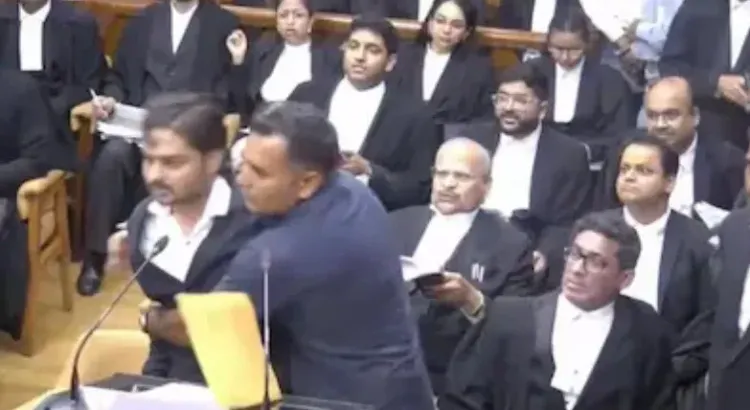
The Supreme Court on Friday, 10 July declined to initiate contempt or disciplinary action against a litigant who allegedly hurled abuses, threw papers into the air, and disrupted proceedings in an open courtroom — choosing leniency over punitive action given what the Bench described as the petitioner's apparent condition.
What Happened in Court
A Bench of Justice K.V. Viswanathan and Justice Alok Aradhe was hearing a Special Leave Petition (SLP) filed by Prabal Pratap, who was appearing in person, challenging an order of the Allahabad High Court's Lucknow Bench. At the outset of the hearing, the petitioner addressed the Bench in a manner that stunned the courtroom.
'Mr judicial servant. I order you to order the registration of an FIR against the ACP... Lucknow,' Prabal Pratap reportedly told the Bench. The court responded, 'You are ordering us?' The petitioner replied, 'That is all from my side. Everything is on record.'
He then allegedly threw papers relating to his case into the air and began hurling abuses, including making offensive remarks against the Chief Justice of India (CJI). Security personnel intervened and escorted him out, allowing proceedings to resume.
What the Supreme Court Said
In its order, the Justice Viswanathan-led Bench recorded that the petitioner, instead of presenting his case, 'made incoherent and unparliamentary utterances.' Despite the gravity of the conduct, the court chose not to act against him.
'We have, however, considering the condition of the petitioner above named, do not propose to take any action against him,' the Bench stated. The court also found 'no good ground to interfere with the impugned judgment/order(s)' and dismissed the SLP along with all pending applications, including those seeking permission to appear and argue in person.
Background: The Allahabad High Court Order
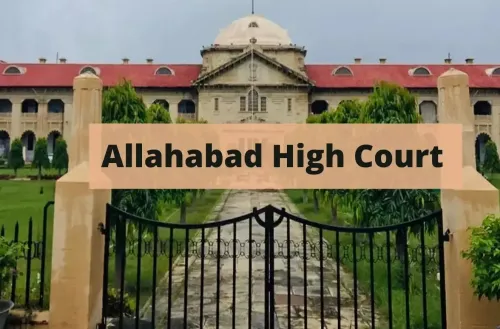
The SLP arose from an April 6 order of a Division Bench comprising Justice Shekhar B. Saraf and Justice Pramod Kumar Srivastava of the Allahabad High Court. The Division Bench had dismissed Prabal Pratap's criminal writ petition, which challenged an order of a Special Chief Judicial Magistrate in Lucknow.
The High Court held that the trial court's direction — that the petitioner's application under Section 173(4) of the Bharatiya Nagarik Suraksha Sanhita (BNSS) be treated as a private complaint — was subject to an efficacious alternative remedy. It dismissed the writ petition while granting liberty to the petitioner to approach the appropriate court.
What This Case Signals
Incidents of litigants-in-person disrupting Supreme Court proceedings are rare but not unprecedented. Courts have occasionally exercised restraint in such cases, particularly where the conduct appears to stem from distress rather than calculated defiance. Notably, the apex court's decision not to initiate action — even after offensive remarks against the CJI — reflects a measured judicial temperament, though legal observers may debate whether such restraint adequately deters future courtroom disruptions.
With the SLP dismissed and all pending applications disposed of, Prabal Pratap's legal options in this matter now stand exhausted at the apex court level.
Point of View
But it raises a legitimate institutional question: at what threshold does judicial leniency shade into a signal that courtroom conduct has no floor? The court's reasoning — the petitioner's apparent condition — is humane, but it is also unverified and unstated in clinical terms. India's apex court has historically been swift to invoke contempt for far less provocative conduct by lawyers and public figures. The asymmetry is worth scrutinising, even if the outcome in this specific case may be the right one.
NationPress
10 Oct 2026
Frequently Asked Questions
What did the litigant do in the Supreme Court?
Prabal Pratap, appearing in person, allegedly told the Bench 'I order you to order the registration of an FIR,' then threw papers into the air and hurled abuses, including offensive remarks against the Chief Justice of India, before being escorted out by security personnel.
Why did the Supreme Court not take action against the litigant?
The Bench of Justice K.V. Viswanathan and Justice Alok Aradhe stated it was 'considering the condition of the petitioner' in declining to initiate any punitive action. The court did not elaborate further on what condition it was referring to.
What was the Supreme Court case about?
Prabal Pratap had filed a Special Leave Petition challenging an Allahabad High Court order that dismissed his criminal writ petition. The High Court had held that an alternative remedy existed for his grievance under Section 173(4) of the Bharatiya Nagarik Suraksha Sanhita (BNSS).
What did the Allahabad High Court rule?
A Division Bench of the Allahabad High Court on 6 April ruled that the trial court's direction to treat the petitioner's application as a private complaint was open to challenge through an efficacious alternative remedy, and dismissed his writ petition while granting liberty to approach the appropriate court.
What happens next for Prabal Pratap?
With the Supreme Court dismissing his SLP and all pending applications, Prabal Pratap's legal options at the apex court level in this matter are exhausted. He retains the liberty granted by the Allahabad High Court to approach the appropriate lower court for redressal.