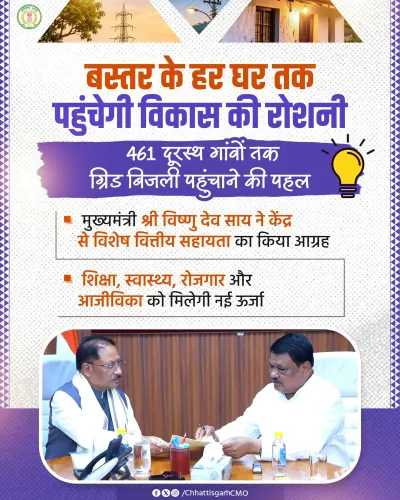
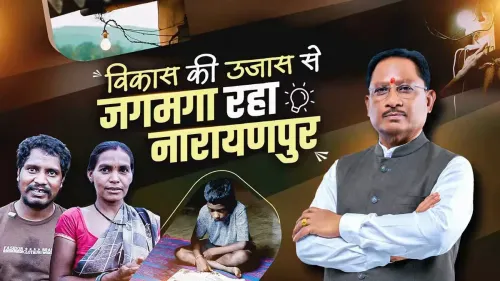
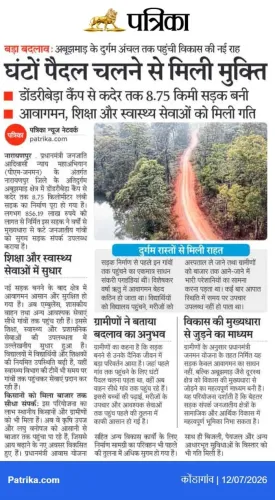
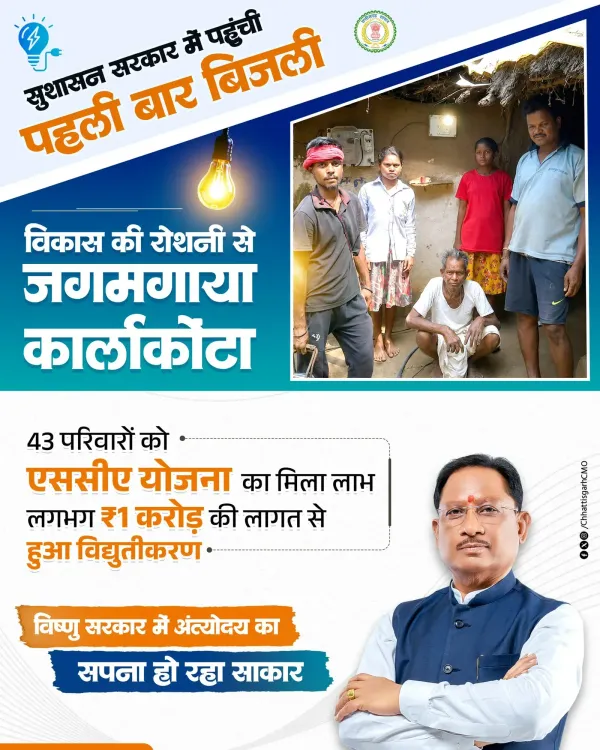
CM Office: Sukma's Karlakonta village gets electricity for first time
Synopsis
The Chief Minister's Office of Chhattisgarh announced that 43 families in Karlakonta, a remote Sukma hamlet, received electricity for the first time at a cost of ₹1 crore, marking a milestone in the state's drive to extend infrastructure to Bastar's tribal interior.
Key Takeaways
43 families in Karlakonta village , Sukma district , received electricity for the first time, ending years of wait.
The electrification project cost approximately ₹1 crore , reflecting the high cost of last-mile grid extension in remote terrain.
Sukma is part of the Bastar region, historically affected by Left Wing Extremism, making infrastructure delivery a governance priority.
The project aligns with the Centre's Saubhagya scheme (launched 2017) and Special Central Assistance for LWE-affected districts.
The Chhattisgarh government's stated goal is Antyodaya — reaching the last person — under its Har Ghar Bijli target.
Remaining unelectrified habitations in Sukma and Dantewada are the next benchmark for the state's rural electrification drive.
The Chief Minister's Office of Chhattisgarh announced on 10 July 2026 that 43 families in Karlakonta, a remote hamlet in Sukma district, have received electricity for the first time, ending years of wait. The electrification project was completed at a cost of approximately ₹1 crore under the state government's drive to extend basic infrastructure to the most inaccessible corners of the state.
The CMO's post, in Hindi, stated: 'सालों का इंतज़ार हुआ ख़त्म' ('Years of waiting have ended'), adding that electrification has brought 'development and prosperity' to the village. The post underlined the government's stated commitment to Antyodaya — reaching the last person — as the defining principle of what it calls the Sushasan Sarkar (Good Governance Government).
Context
Karlakonta lies within Sukma, one of the southernmost districts of Chhattisgarh and part of the broader Bastar region, which has a predominantly tribal population and has historically been affected by Left Wing Extremism (LWE). Difficult terrain, poor road connectivity, and security constraints have long delayed the extension of grid electricity to interior hamlets in this belt. For 43 households, the arrival of power marks a fundamental shift in daily life — from lighting and refrigeration to access to digital services.
Policy Backdrop
The electrification push in Sukma draws on a layered policy framework. The Centre's Saubhagya scheme, launched in September 2017, was designed to achieve universal household electrification by funding last-mile connectivity across unserved rural habitations, with special provisions for LWE-affected districts under Special Central Assistance (SCA). Chhattisgarh has been expanding rural electrification drives since 2015, with Bastar-region blocks receiving targeted attention as part of a post-insurgency development strategy. The #HarGharBijli target — electricity to every home — remains a live benchmark against which coverage in districts like Sukma and Dantewada is measured.
Stakeholders and Impact
The immediate beneficiaries are the 43 tribal families of Karlakonta, for whom electrification enables extended working hours, improved safety, and access to mobile charging and media. For the Sukma district administration, tagged in the post as @SukmaDist, this marks a deliverable in an area where state presence has historically been contested. Broader civil society and tribal welfare advocates have consistently highlighted that infrastructure delivery in former conflict zones signals a shift from security-first to development-first governance.
The project's ₹1 crore expenditure reflects the elevated cost of last-mile electrification in geographically isolated terrain, where conventional grid extension requires additional civil works and security logistics. Such cost structures are characteristic of interior Bastar projects and are factored into SCA allocations.
What's Next
Attention will now turn to the pace at which remaining unelectrified habitations across Sukma and neighbouring Dantewada are covered under ongoing Har Ghar Bijli targets. The Chhattisgarh government is expected to report village-level electrification progress in subsequent state assembly sessions. Sustained power supply — as distinct from a one-time connection — and the maintenance of distribution infrastructure in remote, LWE-sensitive terrain will be the longer-term test of whether this milestone translates into durable development gains for communities like Karlakonta.
Point of View
Where state presence has long been defined by security operations rather than welfare. Framing the milestone through the lens of Antyodaya and Sushasan positions the ruling administration ahead of ongoing scrutiny over tribal welfare in LWE-affected zones. The ₹1 crore price tag for 43 households underscores the structural cost of neglect — terrain and conflict together have made last-mile connectivity in Sukma disproportionately expensive. Whether the state can sustain power supply and expand coverage to remaining dark villages in Sukma and Dantewada will determine whether this announcement becomes a pattern or remains an isolated headline.
NationPress
10 Oct 2026
Frequently Asked Questions
Which village in Sukma got electricity for the first time in 2026?
Karlakonta village in Sukma district, Chhattisgarh, received electricity for the first time, with 43 families connected to the grid at a cost of approximately ₹1 crore.
What is the Saubhagya scheme and does it cover Sukma?
The Saubhagya scheme, launched by the Central government in September 2017, funds last-mile electricity connections for unelectrified rural households, with special provisions for Left Wing Extremism-affected districts like Sukma under Special Central Assistance.
Why has electrification in Sukma taken so long?
Sukma is part of the Bastar region, which has difficult terrain and has historically been affected by Left Wing Extremism, making grid extension costly and logistically complex, delaying electricity access for many interior hamlets.
What is the Antyodaya principle mentioned by the Chhattisgarh government?
Antyodaya refers to the welfare philosophy of reaching the last and most marginalised person first. The Chhattisgarh government cites it as the guiding principle of its Sushasan Sarkar (Good Governance Government) approach to development.
How many families benefited from the Karlakonta electrification project?
43 families in Karlakonta, a remote village in Sukma district, benefited from the electrification project, which was completed at a cost of approximately ₹1 crore.