CM Himanta meets Union Minister Pralhad Joshi on Assam PDS
Synopsis
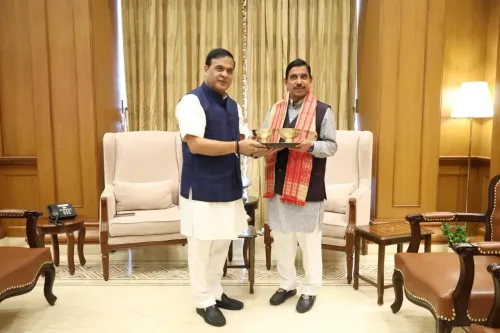
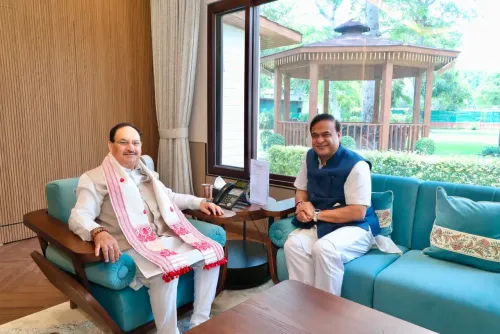
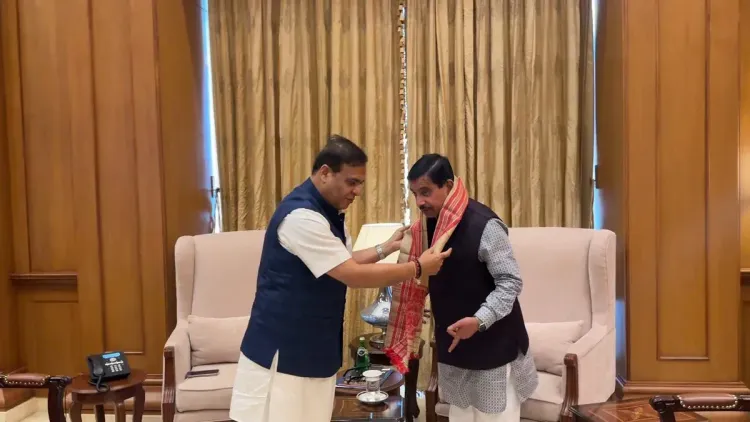
Chief Minister Himanta Biswa Sarma met Union Minister Pralhad Joshi at Lok Sewa Bhawan on 10 July 2026 to discuss strengthening Assam's food security framework, improving PDS delivery, and advancing public welfare initiatives in the northeastern state.
Key Takeaways
CM Himanta Biswa Sarma met Union Minister Pralhad Joshi at Lok Sewa Bhawan on 10 July 2026 .
Discussions centred on strengthening Assam's food security framework and improving the Public Distribution System (PDS) .
Assam has a large rural population significantly dependent on central food subsidies under the National Food Security Act (NFSA) , which covers up to 67 percent of India's population.
The meeting follows increased central-state PDS coordination since the One Nation One Ration Card (ONORC) rollout in 2021 .
Assam's Orunodoi cash-transfer scheme, launched in 2020-21 , complements central food security efforts for economically weaker households.
Formal outcomes of the meeting had not been publicly disclosed at the time of the CMO's post.
The Chief Minister's Office of Assam announced on Friday, 10 July 2026, that Chief Minister Dr. Himanta Biswa Sarma met Union Minister Shri Pralhad Joshi at Lok Sewa Bhawan to discuss strengthening the state's food security architecture, improving the Public Distribution System (PDS), and advancing key public welfare initiatives.
Context
The meeting brought together the head of the Assam government and the Union Minister of Consumer Affairs, Food and Public Distribution to align on the delivery of subsidised food grains to the state's large rural population. The CMO's post stated that discussions 'focused on strengthening Assam's food security framework, improving the Public Distribution System (PDS) and advancing key public welfare initiatives.' No specific outcomes or agreements were disclosed publicly at the time of posting.
Assam is among India's northeastern states most dependent on central food subsidies, with a significant share of its population enrolled as beneficiaries under the National Food Security Act (NFSA), the 2013 legislation that legally entitles up to 67 percent of India's population to subsidised food grains.
Policy Backdrop
The Public Distribution System is India's largest food security programme, channelling subsidised wheat and rice through fair price shops to NFSA beneficiaries across the country. Its administration is a shared responsibility between the central government, which procures and allocates food grains, and state governments, which manage last-mile delivery.
Central-state coordination on PDS has intensified since the nationwide rollout of the One Nation One Ration Card (ONORC) scheme in 2021, which enables inter-state portability of rations, and the integration of Aadhaar-linked authentication at fair price shops. Assam also operates the Orunodoi direct cash-transfer scheme, launched in 2020-21, which supplements food security for women from economically weaker households. BJP-governed states have frequently coordinated with the central ministry to align implementation timelines and access additional food-grain allocations and technology grants.
Stakeholders and Impact
The primary beneficiaries of any improvements to Assam's PDS framework are the millions of households enrolled under the NFSA across the state, particularly in rural and remote areas where fair price shops are often the sole source of affordable food grains. Fair price shop dealers and the state's food and civil supplies department would also be directly affected by any digitisation, modernisation, or grievance-redressal reforms that emerge from such high-level discussions.
Coordination between Chief Minister Sarma and Union Minister Joshi signals the state's intent to remain closely aligned with the central government's evolving food security architecture, including any revisions to beneficiary identification criteria or subsidy outlays that may be introduced in the next Union Budget.
What's Next
Observers will watch for formal announcements on Assam-specific PDS digitisation measures, fair price shop modernisation, or expanded beneficiary coverage that may follow from this ministerial engagement. The next Union Budget's food subsidy allocation and any state legislative action on beneficiary identification or grievance redressal mechanisms are the immediate policy markers to track.
If the discussions yield a concrete roadmap, it could position Assam as an early mover in implementing next-generation PDS reforms ahead of the central government's broader national rollout timeline.
Point of View
Assam has an incentive to front-load its coordination with the central ministry. The emphasis on PDS 'improvement' also signals awareness of persistent last-mile delivery gaps that Aadhaar-linked reforms have not fully resolved. If concrete digitisation or beneficiary-expansion measures follow, the meeting will mark a meaningful step in Assam's welfare delivery modernisation; if not, it remains a signalling exercise ahead of budget season.
NationPress
11 Jul 2026
Frequently Asked Questions
Why did CM Himanta Biswa Sarma meet Pralhad Joshi?
CM Himanta Biswa Sarma met Union Minister Pralhad Joshi on 10 July 2026 at Lok Sewa Bhawan to discuss strengthening Assam's food security framework, improving the Public Distribution System, and advancing public welfare initiatives.
What is the Public Distribution System (PDS) in Assam?
The PDS is India's largest food security programme that delivers subsidised wheat and rice through fair price shops to households entitled under the National Food Security Act. In Assam, the state government manages last-mile delivery while the central government handles procurement and allocation.
What is the National Food Security Act and how does it affect Assam?
The National Food Security Act, enacted in 2013, legally entitles up to 67 percent of India's population to subsidised food grains. Assam, with its large rural population, is significantly dependent on this central legislation for food subsidy coverage.
What is the One Nation One Ration Card scheme?
The One Nation One Ration Card (ONORC) scheme, launched nationwide in 2021, allows NFSA beneficiaries to access their subsidised ration from any fair price shop across India, enabling inter-state portability of PDS entitlements.
What is Assam's Orunodoi scheme?
Orunodoi is a direct cash-transfer scheme launched by the Assam government in 2020-21 to supplement food and livelihood security for women from economically weaker households, complementing the central PDS framework.