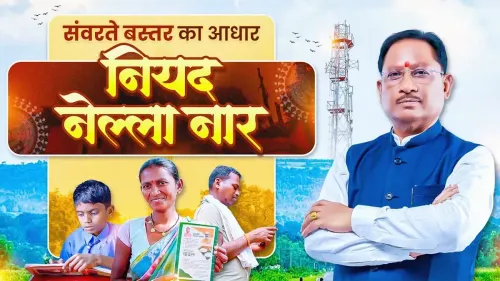
CM Sai's Niyad Nellanar Brings School to Naxal-Hit Sukma
Synopsis
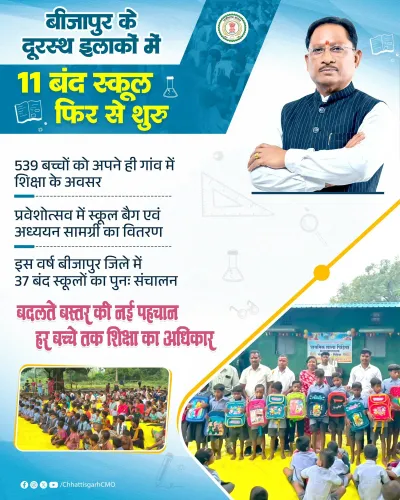
The Chhattisgarh CMO says the Niyad Nellanar scheme has delivered a permanent modern school to Gachhanpalli in Naxal-hit Sukma, ending roughly two decades of disrupted education for tribal children in the Bastar region.
Key Takeaways
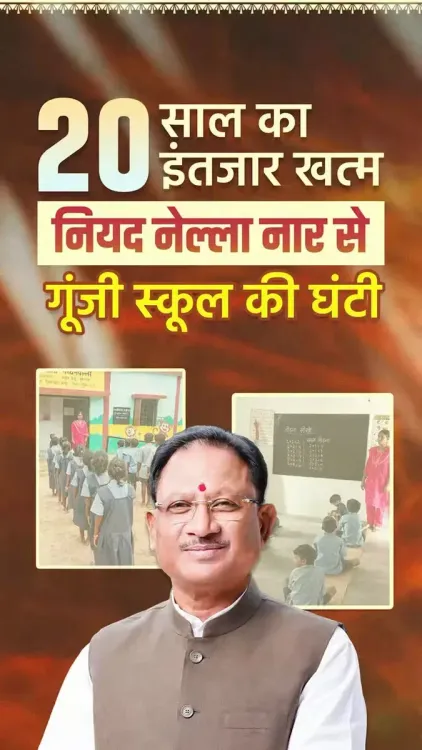
The Chief Minister's Office of Chhattisgarh announced on 10 July 2026 that the Niyad Nellanar scheme has delivered a permanent, modern school to Gachhanpalli in Sukma district .
The CMO states children in Gachhanpalli have received a 'pucca' (permanent) school building after roughly 20 years of disrupted education linked to Naxal violence.
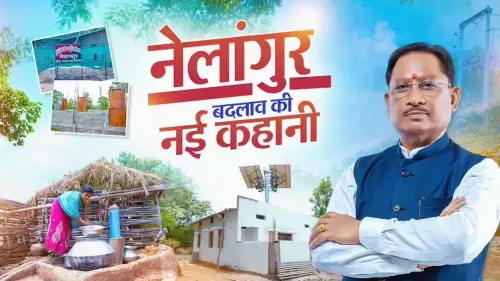
Niyad Nellanar is a holistic village-development programme under CM Vishnu Dev Sai targeting remote Bastar hamlets, covering schools, roads, and health facilities.
Sukma and the broader Bastar region have historically been among India's most severely Naxal-affected areas, with public services repeatedly disrupted.
The government frames the school as evidence of its 'security plus development' approach under the #NaxalMuktBastar campaign.
Further Niyad Nellanar rollout across additional Sukma and Bastar villages is anticipated, with enrolment data expected as a key progress indicator.
The Chief Minister's Office of Chhattisgarh announced on 10 July 2026 that the Niyad Nellanar scheme under Chief Minister Vishnu Dev Sai has delivered a permanent, modern school building to Gachhanpalli village in Sukma district — an area where Naxal violence had blocked access to education for roughly two decades.
Context
The CMO's post declared: 'जहां कभी नक्सल हिंसा ने शिक्षा की राह रोक दी थी, वहीं आज बच्चों की मुस्कान और स्कूल की घंटी गूंज रही है' — 'Where Naxal violence once blocked the path to education, today children's smiles and the school bell are ringing.' The statement frames the Gachhanpalli school as a symbol of what the government calls education, development, and restored trust in a former conflict zone.
Sukma sits in the Bastar division of southern Chhattisgarh, long regarded as one of the most severely Naxal-affected regions in India. Public services including schools were repeatedly shut or destroyed over years of left-wing extremist activity, leaving tribal communities without basic infrastructure.
Policy Backdrop
The Niyad Nellanar scheme — whose name translates roughly to 'Your Good Village' in the local Gondi dialect — is a holistic village-development programme targeting remote Bastar hamlets. It covers infrastructure such as school buildings, roads, and health facilities in areas previously beyond the functional reach of the state.
Chhattisgarh administrations have pursued combined security-and-development strategies in Bastar since the early 2010s, but the pace of facility restoration intensified after the BJP government led by Vishnu Dev Sai took office in December 2023. Education projects form a central pillar of this approach, aimed at demonstrating governance presence in villages where the state had been effectively absent.
The Gachhanpalli school represents the pattern of reopening or newly constructing permanent ('pucca') school buildings in villages where earlier structures were damaged or abandoned. The government's use of the phrase '20 वर्षों बाद' ('after 20 years') underscores the length of disruption that such communities endured.
Stakeholders and Impact
The primary beneficiaries are tribal children in Gachhanpalli and surrounding hamlets of Sukma, who now have access to a structurally sound, modern school facility. For families in this region, a permanent school building carries significance beyond education — it signals that the state intends to stay and deliver services consistently.
Local administration in Sukma district — tagged as @SukmaDist in the CMO's post — is the implementing authority on the ground. Tribal communities across Bastar watch such projects closely, as restored schools have historically been early indicators of broader service normalisation in post-conflict villages.
What's Next
The government's own hashtags — #NaxalMuktBastar ('Naxal-free Bastar') and #DevelopedChhattisgarh — signal that Gachhanpalli is intended as a replicable model rather than an isolated intervention. Further rollout of Niyad Nellanar projects across additional villages in Sukma and the wider Bastar division is expected, with school enrolment and attendance data likely to be cited as progress metrics.
The degree to which physical infrastructure translates into sustained enrolment, teacher deployment, and learning outcomes in these remote tribal areas will determine whether the scheme achieves its stated goal of making Bastar a benchmark for governance in formerly Naxal-dominated territory.
Point of View
Niyad Nellanar, is itself a soft-power signal aimed at tribal communities whose trust the government is actively courting. Whether the infrastructure investment translates into measurable enrolment and learning gains will be the true test of this governance-through-development model.
NationPress
11 Jul 2026
Frequently Asked Questions
What is the Niyad Nellanar scheme in Chhattisgarh?
Niyad Nellanar is a Chhattisgarh government programme for holistic village development in remote Bastar areas, covering infrastructure such as school buildings, roads, and health facilities in regions previously affected by Naxal violence.
Where is Gachhanpalli and why is a school there significant?
Gachhanpalli is a village in Sukma district in southern Chhattisgarh's Bastar division, an area long disrupted by left-wing extremism. The CMO says children there have received a permanent modern school after roughly 20 years without one due to Naxal-linked closures.
Who is Vishnu Dev Sai and what is his role in Bastar development?
Vishnu Dev Sai is the Chief Minister of Chhattisgarh since December 2023, representing the BJP. His government has intensified combined security and development operations in Bastar, with education infrastructure as a key component.
What is the Naxal situation in Sukma district?
Sukma in the Bastar division has historically been among the most severely Naxal-affected districts in India, with public services including schools disrupted or destroyed over years of left-wing extremist activity. Recent security operations have enabled gradual restoration of state services.
What does NaxalMuktBastar mean?
'NaxalMuktBastar' means 'Naxal-free Bastar' — a campaign slogan used by the Chhattisgarh government to describe its goal of eliminating left-wing extremist influence from the Bastar region through security operations paired with development delivery.