CM Sai Govt Reopens 11 Schools in Bijapur Shut by Maoist Violence
Synopsis
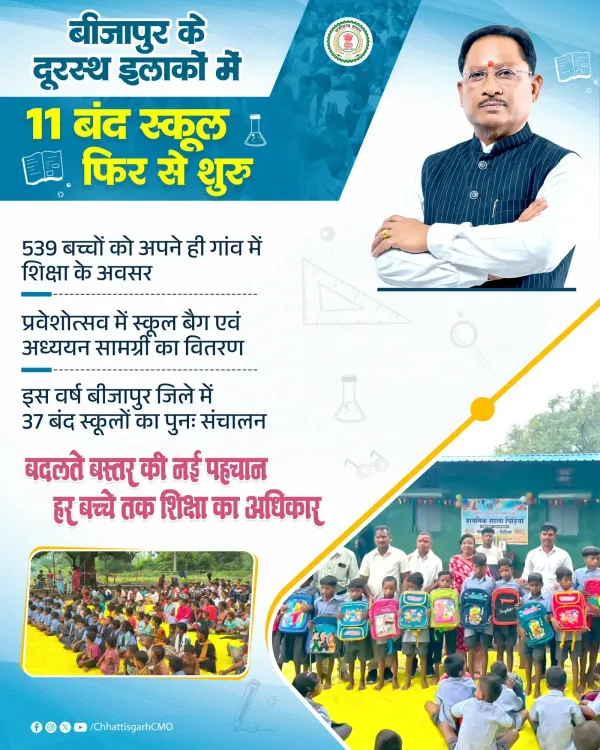
The Chhattisgarh government has reopened 11 schools in Bijapur's tribal villages, shut for years due to Maoist violence. The move restores in-village education for 539 children across settlements in the Bastar division, under the Vishnu Deo Sai administration's push to extend governance into LWE-affected areas.
Key Takeaways
11 schools in Bijapur district, closed due to Maoist violence, were reopened on 2 July 2026 .
539 children across 11 tribal villages in the Bastar division will now have access to in-village schooling.
The villages covered include Pidia, Pedapal, Chhotegotodi, Kuem, Madpal, Andari, Idenar, Donditumnar, Mirganghotul, Gampur and Tamodi .
The announcement was made by the Chief Minister's Office of Chhattisgarh under the Vishnu Deo Sai government, in office since December 2023 .
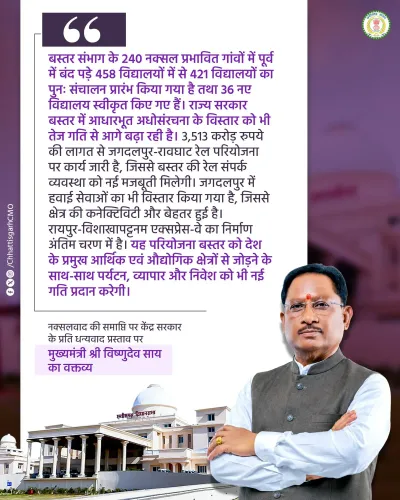
The move aligns with a broader state strategy of restoring public services in Left-Wing Extremism -affected zones across Bastar, Dantewada and Sukma.
Teacher retention and actual enrollment figures will be critical to determining the long-term success of the reopenings.
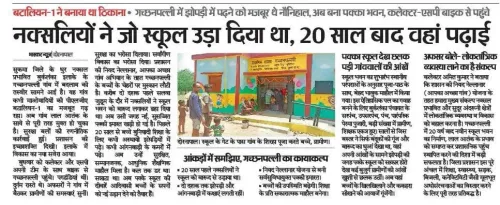
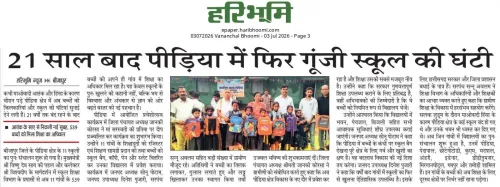
The Chief Minister's Office of Chhattisgarh announced on 2 July 2026 that 11 schools in the Bijapur district, shuttered years ago due to Maoist violence, have been reopened — restoring in-village education access for 539 children across eleven remote tribal settlements.
Posting on X, the CMO stated: 'जहां कभी सन्नाटा था, वहां आज शिक्षा का उजाला है' ('Where there was once silence, today there is the light of education'). The schools serve the villages of Pidia, Pedapal, Chhotegotodi, Kuem, Madpal, Andari, Idenar, Donditumnar, Mirganghotul, Gampur and Tamodi — all within the insurgency-affected Bastar division.
Context
Bijapur district sits at the heart of Bastar, the tribal belt of southern Chhattisgarh that has borne the brunt of Left-Wing Extremism for over two decades. Maoist cadres systematically targeted government infrastructure — schools, health posts, roads — to deny the state a visible presence in remote villages. Many of these eleven schools had been non-functional for years, forcing children to either travel long distances or forgo formal education entirely. The CMO's post framed the reopenings as 'the return of trust and the new identity of a changing Bastar' ('विश्वास की वापसी और बदलते बस्तर की नई पहचान'), directly linking the move to the governance record of the Vishnu Deo Sai administration.Policy Backdrop
Chief Minister Vishnu Deo Sai, who took office in December 2023 heading a BJP government, has made tribal development and the restoration of public services in LWE-affected zones a stated priority. This approach — pairing security operations with service delivery — has been a recurring feature of Chhattisgarh governance since the mid-2000s, pursued by successive state administrations across Bastar, Dantewada and Sukma districts. The current round of school reopenings fits a pattern visible across LWE-affected states nationally, where education access is treated both as a developmental imperative and as a means of extending legitimate governance into spaces previously controlled by insurgents.Stakeholders and Impact
539 children across the eleven villages stand to benefit most directly, gaining access to schooling within their own settlements rather than having to travel to distant facilities or rely on residential schools. For tribal families in these hamlets, proximity to a functioning school significantly reduces dropout risk — particularly for girls and younger children. Teachers, local panchayat bodies and district education officials will be central to sustaining the reopenings. Consistent teacher postings and retention in remote, previously insurgency-affected postings have historically been a challenge in Bastar, and will determine whether the current announcement translates into lasting educational outcomes.What's Next
The administration has not publicly detailed a timeline for monitoring enrollment figures or for expanding similar reopenings to additional villages, but the CMO's hashtags — #ViksitChhattisgarh and #SushasanSarkar — signal that these moves will be presented as governance milestones in the run-up to future political cycles. Independent assessments of teacher attendance, infrastructure condition and actual enrollment in the newly reopened schools will be the true measure of the initiative's durability.Point of View
Symbolic win for the Sai government's 'Viksit Chhattisgarh' narrative, translating security gains in Bastar into visible service delivery. It continues a long-standing pattern across LWE-affected states where education restoration doubles as a governance legitimacy exercise in contested territory. The real test, however, lies beyond the announcement: Bastar's history is littered with schools reopened and then abandoned again when teacher postings go unfilled or security conditions fluctuate. Whether this round of reopenings holds will depend on sustained administrative follow-through rather than political momentum alone.
NationPress
1 Oct 2026
Frequently Asked Questions
Which schools were reopened in Bijapur Chhattisgarh in 2026?
Eleven schools across the villages of Pidia, Pedapal, Chhotegotodi, Kuem, Madpal, Andari, Idenar, Donditumnar, Mirganghotul, Gampur and Tamodi in Bijapur district were reopened on 2 July 2026 after being shut for years due to Maoist violence.
How many children will benefit from the Bijapur school reopening?
According to the Chhattisgarh CMO, 539 children from the eleven affected villages will now have access to education within their own settlements.
Why were schools closed in Bijapur and Bastar?
Schools in Bijapur and the wider Bastar division were shut due to Maoist — also called Naxalite — violence and threats, which forced the closure of government infrastructure including schools across remote tribal villages over many years.
What is the Vishnu Deo Sai government's approach to Bastar development?
The Vishnu Deo Sai government, in office since December 2023, has prioritised restoring public services such as schools and health facilities in Left-Wing Extremism-affected areas as part of a combined security and governance strategy in Bastar.
What challenges remain after Bastar schools are reopened?
The primary challenges are consistent teacher postings and retention in remote, previously insurgency-affected areas, as well as ensuring actual student enrollment — both of which have historically been difficult to sustain in Bastar's LWE-affected villages.