CM Chhattisgarh: Bijapur school reopens after 21 years
Synopsis
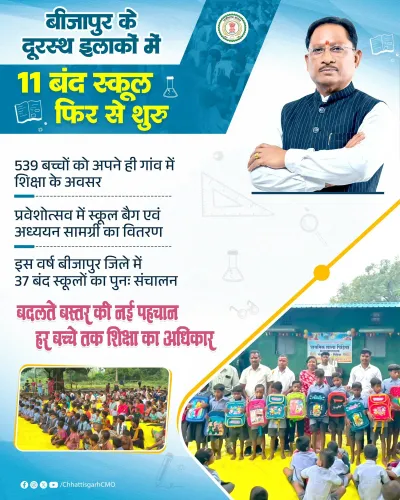
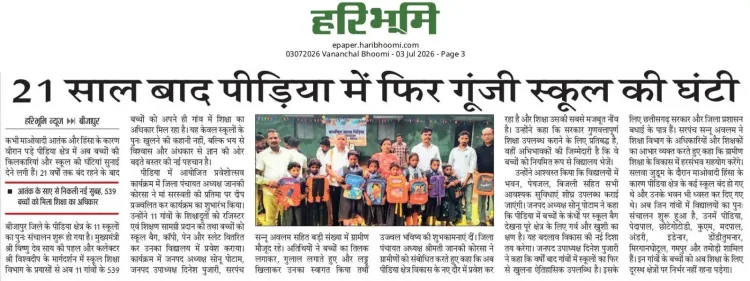
A government school in Pidia village, Bijapur has reopened after 21 years of closure due to Maoist insurgency, the Chhattisgarh CMO announced on 3 July 2026, with 539 children set to benefit from restored access to formal education in the Bastar region.
Key Takeaways
The Chief Minister's Office of Chhattisgarh announced on 3 July 2026 that a school in Pidia village, Bijapur has reopened after 21 years .
539 children will gain access to formal education following the reopening.
Bijapur is part of the Bastar division , one of Chhattisgarh's most Maoist-affected regions, where schools were shut due to insurgency.
The reopening is part of the state's broader strategy of linking security gains with restoration of public services in tribal areas.
Similar school revivals have previously occurred in neighbouring Sukma and Dantewada districts.
Sustained teacher deployment and infrastructure investment will determine whether the gains are durable.
The Chief Minister's Office of Chhattisgarh announced on Friday, 3 July 2026 that a government school in Pidia village, Bijapur district has reopened after 21 years, providing 539 children access to formal education in a region long gripped by Left-Wing Extremism.
The official post declared: 'Dahshat se mukt, naye bhavishya ki aur Bijapur agrasir' ('Free from terror, Bijapur moves towards a new future'), framing the school reopening as a marker of returning normalcy to one of the state's most conflict-affected districts.
Context
Bijapur, located in the Bastar division of southern Chhattisgarh, has for decades been among the districts most severely affected by Maoist insurgency. Schools, health centres, and other public institutions in remote villages were frequently shut or abandoned as civilian administration struggled to maintain a presence in areas where armed groups exercised de facto control. Pidia village is one such settlement where the absence of schooling persisted for over two decades, leaving successive generations of children without access to state-run education.Policy Backdrop
The Chhattisgarh government has pursued a twin-track strategy in former Naxal-affected zones — intensifying security operations while simultaneously restoring basic public services. Since security gains began reducing insurgent control across the Bastar division, authorities have prioritised reopening educational institutions as a visible signal of restored governance. Comparable school revivals have taken place in neighbouring districts of Sukma and Dantewada, where declining Maoist incidents created conditions for civilian re-entry. Education infrastructure is central to the state's stated development approach for tribal regions, linking improved security with welfare delivery.Stakeholders and Impact
The most immediate beneficiaries are the 539 children in and around Pidia who will now have access to a functioning government school. For tribal communities in Bijapur, the reopening carries significance beyond academics — it represents a resumption of state presence and a pathway to entitlements tied to school enrolment, including mid-day meals and scholarships. Teachers will need to be deployed and infrastructure maintained for the gains to be sustained. Families who spent years without local schooling options faced either sending children to distant residential schools or foregoing formal education altogether.What's Next
Sustained enrolment numbers, regular teacher postings, and infrastructure upgrades will be the key indicators of whether this reopening translates into lasting educational access. The Chhattisgarh government is expected to face scrutiny on whether adequate staffing and resources follow the announcement. If the Pidia model holds, it could be replicated across other villages in Bijapur and the wider Bastar region where schools remain shuttered. The announcement signals that the state views education revival as both a governance priority and a political marker of progress in its anti-insurgency effort.Point of View
However, lies in whether teacher postings and infrastructure follow — past reopenings in conflict-affected zones have sometimes stalled at the announcement stage.
NationPress
1 Oct 2026
Frequently Asked Questions
Why was the school in Pidia, Bijapur closed for 21 years?
The school in Pidia, Bijapur was closed for 21 years due to the Maoist insurgency in the Bastar region, which disrupted civilian administration and made it unsafe to operate public institutions in many remote villages.
How many children will benefit from the Pidia school reopening?
According to the Chhattisgarh CMO's announcement, 539 children will now have access to education following the school's reopening in Pidia village, Bijapur.
Which district is Pidia village located in?
Pidia village is located in Bijapur district , which is part of the Bastar division in southern Chhattisgarh.
Is Bijapur a Naxal-affected area?
Yes, Bijapur in Chhattisgarh's Bastar division has been one of the districts most severely affected by Left-Wing Extremism, though security conditions have improved significantly in recent years.
Has Chhattisgarh reopened other schools in Naxal-hit areas?
Yes, comparable school reopenings have taken place in Sukma and Dantewada districts as security gains reduced Maoist control, with education revival forming a key part of the state's post-insurgency development strategy.