Supreme Court hearing disrupted as litigant hurls abuses, throws papers in open court
Synopsis
A litigant appearing in person stunned the Supreme Court on 10 July by 'ordering' the Bench to register an FIR, then hurling abuses and scattering papers before being physically removed — the second major courtroom disruption at the apex court in a matter of months.
Key Takeaways
A litigant allegedly hurled abuses and threw papers in the Supreme Court on 10 July , disrupting proceedings before Justice K.V.
Viswanathan and Justice Alok Aradhe .
The litigant had demanded the Bench 'order' registration of an FIR against an ACP in Lucknow and a private company.
Security personnel forcibly removed the litigant, allowing the hearing to resume.
The incident follows a similar disruption months earlier, when advocate Rakesh Kishore allegedly attempted to throw an object at a Bench led by then CJI B.R.
Criminal contempt proceedings under the Contempt of Courts Act, 1971 were initiated against Kishore after Attorney General R.
Venkataramani granted consent.
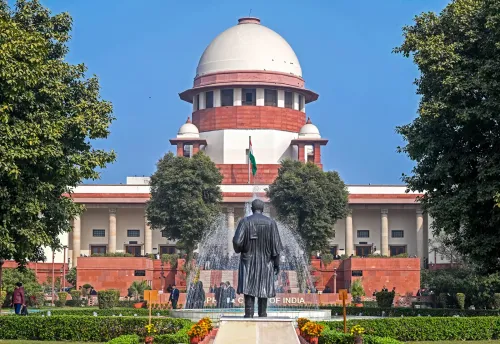
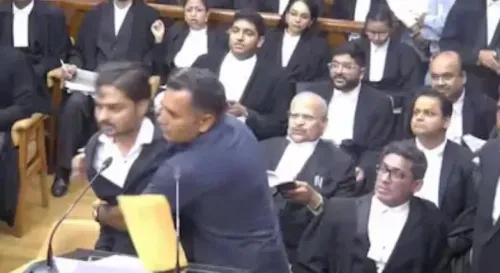
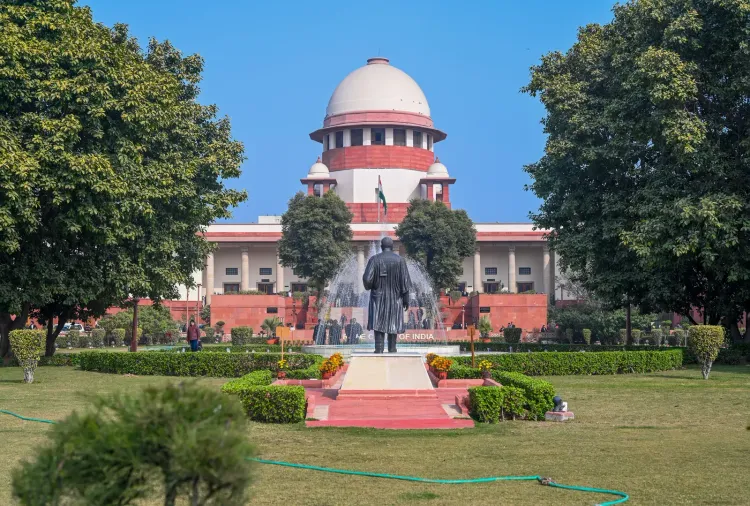
The Supreme Court on Friday, 10 July witnessed a rare and dramatic disruption when a litigant appearing in person allegedly hurled abuses at the Bench, scattered papers across the courtroom, and had to be physically removed by security personnel. The incident unfolded during a hearing before a Bench of Justice K.V. Viswanathan and Justice Alok Aradhe, briefly halting proceedings at the apex court in New Delhi.
How the Disruption Unfolded
The litigant, who was contesting an order passed by the Allahabad High Court, opened the hearing with an extraordinary demand — that the Bench order the registration of a First Information Report (FIR) against an Assistant Commissioner of Police (ACP) in Lucknow and a private company. He addressed Justice Viswanathan directly, saying, 'Mr judicial servant. I order you to order the registration of an FIR against the ACP... Lucknow.'
The Bench, visibly taken aback, responded: 'You are ordering us?' The litigant replied, 'That is all from my side. Everything is on record.' He then allegedly threw the papers relating to his case into the air and began hurling abuses, including reportedly making offensive remarks against the Chief Justice of India (CJI).
Security personnel intervened swiftly, escorting the litigant out of the courtroom and allowing the hearing to resume.
A Pattern of Courtroom Disruptions
This incident is not isolated. Months earlier, the Supreme Court had faced a similar episode involving advocate Rakesh Kishore, who allegedly attempted to throw an object at a Bench led by then Chief Justice of India B.R. Gavai. That incident had prompted a significant institutional response.
Though then CJI Gavai had initially decided against taking action, Attorney General R. Venkataramani subsequently granted consent to initiate criminal contempt proceedings against Kishore. Venkataramani observed that the advocate's conduct amounted to criminal contempt under the Contempt of Courts Act, 1971 and was 'calculated to demean the majesty and authority of the Supreme Court.'
During a later hearing, then CJI Gavai stated that he and his fellow judge were 'very shocked' by the incident but had since treated it as 'a forgotten chapter.' Solicitor General Tushar Mehta described the conduct as 'completely unpardonable', underscoring the need to protect the institutional integrity of the apex court.
Significance and Legal Context
Disruptions of this nature inside the Supreme Court are exceptionally rare and carry serious legal consequences. The Contempt of Courts Act, 1971 provides the judiciary with powers to act against individuals who scandalise the court or obstruct the administration of justice. Notably, the two incidents within months of each other have renewed concerns about courtroom security protocols and the conduct of those appearing before the country's highest court.
What Happens Next
It remains to be seen whether the Supreme Court or the Attorney General's office will initiate contempt proceedings against the litigant involved in Friday's incident. The petition challenging the Allahabad High Court order is expected to be listed again for a fresh hearing date.
Point of View
Who bypass the procedural filters that govern advocates. The contempt route, while available, is reactive; the court has not yet signalled any proactive review of entry and conduct protocols. For an institution whose authority rests entirely on public deference, repeated scenes of chaos — however quickly contained — carry a reputational cost that security personnel alone cannot offset.
NationPress
9 Oct 2026
Frequently Asked Questions
What happened at the Supreme Court on 10 July?
A litigant appearing in person allegedly hurled abuses at the Bench, threw his case papers into the air, and made offensive remarks before being forcibly removed by security personnel. The disruption briefly halted proceedings before Justices K.V. Viswanathan and Alok Aradhe.
What was the litigant's case about?
The litigant had filed a petition challenging an order passed by the Allahabad High Court. At the hearing, he also demanded that the Bench direct the registration of an FIR against an ACP in Lucknow and a private company.
Has the Supreme Court faced similar disruptions before?
Yes. Months earlier, advocate Rakesh Kishore allegedly attempted to throw an object at a Bench led by then CJI B.R. Gavai. Criminal contempt proceedings under the Contempt of Courts Act, 1971 were subsequently initiated against Kishore after the Attorney General granted consent.
What legal action can be taken against the litigant?
Under the Contempt of Courts Act, 1971, the Supreme Court has the power to initiate criminal contempt proceedings against individuals who scandalise the court or obstruct the administration of justice. Whether such action will be taken in this case has not yet been announced.
What did Solicitor General Tushar Mehta say about the earlier disruption?
Solicitor General Tushar Mehta described advocate Rakesh Kishore's conduct during the earlier incident as 'completely unpardonable' and stressed that the institutional integrity of the Supreme Court must be protected.