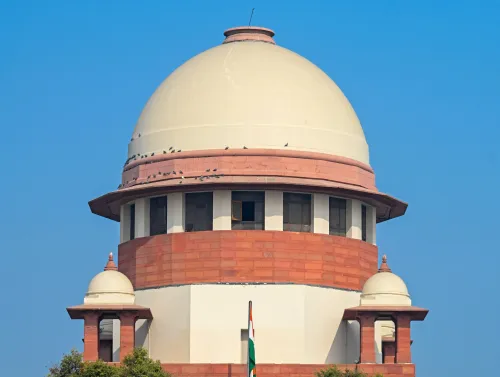
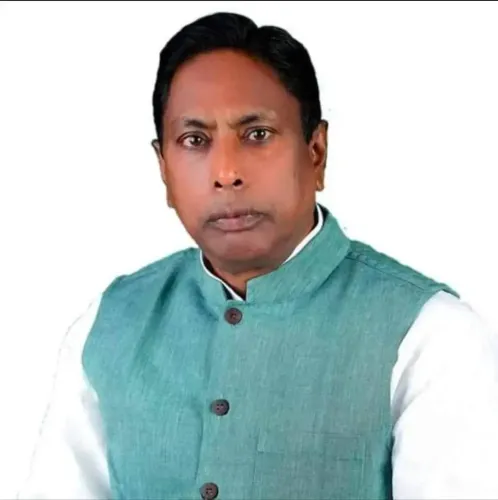
Supreme Court grants bail after 5-year custody in attempt-to-murder case

Synopsis
The Supreme Court has freed an attempt-to-murder accused who spent nearly five years behind bars as an undertrial — with only 5 of 22 prosecution witnesses examined. The ruling spotlights India's undertrial crisis and the apex court's growing willingness to override serious-charge bail denials when trials drag without end.
Key Takeaways
The Supreme Court granted bail to Tota Pahelwan alias Sunil Yadav after nearly 5 years of undertrial custody in an attempt-to-murder case.
The Bench of Justices J.B.
Viswanathan noted only 5 of 22 prosecution witnesses had been examined.
The offence falls under Section 307 IPC (attempt to murder); the court cited co-accused Rambhool already being on bail as a parity ground.
The FIR was registered in 2021 at Sikandrabad Police Station, Bulandshahr, Uttar Pradesh .
The court directed the trial court to proceed expeditiously despite the bail grant.
The Supreme Court of India has granted bail to Tota Pahelwan alias Sunil Yadav, an undertrial prisoner held for nearly five years in an attempt-to-murder case, citing prolonged incarceration and the slow pace of trial proceedings. The order was passed by a Bench comprising Justices J.B. Pardiwala and K.V. Viswanathan while hearing a Special Leave Petition (SLP) challenging an Allahabad High Court order that had denied him regular bail.
Key Developments in the Case
The apex court took pointed note of the fact that the prosecution had managed to examine only five witnesses in nearly five years of trial. The petitioner's advocate, Alakh Alok Srivastava, submitted that the prosecution intended to call a total of 22 witnesses — indicating that the proceedings are far from conclusion and could stretch considerably longer.
'We take into consideration the fact that the petitioner is in judicial custody as an undertrial prisoner since almost 5 years. Till this date the prosecution has been able to examine 5 witnesses,' the Bench observed in its order.
Why the Court Exercised Discretion in Favour of the Accused
The offence in question — attempt to commit murder — is punishable under Section 307 of the Indian Penal Code (IPC), a serious charge that courts typically weigh heavily against bail. However, the Bench stated it was persuaded to exercise discretion in the petitioner's favour given the circumstances.
A key factor was parity: a co-accused in the same case, identified as Rambhool, was already on bail. The court noted that denying bail to Yadav while a similarly situated co-accused remained free would be difficult to justify. 'This being a case of attempt to commit murder punishable under Section 307 of the IPC, we are persuaded to exercise our discretion in favour of the petitioner, more particularly, when a similarly situated co-accused, namely, Rambhool, is on bail,' the order stated.
Bail Conditions and Trial Directions
The Supreme Court directed that Yadav be released forthwith, subject to terms and conditions imposed by the trial court, provided he is not required in any other case. Critically, the Bench also directed that the trial must proceed without further delay, underlining that the bail order was not a licence for the proceedings to stall.
'Despite the fact that we have ordered release of the petitioner on bail, trial shall proceed further expeditiously,' the Bench said.
Background of the Case
The case originates from an FIR registered in 2021 at Sikandrabad Police Station in Bulandshahr district, Uttar Pradesh, for offences under Sections 323 and 307 of the IPC. A chargesheet was filed following completion of the investigation, and the matter is currently pending before the court of the 2nd Additional District and Sessions Judge, Bulandshahr.
This order is consistent with a broader pattern of the Supreme Court intervening in cases where undertrial detention has stretched well beyond what trial timelines can justify. With India's prison population comprising a significant proportion of undertrials, such rulings carry implications beyond individual cases. The next critical marker will be whether the trial court at Bulandshahr adheres to the apex court's direction for expeditious proceedings.
Point of View
The system's failure is the headline — not the relief granted. The parity argument involving co-accused Rambhool also raises a pointed question: why was one accused on bail while the other languished for five years in the same case? The Supreme Court's direction for expeditious trial is welcome, but without a mechanism to enforce it, such directions have historically gone unheeded. India's undertrial population — over two-thirds of its prison occupants — is a structural problem that individual bail orders cannot solve.
NationPress
12 Oct 2026
Frequently Asked Questions
Why did the Supreme Court grant bail in this attempt-to-murder case?
The Supreme Court granted bail because the accused, Tota Pahelwan alias Sunil Yadav, had been in judicial custody for nearly five years while the prosecution had examined only 5 of its 22 witnesses, indicating the trial would take considerably longer. The court also noted that a co-accused in the same case, Rambhool, was already on bail.
What is the Section 307 IPC charge in this case?
Section 307 of the Indian Penal Code pertains to attempt to commit murder, which carries a serious penalty. The FIR in this case was registered in 2021 at Sikandrabad Police Station in Bulandshahr, Uttar Pradesh, for offences under Sections 323 and 307 IPC.
Who are the judges that passed this bail order?
The bail order was passed by a Supreme Court Bench comprising Justices J.B. Pardiwala and K.V. Viswanathan, which was hearing Yadav's Special Leave Petition challenging the Allahabad High Court's denial of regular bail.
What conditions were attached to the bail granted by the Supreme Court?
The Supreme Court directed that Yadav be released forthwith subject to terms and conditions set by the trial court, provided he is not required in any other case. The court also mandated that the trial proceed expeditiously.
Where is the trial currently being heard?
The case is pending before the court of the 2nd Additional District and Sessions Judge in Bulandshahr, Uttar Pradesh, following the filing of a chargesheet after the completion of investigation.