Supreme Court Denies Bail to Jharkhand's Alamgir Alam, Urges Quick Trial

Synopsis
In a significant ruling, the Supreme Court has denied bail to Jharkhand's former Rural Development Minister Alamgir Alam and his secretary Sanjeev Lal in a money laundering case. The court has ordered a speedy trial, emphasizing the seriousness of the charges.
Key Takeaways
Supreme Court denies bail to former Jharkhand Minister and secretary.
Trial proceedings to be expedited as per court's directive.
Case involves serious allegations of money laundering and tender fraud.
ED's investigation reveals extensive commission networks.
Significant financial recoveries linked to the case.
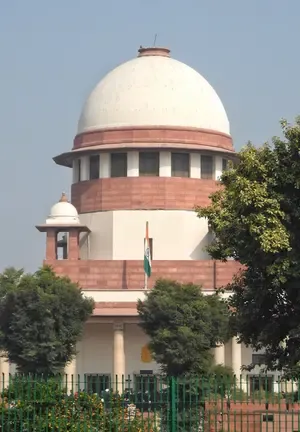
New Delhi, April 2 (NationPress) - The Supreme Court has turned down the bail applications of Alamgir Alam, the former Rural Development Minister of Jharkhand, along with his private secretary, Sanjeev Lal, in connection with a money laundering investigation tied to an alleged tender commission fraud.
The court has mandated that the proceedings of the trial be hastened.
A bench led by Justice M.M. Sundresh and Justice N. Kotiswar Singh denied the requests for bail from both defendants, who have been in judicial custody for over 18 months, and instructed the trial court to gather testimonies from essential witnesses within a strict timeframe of four weeks.
The bench clarified that the next hearing will only be scheduled after the examination of the witnesses is concluded.
During the proceedings, Alam's lawyer contended that the 76-year-old politician has been detained since May 2024 and highlighted the delays in the trial process due to multiple supplementary charge sheets filed by the Enforcement Directorate (ED).
The defense also noted the lack of a prosecution sanction. Nevertheless, the court deemed these arguments inadequate to permit bail.
Sanjeev Lal, who sought bail on comparable grounds, was similarly denied relief.
This case originates from an ED investigation into purported irregularities within the Rural Development Department. On May 6, 2024, the agency executed raids at locations associated with Sanjeev Lal and his associate, Jahangir Alam, recovering cash totaling Rs 32.20 crore. Furthermore, Rs 10.05 lakh and a diary allegedly detailing commission transactions were taken from Lal.
Following the investigation, Alamgir Alam was apprehended on May 15, 2024. The ED claims there was a systematic network established for collecting commissions in return for government tender allocations.
According to the agency, contractors were allegedly mandated to pay approximately three percent of the total contract value as commission. Of this amount, around 1.35 percent was reportedly funneled to the then-minister via his private secretary, while 0.65 to 1 percent was divided among senior departmental officials, with the remainder shared among various personnel, including engineers.
The ED asserts that the alleged scam resulted in illicit proceeds exceeding Rs 90 crore related to tender allocations approximating Rs 3,048 crore.
The Supreme Court underscored the gravity of the allegations and emphasized the necessity for swift trial proceedings while denying bail to the accused.
Point of View
Emphasizing the judiciary's role in ensuring accountability. The swift directive for a trial signals a commitment to addressing serious allegations associated with public office.
NationPress
13 Oct 2026
Frequently Asked Questions
What was the reason for the bail denial?
The Supreme Court denied bail due to the serious nature of the allegations and the need for an expedited trial.
How long have Alam and Lal been in custody?
Both Alam and Lal have been in judicial custody for over 18 months.
What is the basis of the ED's case?
The case is centered around alleged irregularities in the Rural Development Department involving a tender commission scam.
What was recovered during the ED raids?
Raids conducted by the ED recovered cash amounting to Rs 32.20 crore, along with other financial records.
What is the alleged commission structure?
Contractors were reportedly required to pay around three percent of the total contract value as commission.