Supreme Court Raises Alarm Over Trial Court's Use of AI-Generated Fake Judgments
Synopsis
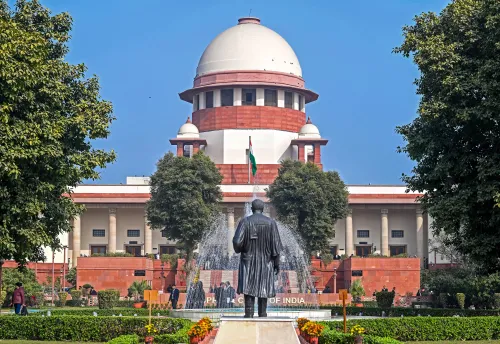
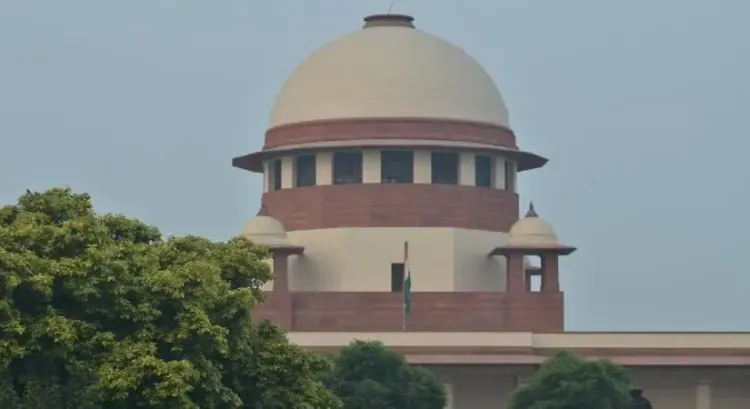
The Supreme Court has raised serious concerns about a trial court's reliance on AI-generated 'non-existent' judgments in a civil case, emphasizing the potential misconduct and its implications for judicial integrity. This issue is set to be examined further on March 10.
Key Takeaways
Supreme Court's Concern: The court is alarmed by the trial court's reliance on AI-generated judgments.
Potential Misconduct: Such reliance could be classified as misconduct with serious implications.
Next Steps: The case will be reviewed further on March 10.
Legal Representation: Senior advocate Shyam Divan has been appointed to assist in the case.
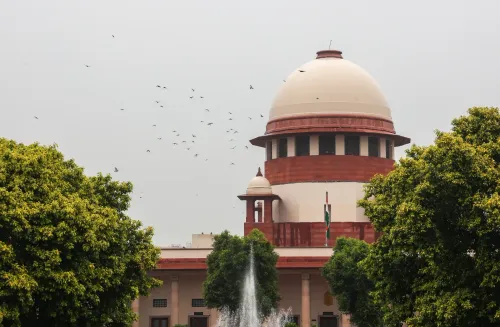
New Delhi, March 2 (NationPress) The Supreme Court has expressed grave concern regarding a trial court's alleged reliance on AI-generated "non-existent and fabricated" judgments during a civil dispute ruling. This behavior, the court noted, has significant implications for the integrity of the judicial process and could be classified as misconduct.
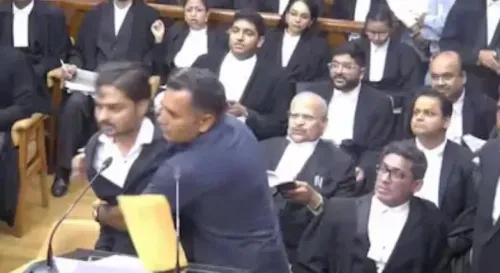
A bench comprising Justices P.S. Narasimha and Alok Aradhe indicated that the situation raises "substantial institutional apprehensions, not solely due to the verdict based on the case's merits, but concerning the adjudication and determination process itself."
The apex court was addressing a special leave petition (SLP) contesting a ruling from the Andhra Pradesh High Court, which had upheld a trial court's decision in a property dispute related to an injunction suit. The petitioners are the defendants in this injunction case.
Throughout the proceedings, the trial court designated an Advocate Commissioner to document the property's physical characteristics. The petitioners raised objections to the Commissioner’s report; however, their objections were dismissed by the trial court which cited several Supreme Court precedents.
In their appeal to the Andhra Pradesh High Court, the petitioners argued that the judgments referenced and relied upon by the trial court were "non-existent and fabricated orders."
The AP High Court acknowledged that the decisions referenced were generated by AI, offering a cautionary note but ultimately ruled on the matter's merits, dismissing the civil revision petition.
In light of the situation, the Supreme Court voiced its alarm regarding the trial court's dependence on "non-existent and fabricated" judgments for judicial decision-making.
Justice Narasimha's bench stated, "We acknowledge that the Trial Court's use of AI-generated non-existent, fabricated, or synthetic judgments warrants scrutiny of its effects and accountability, as it has a direct impact on the integrity of the adjudicatory process."
"To begin with, we must assert that a ruling based on such non-existent and fabricated judgments is not merely an error in judgment-making; it constitutes misconduct, with legal repercussions to follow," the Supreme Court further elaborated.
The court has issued notice in this matter, set for return on March 10, instructing that, pending the resolution of the SLP, the trial court "must not act based on the Advocate Commissioner’s Report."
Additionally, the Supreme Court has notified the Attorney General, the Solicitor General—the chief legal representatives of the Centre—and the Bar Council of India (BCI). The bench has also appointed senior advocate Shyam Divan to assist the court in this case, allowing him to select an Advocate-on-Record for support. The case is scheduled for further review on March 10.
Point of View
I see the Supreme Court's intervention as a crucial step to uphold judicial integrity. The reliance on AI-generated judgments poses significant risks to the legal system, demanding a thorough examination to ensure accountability and maintain public trust in our courts.
NationPress
30 Sept 2026
Frequently Asked Questions
What did the Supreme Court say about AI-generated judgments?
The Supreme Court expressed serious concerns regarding a trial court's reliance on AI-generated 'non-existent and fabricated' judgments, highlighting potential misconduct.
What was the context of this issue?
The Supreme Court was addressing a special leave petition challenging a ruling from the Andhra Pradesh High Court regarding a property dispute.
When is the next hearing scheduled?
The next hearing is set for March 10.
Who was appointed to assist the Supreme Court in this matter?
Senior advocate Shyam Divan was appointed to assist the Supreme Court.
What implications does this case have for the judicial system?
The case raises significant concerns about the integrity and accountability of the judicial process.