Supreme Court to Review Plea Against Madhya Pradesh High Court Judges' Visit to Bhojshala Dispute Site
Synopsis
The Supreme Court is preparing to review a plea from the Muslim community challenging the Madhya Pradesh High Court’s recent orders regarding the Bhojshala Temple-Kamal Maula Mosque dispute, raising questions about the historical claims and communal harmony at the site.
Key Takeaways
Supreme Court to review a plea from the Muslim side against the Madhya Pradesh High Court's order.
Bhojshala Temple-Kamal Maula Mosque dispute raises questions about historical claims.
The High Court ordered a personal inspection of the disputed site.
ASI's findings suggest earlier temple architecture, contested by the Muslim community.
Importance of maintaining communal harmony emphasized by the Supreme Court.
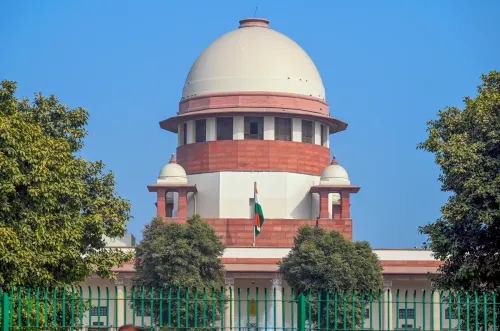
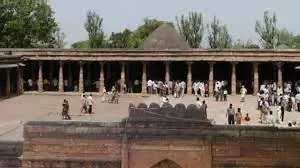
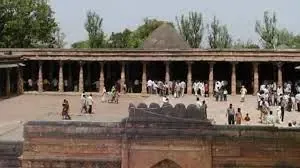
New Delhi, March 31 (NationPress) The Supreme Court is set to hear a plea on Wednesday, submitted by the Muslim community, contesting the Madhya Pradesh High Court’s ruling in the protracted Bhojshala Temple-Kamal Maula Mosque conflict in Dhar district.
According to the causelist released on the Supreme Court's official website, a bench consisting of Chief Justice of India (CJI) Surya Kant and Justices Joymalya Bagchi and Vipul M. Pancholi will review the Special Leave Petition (SLP) filed by the Maulana Kamaluddin Welfare Society on April 1.
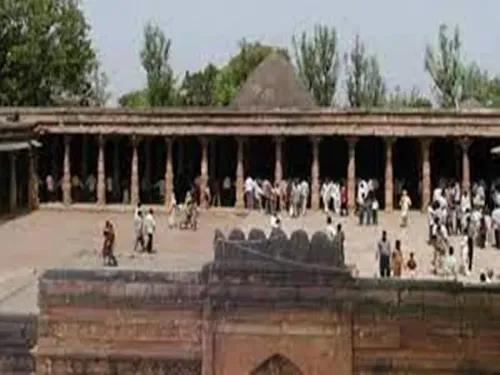
This petition challenges the March 16 decision made by the Indore Bench of the Madhya Pradesh High Court, which decided to conduct a personal inspection of the contentious Bhojshala complex ahead of the next hearing, scheduled for April 2.
The Muslim side asserts in its SLP that it was not given a fair chance to present objections regarding the report from the Archaeological Survey of India (ASI).
Previously, on March 16, a Division Bench led by Justices Vijay Kumar Shukla and Alok Awasthi of the Madhya Pradesh High Court, after thorough discussions, noted that due to the numerous disputes surrounding the Bhojshala Temple–Kamal Maula Mosque complex, they would personally visit the location before the upcoming hearing.
The Justice Shukla-led Bench indicated that no parties would be permitted to be present during the inspection.
The Madhya Pradesh High Court also instructed all involved parties to submit their objections, suggestions, and feedback regarding the ASI’s survey report before April 2, when the regular hearings will commence.
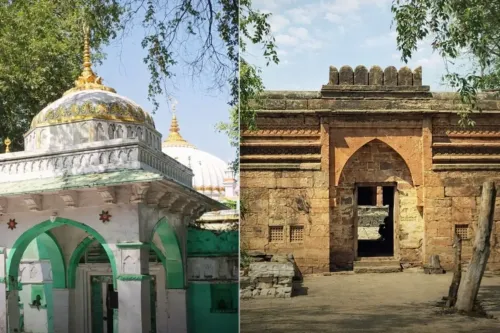
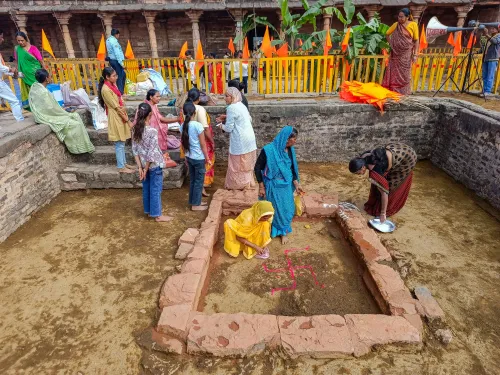
The ASI, which performed an extensive scientific survey of the protected monument, suggested that the current structure displays characteristics of earlier temple architecture, a claim that has been refuted by the Muslim side.
The contention revolves around conflicting assertions about the historical nature of the Bhojshala complex, with the Hindu faction claiming it was originally a temple, while the Muslim community challenges both the ASI’s conclusions and the methods used in the survey.
Significantly, an earlier ruling issued on January 22 by the Supreme Court allowed both communities to practice their respective religions at the site. The CJI Surya Kant-led Bench permitted Basant Panchami worship without time constraints, while stipulating that Friday namaz should be offered between 1 p.m. and 3 p.m. in a designated area within the premises.
The apex court emphasized the importance of fostering communal harmony and encouraged both parties to collaborate with authorities to maintain law and order, establishing a balanced framework for the exercise of religious rights at the contested site.
Point of View
The ongoing legal battle at the Bhojshala complex highlights the delicate balance between historical claims and communal relations in India. As the Supreme Court prepares to hear the plea, it is crucial for all parties involved to prioritize dialogue and understanding to foster harmony in a diverse society.
NationPress
15 Oct 2026
Frequently Asked Questions
What is the Bhojshala dispute about?
The Bhojshala dispute centers around competing claims regarding the historical nature of the Bhojshala complex, with the Hindu community asserting it was originally a temple and the Muslim community contesting this claim.
When is the Supreme Court hearing the case?
The Supreme Court is scheduled to hear the plea on April 1.
What did the Madhya Pradesh High Court decide regarding the inspection?
The Madhya Pradesh High Court decided to personally inspect the Bhojshala complex before the next hearing, scheduled for April 2.
What was the ASI's conclusion about the Bhojshala structure?
The ASI's survey indicated that the existing structure exhibits features of earlier temple architecture, which has been disputed by the Muslim community.
What are the implications of the Supreme Court's ruling on communal harmony?
The Supreme Court's previous ruling emphasized the need for maintaining communal harmony, allowing both communities to practice their religions and urging cooperation with authorities.