Cabinet Clears ₹14,447 Cr Elevated Corridor Near Varanasi
Synopsis
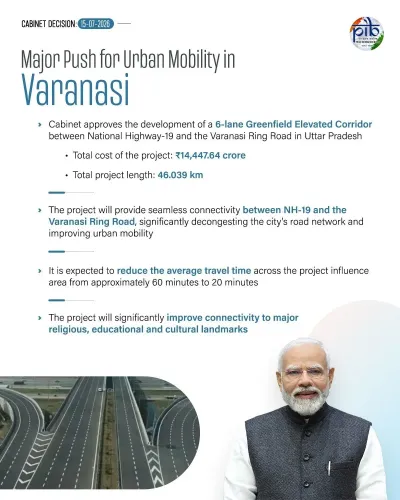
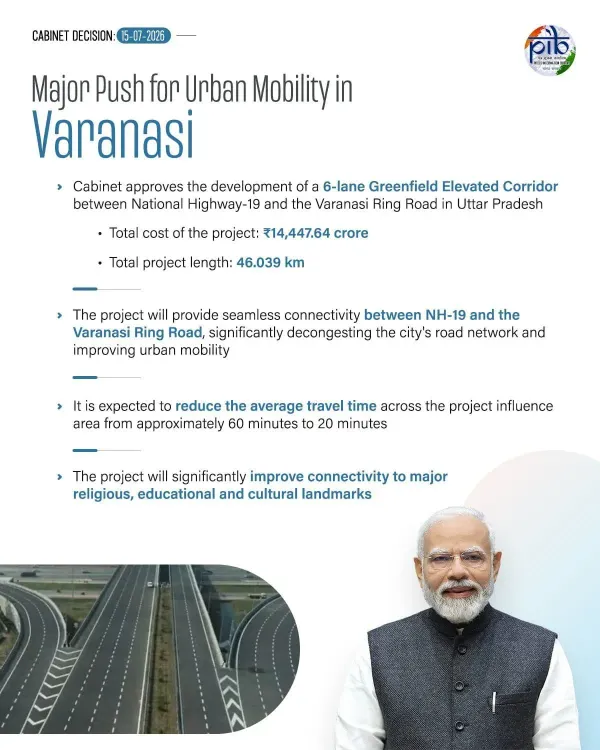
The Union Cabinet chaired by PM Narendra Modi has approved a 6-lane Greenfield Elevated Corridor between NH-19 and the Varanasi Ring Road in Uttar Pradesh at a capital cost of ₹14,447.64 crore under the Hybrid Annuity Model, aimed at easing urban congestion in the pilgrimage city.
Key Takeaways
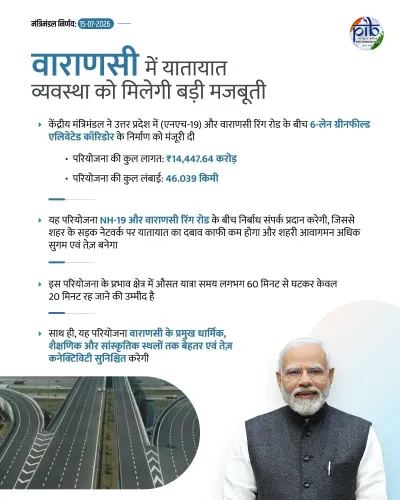
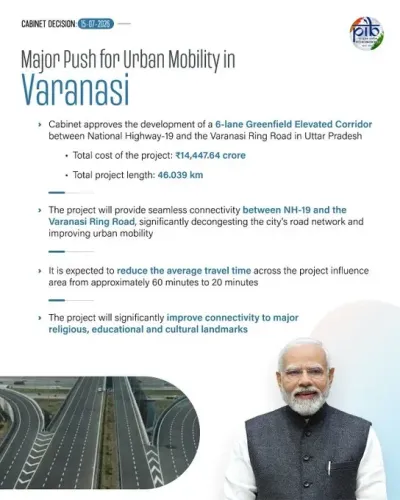
The Union Cabinet approved a 6-lane Greenfield Elevated Corridor between National Highway-19 and the Varanasi Ring Road in Uttar Pradesh .
Total capital cost of the project is ₹14,447.64 crore .
The project will be executed under the Hybrid Annuity Model (HAM) , where the government funds 40 per cent of construction cost upfront.
The corridor is intended to improve urban mobility and decongest entry and exit routes into Varanasi .
The announcement was made by Union Minister Sarbananda Sonowal following the Cabinet meeting chaired by PM Narendra Modi on 15 July 2026 .
Next steps include NHAI issuing tenders and completing land acquisition and environmental clearances.
Union Minister Sarbananda Sonowal on Wednesday, 15 July 2026 announced that the Union Cabinet, chaired by Prime Minister Narendra Modi, has approved the development of a 6-lane Greenfield Elevated Corridor connecting National Highway-19 and the Varanasi Ring Road in Uttar Pradesh, at a total capital cost of ₹14,447.64 crore under the Hybrid Annuity Model.
Context
The Cabinet decision, shared by Sonowal on X, states that the project is aimed at 'improving urban mobility' in and around Varanasi, one of India's most densely trafficked pilgrimage and heritage cities. The elevated greenfield corridor will serve as a critical link between the existing national highway network and the city's ring road, easing congestion at entry and exit points.
National Highway-19 — formerly designated NH-2 — is the principal Delhi-Kolkata corridor that passes through Uttar Pradesh and carries heavy freight and passenger traffic year-round, making the pinch-point near Varanasi a longstanding bottleneck.
Policy Backdrop
The project is financed under the Hybrid Annuity Model (HAM), introduced in 2016 to revive stalled highway projects by splitting construction risk between the government and private developers. Under HAM, the government contributes 40 per cent of the project cost during construction, with the private concessionaire recovering the remainder through annuity payments over the operations period.
The broader framework for such corridors is Bharatmala Pariyojana, the flagship highway development programme approved in 2017, which earmarked elevated corridors and ring roads around major cities including Varanasi. The Varanasi Ring Road itself was first conceptualised in the 2015-16 urban development plans for the Prime Minister's parliamentary constituency.
Varanasi has received a series of central government approvals for large-scale connectivity and urban infrastructure projects in recent years, including the Kashi Vishwanath Corridor and modernisation of Lal Bahadur Shastri International Airport, making this elevated corridor part of a sustained investment push in the city.
Stakeholders and Impact
The primary beneficiaries are Varanasi commuters, pilgrims, and freight operators who currently face severe congestion on approach roads to the city. A dedicated 6-lane elevated structure will allow through-traffic to bypass urban choke-points, reducing travel time and vehicle emissions in the city core.
For Uttar Pradesh more broadly, the project adds to a growing portfolio of greenfield highway infrastructure that supports industrial logistics and inter-city mobility. Private highway developers and construction contractors are expected to be key stakeholders once the National Highways Authority of India (NHAI) issues tender documents.
What's Next
The immediate next steps involve NHAI floating tenders for the project, followed by land acquisition proceedings and the securing of environmental clearances — processes that have historically determined the pace of delivery for similar urban corridor projects. Progress on these fronts will be closely watched by investors and state authorities in Uttar Pradesh.
With a capital outlay of ₹14,447.64 crore, the corridor represents one of the larger single-project approvals under HAM in the current cycle, and its execution timeline will be a key indicator of the government's capacity to deliver greenfield urban highway infrastructure at scale ahead of the next general election cycle.
Point of View
447.64 crore elevated corridor in Varanasi fits a deliberate pattern of channelling large central infrastructure investments into the Prime Minister's constituency, reinforcing the city's transformation into a flagship urban renewal showcase. The use of the Hybrid Annuity Model signals confidence in private-sector participation for urban highway projects, even as HAM projects in other corridors have faced delays at the land acquisition stage. For the BJP, visible greenfield infrastructure in a high-profile constituency carries electoral as well as developmental weight. The real test will be whether NHAI can move from Cabinet approval to ground-breaking within the compressed timelines the government has publicly committed to.
NationPress
15 Jul 2026
Frequently Asked Questions
What is the Varanasi Greenfield Elevated Corridor project?
It is a proposed 6-lane elevated highway corridor connecting National Highway-19 and the Varanasi Ring Road in Uttar Pradesh, approved by the Union Cabinet at a cost of ₹14,447.64 crore to improve urban mobility in Varanasi.
What is the Hybrid Annuity Model used for this project?
The Hybrid Annuity Model (HAM) is a public-private partnership framework introduced in 2016 for national highway projects, under which the government pays 40 per cent of the project cost during construction and the private developer recovers the rest through annuity payments over the operations period.
Who announced the Cabinet approval for the Varanasi corridor?
Union Minister of Ports, Shipping and Waterways Sarbananda Sonowal announced the Cabinet decision on 15 July 2026, noting that the Cabinet was chaired by Prime Minister Narendra Modi.
Why is a new corridor needed between NH-19 and the Varanasi Ring Road?
National Highway-19, the major Delhi-Kolkata corridor, creates severe congestion near Varanasi due to heavy freight and pilgrim traffic. A dedicated elevated greenfield corridor will allow through-traffic to bypass urban choke-points and reduce travel times.
What are the next steps for the Varanasi elevated corridor?
The National Highways Authority of India (NHAI) is expected to issue tender documents, after which land acquisition and environmental clearances will need to be secured before construction can begin.