CM Saini: AAP Ministers Can't Enter Villages as Drug Crisis Grows
Synopsis
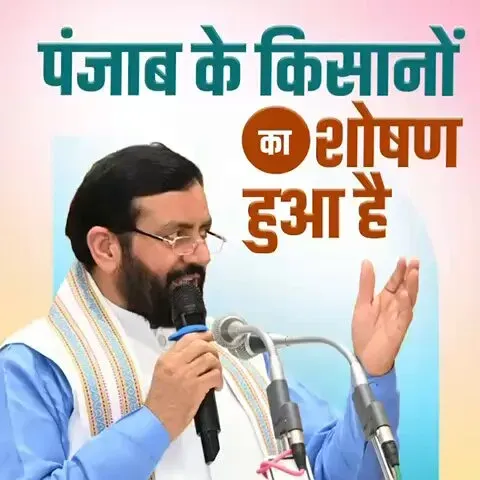
Haryana CM Nayab Singh Saini attacked the AAP Punjab government on November 11, 2026, claiming minister Aman Arora was confronted by villagers over open sales of synthetic drug 'chitta', accusing AAP of betraying its 2022 anti-drug election promise.
Key Takeaways
Haryana CM Nayab Singh Saini posted a sharp attack on the AAP Punjab government on November 11, 2026 .
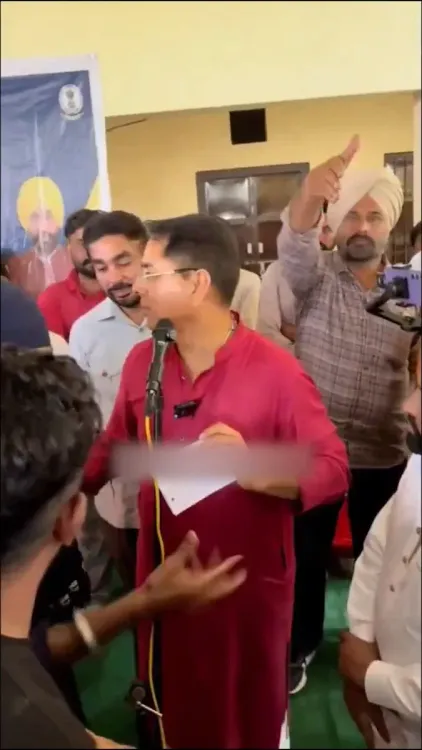
He claimed AAP Punjab minister and state president Aman Arora was surrounded by villagers complaining about chitta being sold openly in their village.
Saini used the wordplay 'AAP-da' (AAP + disaster) to frame the ruling party as a governance failure.
AAP won Punjab in 2022 on an explicit promise of eradicating the drug trade from the state.
Saini stated he finds 'unbroken faith' in BJP's drug-free Punjab pledge each time he meets people from the state, positioning his party as the credible alternative.
Drug trafficking along the Punjab-Haryana border has been a recurring political flashpoint for over a decade across multiple governments.
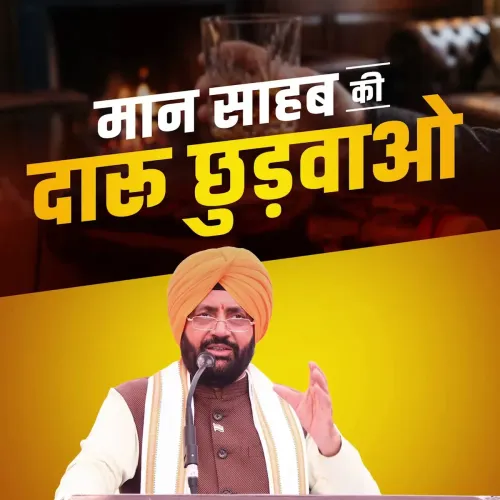
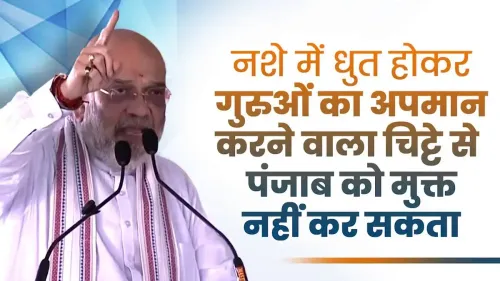
Villagers in Punjab are confronting their own state ministers at the gates — and Haryana Chief Minister Nayab Singh Saini wants the country to know it. In a sharp political broadside posted on Wednesday, November 11, 2026, Saini claimed that AAP Punjab minister and state party president Aman Arora was surrounded by rural residents who openly complained about 'chitta' (synthetic heroin) being sold freely in their villages.
Saini wrote that 'AAP-da sarkar ke mantriyon ka ab gaanvon mein ghusna mushkil ho gaya hai' — 'it has now become difficult for ministers of the AAP-da government to even enter villages.' The wordplay on 'AAP-da' (a portmanteau of AAP and aapda, meaning disaster) is a recurring BJP barb. The claim: that Arora, one of the ruling party's most prominent faces in Punjab, was encircled by villagers demanding answers over open drug sales in their locality.
The 'Chitta' Complaint That Made It Personal
The specific grievance — residents confronting a sitting minister about chitta being sold 'khulleaam' (openly) — cuts to the heart of AAP's 2022 mandate. The party swept Punjab's assembly elections that year on an explicit promise of rapid, decisive action against the drug trade that has devastated thousands of families across the state's rural belt. For a minister to be physically surrounded by villagers making that complaint is, politically, a charged image.
Saini added a personal dimension: whenever he meets people from Punjab, he sees 'unbroken faith and trust' in BJP's pledge of a drug-free Punjab and a secure future for its youth. The framing is deliberate — positioning BJP as the credible alternative custodian of a promise AAP made and, in Saini's telling, has failed to keep.
A Border-State Rivalry With a Decade-Long Paper Trail
This is not a new front. Drug trafficking along the Punjab-Haryana border has been a live political flashpoint for well over a decade, cutting across multiple state governments of different parties. Synthetic drugs, particularly chitta, have replaced older substances as the dominant threat in rural Punjab, and enforcement gaps — real and alleged — have fuelled cycles of blame between state administrations and opposition benches.
What gives Saini's post its edge is the specificity: a named minister, a named complaint, a named substance. Opposition leaders have learned that abstract accusations wash off; a vivid village scene sticks.
What Punjab's AAP Government Has Said
The AAP government has consistently maintained that it has significantly stepped up drug enforcement since taking office, pointing to increased seizures and arrests. No immediate official response to Saini's specific claim about Arora's village visit was available at the time of publication. Whether Punjab's administration addresses the incident directly — or the numbers behind it — will be worth watching in the days ahead.
For now, Saini has planted the narrative: in Punjab's villages, AAP's drug promise is not just unfulfilled — it is becoming a liability ministers can no longer outrun at their own doorstep.
Point of View
He elevates a local incident into a headline indictment of AAP's signature 2022 mandate. The move also signals that BJP views the drug issue in Punjab not merely as a law-and-order concern but as an enduring electoral wedge — one that grows sharper each time a ruling party minister is visibly cornered on it. How AAP responds, with either counter-data or a policy reset, will determine whether this narrative gains traction beyond the opposition bench.
NationPress
11 Nov 2026
Frequently Asked Questions
What did Nayab Singh Saini say about AAP Punjab on November 11 2026?
Haryana CM Nayab Singh Saini claimed that AAP Punjab minister and state president Aman Arora was surrounded by villagers who complained about 'chitta' (synthetic heroin) being sold openly in their village, arguing that AAP ministers can no longer freely enter rural areas.
Who is Aman Arora and what is his role in Punjab?
Aman Arora is a senior AAP leader serving as both a Punjab cabinet minister and the party's state president, making him one of the most prominent faces of the ruling Aam Aadmi Party government in Punjab.
What is 'chitta' and why is it a political issue in Punjab?
'Chitta' is a synthetic heroin-like drug that has become the dominant substance of abuse in rural Punjab. Its widespread availability has been a major political flashpoint, as AAP came to power in Punjab in 2022 specifically promising to eradicate the drug trade.
Did AAP promise to end drugs in Punjab when it came to power?
Yes. The Aam Aadmi Party made eliminating Punjab's drug problem a central plank of its 2022 assembly election campaign and won a landslide majority, making the drug-enforcement record a key benchmark by which voters and opponents measure the government.
Why is a Haryana CM commenting on Punjab's drug problem?
Punjab and Haryana share a long border and both states deal with drug trafficking flows. BJP leaders in Haryana have consistently used Punjab's drug enforcement gaps as a political attack line against the AAP government, framing it as a broader governance failure.