CM Saini Slams Punjab Over Mansa Drug Death, AAP's 6-Month Pledge
Synopsis
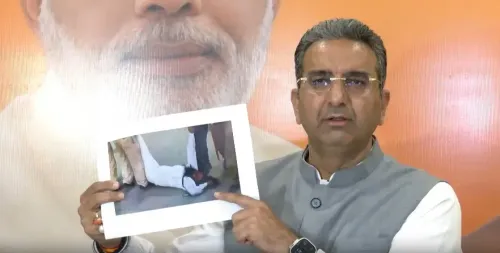
Haryana CM Nayab Singh Saini publicly condemned the suspected drug overdose death of 35-year-old Jeetu in Mansa, Punjab, accusing the AAP government of misrule, citing police mishandling of protests, and reviving AAP's unfulfilled six-month drug-eradication pledge from 2022.
Key Takeaways
35-year-old Jeetu died from a suspected drug overdose in Mansa, Punjab , prompting family and village protests.
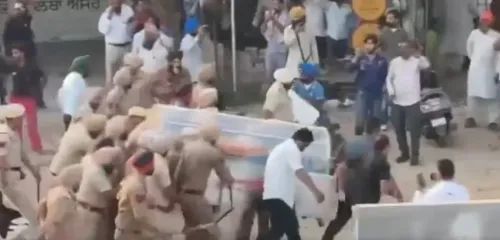
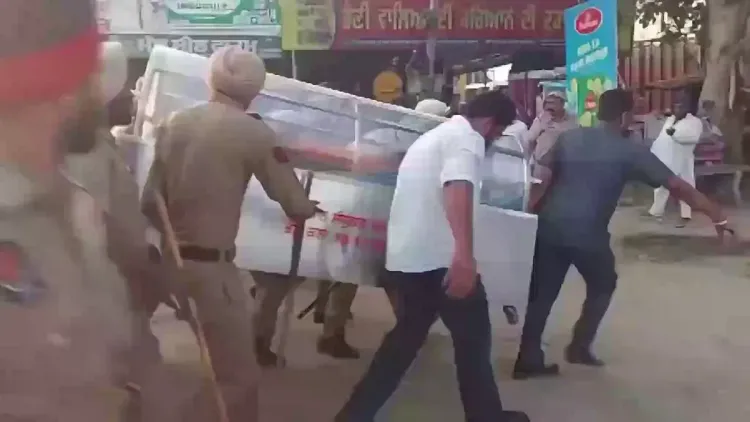
Allegations have emerged that Punjab Police forcibly removed the body and detained protesters seeking justice.
Haryana CM Nayab Singh Saini condemned the incident as evidence of AAP's misrule in Punjab.
Saini explicitly cited AAP's 2022 campaign pledge to eradicate drugs in Punjab within six months , contrasting it with ongoing deaths.
The family of Parvinder Jhota was also named as still seeking justice in a separate drug-related case, highlighting a pattern of unresolved grievances.
Saini called on the Punjab government to investigate complaints impartially and take effective action against drug trafficking networks.
A 35-year-old man named Jeetu is dead in Mansa, Punjab — suspected drug overdose, his family demanding justice on the streets — and Haryana Chief Minister Nayab Singh Saini is now holding Punjab's ruling government accountable in unambiguous terms. In a post on X on Wednesday, October 28, 2026, Saini condemned both the tragedy and what he described as a wider pattern of state mismanagement on the drug crisis.
Writing in Hindi, Saini called Jeetu's death 'behad dukhadayi' — deeply sorrowful — and pointed directly to allegations swirling in Mansa: that police removed the body over the family's objections, and that protesters who gathered seeking answers were detained. 'These allegations raise serious questions,' Saini wrote, and he did not leave the criticism abstract.
The Promise That Now Haunts AAP in Punjab
The sharpest barb in Saini's post is a callback to a specific election pledge. During AAP's 2022 Punjab assembly campaign, the party made the drug menace a centrepiece of its pitch — promising to eradicate it within six months of taking power. That promise, repeated at rallies and in campaign material, became one of the most cited commitments of a landslide victory. More than four years on, Saini invoked it directly: families in Punjab are still losing their children under what he called the government's 'kushasan' — misrule.
It is a charge that carries political weight precisely because the six-month pledge was so specific and so public. Opposition parties have returned to it repeatedly as a measuring stick against which AAP's Punjab performance can be held.
Parvinder Jhota's Family and the Pattern of Unheard Voices
Saini also named a second family — that of Parvinder Jhota — as still struggling for justice in a separate drug-related case. The mention is pointed: this is not one incident, the post implies, but a recurring failure of accountability. Families grieving, villages protesting, and, in Saini's telling, a government that has not answered either effectively.
Punjab's drug crisis is not a new story. It has outlasted multiple state governments — Congress, Akali Dal, now AAP — with trafficking networks operating along border corridors proving stubbornly resistant to enforcement. What changes with each government is the political ownership of the failure. Right now, that ownership sits with AAP, and Saini's post ensures the pressure stays visible.
What Saini Is Demanding — and Why It Matters
Saini closed with a direct list of demands: the Punjab government must listen to these voices, act impartially on complaints, and take effective steps against drug trafficking. The language is measured — this is an opposition leader using the register of accountability, not inflammatory rhetoric — but the underlying message is pointed. An elected state government, in his framing, has failed both its promise and its people.
Whether Punjab's home department orders an independent inquiry into the Mansa incident — the handling of Jeetu's body and the detentions — will be the clearest early indicator of how seriously the state responds to the mounting pressure. For the families still waiting, that response cannot come too soon.
Point of View
He grounds the criticism in specific victims rather than statistics, a rhetorical choice that makes the charge harder to deflect. The post fits squarely into BJP's broader strategy of positioning AAP's Punjab governance as a failed experiment, ahead of any future electoral cycle in the region. The demand for impartial action is framed as administrative, not partisan — which gives it wider resonance beyond BJP's own support base.
NationPress
28 Oct 2026
Frequently Asked Questions
Who was Jeetu and how did he die in Mansa?
Jeetu was a 35-year-old resident of Mansa district, Punjab , who died from a suspected drug overdose. His death triggered protests by family members and villagers demanding justice, with allegations that police removed the body against the family's wishes and detained demonstrators.
What was AAP's six-month drug pledge in Punjab?
During the 2022 Punjab assembly election campaign , AAP prominently promised to eradicate the drug menace in the state within six months of coming to power. The pledge became one of the most-cited commitments of the campaign and has since been repeatedly raised by opposition parties as a benchmark of unfulfilled promises.
Why is Haryana CM Saini commenting on a Punjab drug case?
As a BJP leader , Saini is using the Mansa incident to hold the AAP-led Punjab government accountable on its drug-crisis record. Interstate political criticism between BJP-governed Haryana and AAP-governed Punjab on law-and-order and drug trafficking has been a recurring pattern since AAP came to power in 2022.
Who is Parvinder Jhota and why was he mentioned by Saini?
Parvinder Jhota is an individual whose family is cited in Saini's post as separately seeking justice in a drug-related case in Punjab. Saini's mention underscores his argument that Jeetu's death is not an isolated incident but part of a wider pattern of unresolved drug-related grievances.
What action is Nayab Singh Saini demanding from the Punjab government?
Saini demanded that the Punjab government listen to the voices of affected families, take impartial action on complaints — including the alleged police mishandling in Mansa — and implement effective measures against drug trafficking networks operating in the state.