Gujarat CM Office: Banaskantha Biogas Plant to Launch Oct 30
Synopsis
The Chief Minister's Office of Gujarat says PM Modi will inaugurate Banas Dairy's Banaskantha biogas plant on 30 October 2026, which processes 340 tonnes of cattle dung daily into clean energy and biofertiliser, linking dairy farmers to green income under India's net-zero framework.
Key Takeaways
Banas Dairy in Banaskantha, Gujarat is launching a biogas plant set to process 340 tonnes of cattle dung per day .
Prime Minister Narendra Modi is scheduled to inaugurate the facility on 30 October 2026 .
The project aligns with India's net-zero-by-2070 commitment announced at COP26 in Glasgow in 2021 .
It operates under the Gobardhan scheme , launched in 2018 to convert dung and farm waste into biogas and organic fertiliser.
Dairy farmers and livestock owners will receive direct economic returns for supplying dung to the facility.
The initiative is framed as advancing Atmanirbhar Bharat by linking agricultural waste, rural energy security, and farmer income in a single cooperative model.
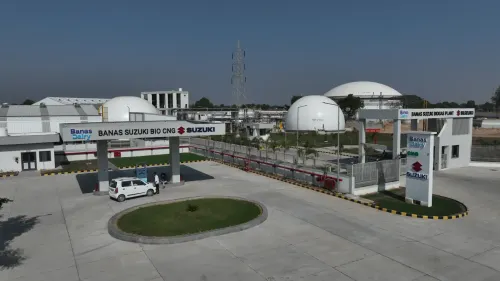
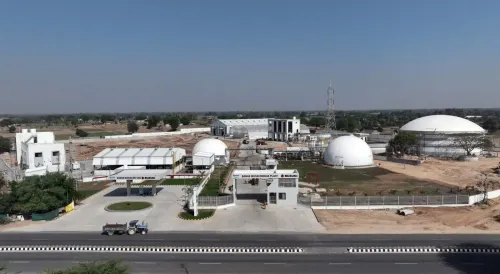
Dung into gas, waste into gold — Banaskantha district in northern Gujarat is on the verge of inaugurating what the Chief Minister's Office of Gujarat is calling a landmark chapter in rural green energy. A biogas facility run by Banas Dairy, one of India's largest milk cooperatives, is set to be dedicated to the nation by Prime Minister Narendra Modi on 30 October 2026, converting cattle dung at scale into clean energy and supplementary farmer income.
From cowshed to clean energy: what Banas Dairy has built
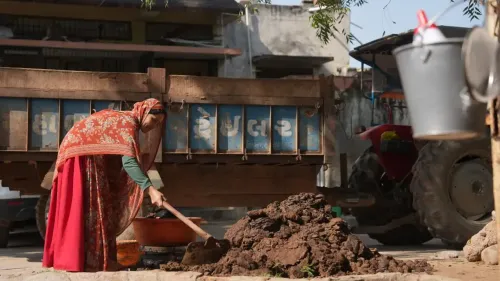
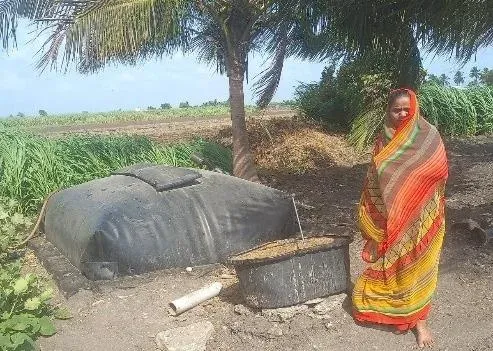
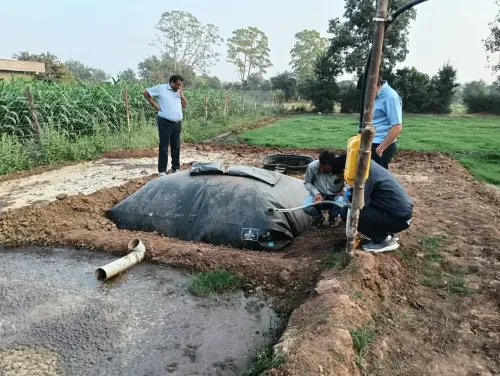
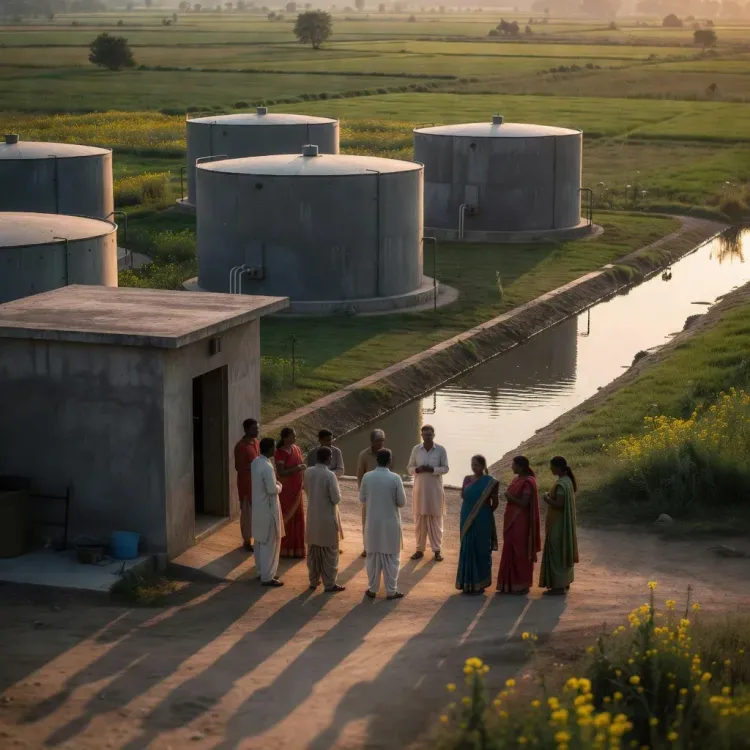
The plant, located in Banaskantha, processes 340 tonnes of cattle dung every day, channelling the output of thousands of dairy animals into modern biogas units. The Gujarat CMO's post, written in Gujarati, describes the initiative as a 'hariyat kranti' (green revolution) — not merely an energy project but a full-circle rural economy loop: livestock owners supply dung, the cooperative processes it, and farmers receive economic returns for material that was previously waste.
Banas Dairy already anchors the milk economy of northern Gujarat, collecting from hundreds of village societies across the district. Layering biogas production onto that network means the cooperative's existing logistics — daily dung collection routes, farmer relationships, payment infrastructure — can carry the new model without being rebuilt from scratch. That integration is precisely what gives the project its scale.
India's net-zero road and the Gobardhan thread
Prime Minister Modi announced India's net-zero-by-2070 target at the COP26 summit in Glasgow in 2021, committing the country to a trajectory that requires deep decarbonisation of agriculture, energy and industry. Gujarat's CMO frames the Banas Dairy plant explicitly within that vision — positioning Banaskantha as a district-level proof point for a national ambition.
The policy scaffolding already exists at the Centre. The Gobardhan scheme, launched in 2018 under the Swachh Bharat Mission, was designed exactly for this: turning cattle dung and agricultural waste into compressed biogas and organic fertiliser. The Banas Dairy plant represents the scheme's cooperative-sector potential coming to fruition — a dairy giant, rather than a single farm or municipality, driving volume that a household-level unit never could.
Three payoffs: energy, environment, and farmer income
The CMO's post is careful to name all three dividends simultaneously. Clean energy production reduces the village's dependence on fossil fuels and cuts methane emissions from unprocessed dung — a significant but often overlooked source of agricultural greenhouse gases. The organic residue left after biogas extraction becomes biofertiliser, reducing chemical input costs for farmers. And the dung-purchase payment system means livestock owners earn from every animal they keep, strengthening the economics of small-scale dairy farming.
This triple payoff — energy security, environmental protection, farmer income — is the template the Atmanirbhar Bharat framework has long promised for rural India. Banaskantha, on 30 October, gets to show whether the template holds at cooperative scale.
With PM Modi personally presiding over the inauguration, every camera in the country will be on a dung-processing plant in northern Gujarat. If the numbers hold, the pressure to replicate the model across dairy-dense districts nationwide will be immediate.
Point of View
The state sidesteps the implementation bottlenecks that have slowed Gobardhan scheme targets elsewhere. The triple-dividend framing — energy, environment, farmer income — also serves Gujarat's rural political economy, tying green credentials to the tangible income concerns of the state's large livestock-owning vote base. Whether the 340-tonne daily processing figure is sustained at full capacity will be the real test of whether this becomes a replicable national template or a well-publicised one-off.
NationPress
28 Oct 2026
Frequently Asked Questions
What is the Banas Dairy biogas project in Banaskantha?
It is a large-scale biogas facility operated by Banas Dairy in Banaskantha, Gujarat , designed to process 340 tonnes of cattle dung daily into clean biogas energy and organic biofertiliser, with dairy farmers earning payment for the dung they supply.
When will PM Modi inaugurate the Banas Dairy biogas plant?
Prime Minister Narendra Modi is scheduled to inaugurate the Banas Dairy biogas plant on 30 October 2026 , according to the Chief Minister's Office of Gujarat.
What is the Gobardhan scheme and how does it relate to this project?
The Gobardhan scheme was launched in 2018 under the Swachh Bharat Mission to convert cattle dung and agricultural waste into compressed biogas and organic fertiliser. The Banas Dairy plant is a large cooperative-scale implementation of that national policy.
How will dairy farmers benefit from the Banaskantha biogas plant?
Livestock owners and dairy farmers will receive direct economic payments for supplying cattle dung to the facility, turning a previously discarded byproduct into a reliable source of supplementary income alongside their milk revenues.
How does this project connect to India's net-zero target?
India committed to net-zero carbon emissions by 2070 at COP26 in Glasgow in 2021 . The Banas Dairy biogas plant reduces methane from unprocessed dung and displaces fossil fuels with clean energy, directly supporting that long-term climate goal at a district level.