Banas Bio-CNG Project: Cutting CO2 Emissions and Elevating Farmer Incomes in Gujarat
Synopsis
Discover how Gujarat's Banas Bio-CNG initiative is transforming rural economies and reducing carbon emissions. This innovative project not only boosts farmer incomes but also sets a precedent for sustainable energy practices in India.
Key Takeaways
Innovative waste-to-energy model enhances farmer incomes.
Annual CO2 reduction of 6,750 tonnes boosts environmental sustainability.
Expansion plans include five additional plants in Banaskantha.
Direct benefits to 400-450 households from dung supply.
Government support with Rs 60 crore budget allocation for Bio-CNG sector.
Gandhinagar, March 26 (NationPress) The Banas Bio-CNG initiative in Gujarat is setting a new standard in rural economic progress, delivering substantial income to farmers while assisting the state's environmental objectives, officials reported on Thursday.
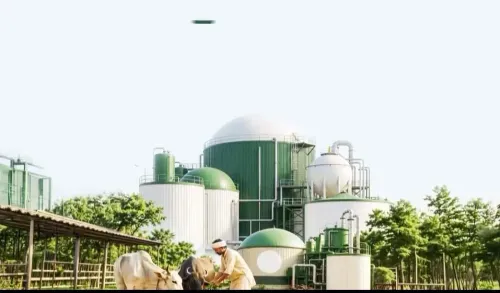
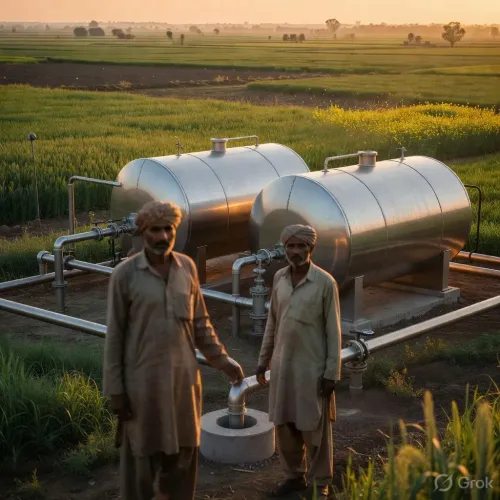
Launched by Banas Dairy with the leadership of Chief Minister Bhupendra Patel, this innovative project transforms cow dung and other organic waste into clean energy and organic fertilizers, establishing a holistic model for energy generation, agricultural enhancement, and environmental protection.
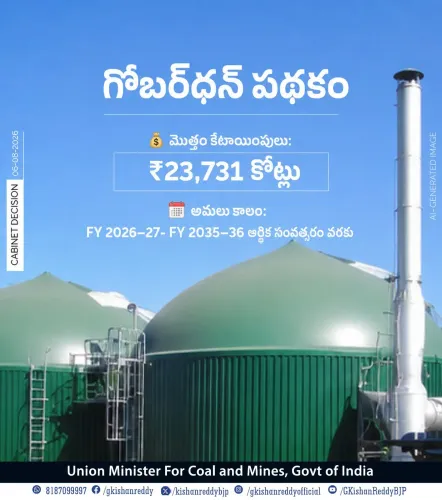
The Gujarat government has earmarked Rs 60 crore in the 2026-27 budget aimed at broadening the Bio-CNG sector through cooperative milk production societies.
Each facility is anticipated to generate approximately Rs 12 crore annually from the sale of compressed biogas (CNG) and organic fertilizers.
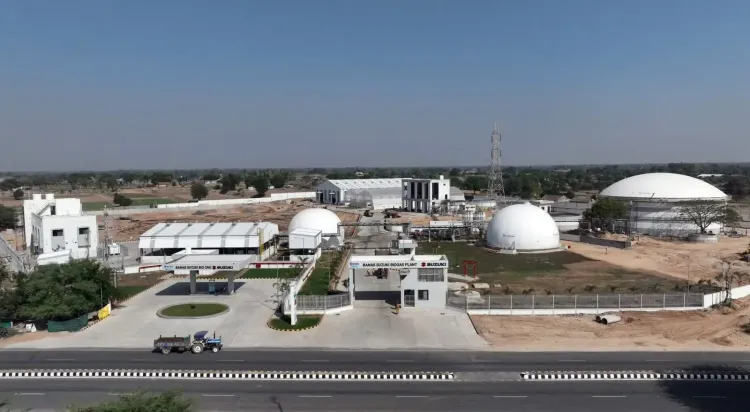
Daily outputs from each plant include nearly 1,800 kg of compressed biogas, 25 metric tonnes of solid organic fertilizer, and 75 metric tonnes of liquid fertilizer.
Market prices for these products are Rs 75 per kg for CNG, Rs six per kg for solid fertilizer, and Rs 0.50 per kg for liquid fertilizer, collectively contributing over Rs three lakh in daily revenue per plant.
Officials stated, "The Banas Bio-CNG model is a tried-and-true strategy that offers farmers consistent additional income while simultaneously lowering carbon emissions."
They also noted that "Around 400 to 450 households from 20 to 25 villages in Banaskantha directly benefit, receiving Rs one per kg of cow dung supplied to the facilities."
The inaugural plant in Banaskantha, operational for six years, has a processing capacity of 40 metric tonnes of cow dung per day.
Encouraged by its success, plans are underway for five additional large-scale facilities in the district.
Currently, two of these plants are operational, with a third nearing completion.
Each plant processes approximately 100 metric tonnes of dung daily utilizing scientific techniques.
Around 13 tractor-trolleys are used to transport the dung, each carrying about four metric tonnes per trip, generating local jobs and enhancing rural economic activity.
Beyond its economic contributions, the initiative promotes environmental sustainability.
Officials project that the project will cut greenhouse gas emissions by about 6,750 tonnes of CO2 equivalent each year.
"This initiative illustrates the synergy of clean fuel production, organic fertilizer availability, and scientific waste management, making Gujarat's Green Gujarat vision a tangible reality," an official remarked.
The project has garnered national interest, with nearly 15 states considering replication efforts under the collaborative initiatives of the Union Ministries of Jal Shakti and Cooperation.
Experts indicate that the Banas Bio-CNG model exemplifies how rural energy production can be merged with ecological preservation, offering a replicable framework for sustainable rural advancement across India.
Point of View
It presents a replicable model for other regions in India, demonstrating the potential of innovative agricultural practices.
NationPress
3 Oct 2026
Frequently Asked Questions
What is the Banas Bio-CNG project?
The Banas Bio-CNG project converts cow dung and organic waste into clean fuel and organic fertilizers, enhancing farmer income and reducing carbon emissions.
How much CO2 does the project reduce annually?
The initiative is estimated to reduce greenhouse gas emissions by approximately 6,750 tonnes of CO2 equivalent each year.
Who benefits from the project?
Around 400-450 households from 20-25 villages in Banaskantha benefit directly by supplying cow dung to the plants.
What is the daily production capacity of the plants?
Each plant processes about 100 metric tonnes of dung daily, producing biogas and fertilizers.
How does the project contribute to rural employment?
The project generates local jobs by utilizing tractor-trolleys for dung transportation and by employing local communities in the operation of the plants.